- This topic is empty.
-
AuthorPosts
-
19/01/2026 at 15:05 #6997
In the world of compressed air systems, oil-free scroll compressors are widely recognized for their ability to deliver clean, reliable, and high-purity air without the risk of oil contamination. With industries like pharmaceuticals, food & beverage, electronics manufacturing, and medical sectors requiring strict air quality standards, oil-free technology has become a go-to solution. However, within the oil-free scroll compressor category itself, buyers often face an important decision: Single-Scroll vs Multi-Scroll Oil-Free Compressors.
Choosing the right configuration can significantly impact performance, efficiency, maintenance costs, lifecycle value, and even total cost of ownership (TCO). This article dives deep into both types of scroll compressors, comparing features, advantages, limitations, and ideal use cases — so you can determine which one is truly better for your specific application.
1. What Are Oil-Free Scroll Compressors? A Brief Primer
Before comparing single and multi-scroll designs, it’s essential to understand what oil-free scroll compressors are.
Oil-free scroll compressors use two interleaved spiral elements (scrolls) — one fixed and one orbiting — to compress air. As the orbiting scroll moves in a circular path, it traps pockets of air between the scrolls and progressively reduces their volume, thereby increasing pressure without the need for oil lubrication in the compression chamber.
Because oil is not introduced into the air path, the discharge air is inherently oil-free, which eliminates contamination risk and meets clean air standards such as ISO 8573-1 Class 0 — the highest purity class for compressed air quality. This makes oil-free scroll compressors ideal for critical processes in healthcare, laboratories, food processing, and high-tech manufacturing.
2. Understanding the Difference: Single-Scroll vs Multi-Scroll Designs
Single-Scroll Compressors
A single-scroll compressor uses one set of fixed and orbiting scrolls to compress air. It’s the classic scroll design and the most straightforward implementation of scroll compression technology.
Key Characteristics:
-
One compression element (scroll pair)
-
Simpler design
-
Often smaller, lighter, and more compact
-
Lower complexity in mechanical structure
Multi-Scroll Compressors
A multi-scroll compressor incorporates multiple scroll pairs operating either in parallel or in staged arrangement. Think of it as several single-scroll units working together within one integrated system.
Key Characteristics:
-
Two or more scroll elements
-
Potential for staged compression
-
Higher total airflow capacity
-
Better scalability across pressure and flow ranges
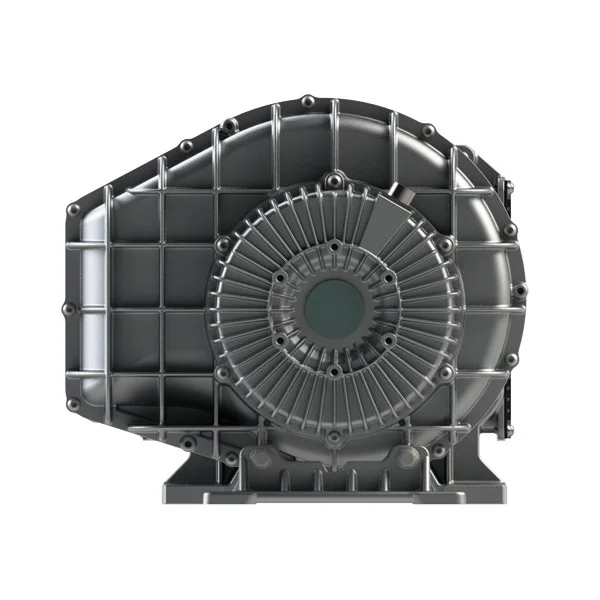
3. Performance Comparison
Airflow & Capacity
-
Single-Scroll Compressors: Best suited for applications with lower to moderate airflow requirements — typically in small laboratories, clinics, dental offices, and low-flow industrial uses.
-
Multi-Scroll Compressors: Deliver higher total flow rates and can support larger operations, especially when multiple scroll elements are synchronized to run simultaneously.
Verdict: Multi-Scroll compressors win when you need more airflow or intend to expand capacity over time.
Pressure Flexibility
-
Single-Scroll Units: Limited to a fixed performance curve. These compressors are often optimized for a specific pressure range (e.g., 80–120 psi).
-
Multi-Scroll Units: Can be designed for multiple pressure stages or controlled independently to respond to varying demand, offering better adaptability in systems with fluctuating pressure requirements.
Verdict: Multi-Scroll compressors offer superior flexibility for variable pressure needs.
4. Energy Efficiency & Operating Costs
Efficiency in Part-Load Conditions
Energy efficiency is critical because compressed air systems often operate part-load rather than at full capacity.
-
Single-Scroll Compressors: Efficiency tends to drop at part-load because there is only one operating unit, making it harder to modulate output precisely.
-
Multi-Scroll Compressors: Can throttle or stage individual scroll elements to match demand, improving part-load efficiency significantly.
Overall Power Consumption
Multi-scroll systems can be engineered to distribute work evenly across scroll elements, reducing mechanical stress and lowering energy waste. Additionally, some advanced multi-scroll designs include variable-frequency drives (VFDs) to optimize motor speed and energy use.
Verdict: Multi-Scroll compressors typically outperform single-scroll units in overall energy efficiency, especially in variable-demand environments.
5. Reliability & Maintenance Considerations
Mechanical Simplicity
-
Single-Scroll Compressors: Fewer moving parts mean there is less that can go wrong. This translates to easier maintenance and fewer unexpected breakdowns.
-
Multi-Scroll Compressors: More components add complexity. Although modern designs are robust, there are more elements to inspect, service, and potentially fail.
Redundancy and System Resilience
Multi-scroll systems often provide a form of built-in redundancy: if one scroll element requires service, others can continue to operate, preventing a complete production halt.
Maintenance Frequency & Cost
-
Single-Scroll Units: Lower maintenance cost in small systems due to simplicity.
-
Multi-Scroll Units: Potentially higher maintenance cost because of more parts, but with improved uptime thanks to redundancy.
Verdict: Single-scroll units are simpler and cheaper to maintain, but multi-scroll designs offer better uptime where redundancy matters.
6. Footprint, Installation, and Scalability
Space Requirements
-
Single-Scroll Compressors: Compact and lightweight — excellent for facilities with limited space.
-
Multi-Scroll Compressors: Larger and heavier due to multiple stacked compressor elements and possibly additional control hardware.
Scalability
One of the biggest advantages of multi-scroll systems is modularity. Many multi-scroll models allow users to:
-
Add or remove scroll modules
-
Stage elements for capacity control
-
Customize airflow output based on future growth
Verdict: If scalability and future expansion are priorities — multi-scroll compressors offer more adaptability.
7. Cost Considerations: Initial vs Total Cost of Ownership
Initial Investment
-
Single-Scroll Compressors: Lower purchase price and installation cost — attractive for smaller budgets and low-demand applications.
-
Multi-Scroll Compressors: Higher upfront cost due to complexity and additional components.
Operational Costs Over Time
Although multi-scroll units cost more initially, their energy savings, capacity flexibility, and reliability under high-demand conditions often translate into a lower total cost of ownership (TCO) — especially for medium to large operations.
Verdict: Single-scroll for low budget/low demand; multi-scroll for long-term savings at scale.
8. Application-Specific Recommendations
Best Use Cases for Single-Scroll Compressors
-
Small dental clinics and medical offices
-
Low-to-moderate laboratory applications
-
Small-scale food processing lines
-
Mobile or portable compressed air needs
-
Users with limited floor space or low initial budget
Best Use Cases for Multi-Scroll Compressors
-
Large manufacturing plants with fluctuating demand
-
High-purity air environments in semiconductor or biotech production
-
Centralized compressed air systems supporting multiple departments
-
Continuous 24/7 industrial operations
-
Facilities prioritizing energy savings and scalability
9. Emerging Trends and Future Directions
The compressor industry continues to evolve. Here are trends shaping the future of single vs multi-scroll oil-free compressors:
Digital Monitoring & Smart Controls
Advanced compressor controls now allow multi-scroll systems to:
-
Predict maintenance needs
-
Adjust performance dynamically
-
Optimize for energy use based on real-time demand
Integration with IoT & Industry 4.0
Oil-free scroll compressors with embedded sensors and connectivity can align with broader facility automation platforms, further improving uptime and efficiency.
Eco-Friendly Technologies
Manufacturers are focusing on:
-
Reducing lifecycle environmental impact
-
Improving heat recovery from compressed air systems
-
Integrating renewable power sources
These advancements disproportionately benefit multi-scroll systems due to their larger scale and integration flexibility.
10. Final Verdict: Single vs Multi-Scroll — Which Is Better?
There’s no one-size-fits-all answer — it depends on your operational needs, budget, and future growth plans. Here is a distilled conclusion:
Criteria Best Choice Simplicity & Low Cost Single-Scroll Higher Capacity & Scalability Multi-Scroll Energy Efficiency (Variable Demand) Multi-Scroll Maintenance Ease Single-Scroll Redundancy & Uptime Multi-Scroll Compact Footprint Single-Scroll Long-Term TCO Multi-Scroll (usually) In summary:
-
Choose single-scroll oil-free compressors if your application has low to moderate airflow needs, limited space, and budget constraints.
-
Choose multi-scroll oil-free compressors if you seek scalability, better efficiency under variable loads, redundancy, and long-term operational savings — particularly in larger or more demanding industrial environments.
As a professional manufacturer and solution provider of oil-free scroll compressors, Gaoling has been deeply rooted in the field of oil-free compressed air for many years, consistently dedicated to providing efficient, stable, and high-purity compressed air systems for various industries. Whether it's a single-scroll solution prioritizing simple structure and controllable costs, or a multi-scroll system emphasizing high efficiency, strong stability, and redundancy, Gaoling helps customers achieve long-term stable operation and lower overall operating costs through reliable product performance, strict quality control, and professional technical support.
http://www.glcompressor.com
glcompressor -
-
AuthorPosts

- You must be logged in to reply to this topic.