- This topic is empty.
-
AuthorPosts
-
27/01/2026 at 14:35 #7066
The paper industry is one of the oldest manufacturing sectors, yet it continues to evolve rapidly with advancements in technology and automation. Modern paper production demands precision, consistency, and efficiency, which makes accurate measurement and control of raw materials, chemicals, and liquids critical. Among the advanced instrumentation technologies that have gained popularity in recent decades, Coriolis Mass Flow Meters (CMFMs) stand out as highly effective devices for ensuring accurate flow measurement and process optimization. This article explores the applications, benefits, and challenges of using Coriolis mass flow meters in the paper industry.
Understanding Coriolis Mass Flow Meters
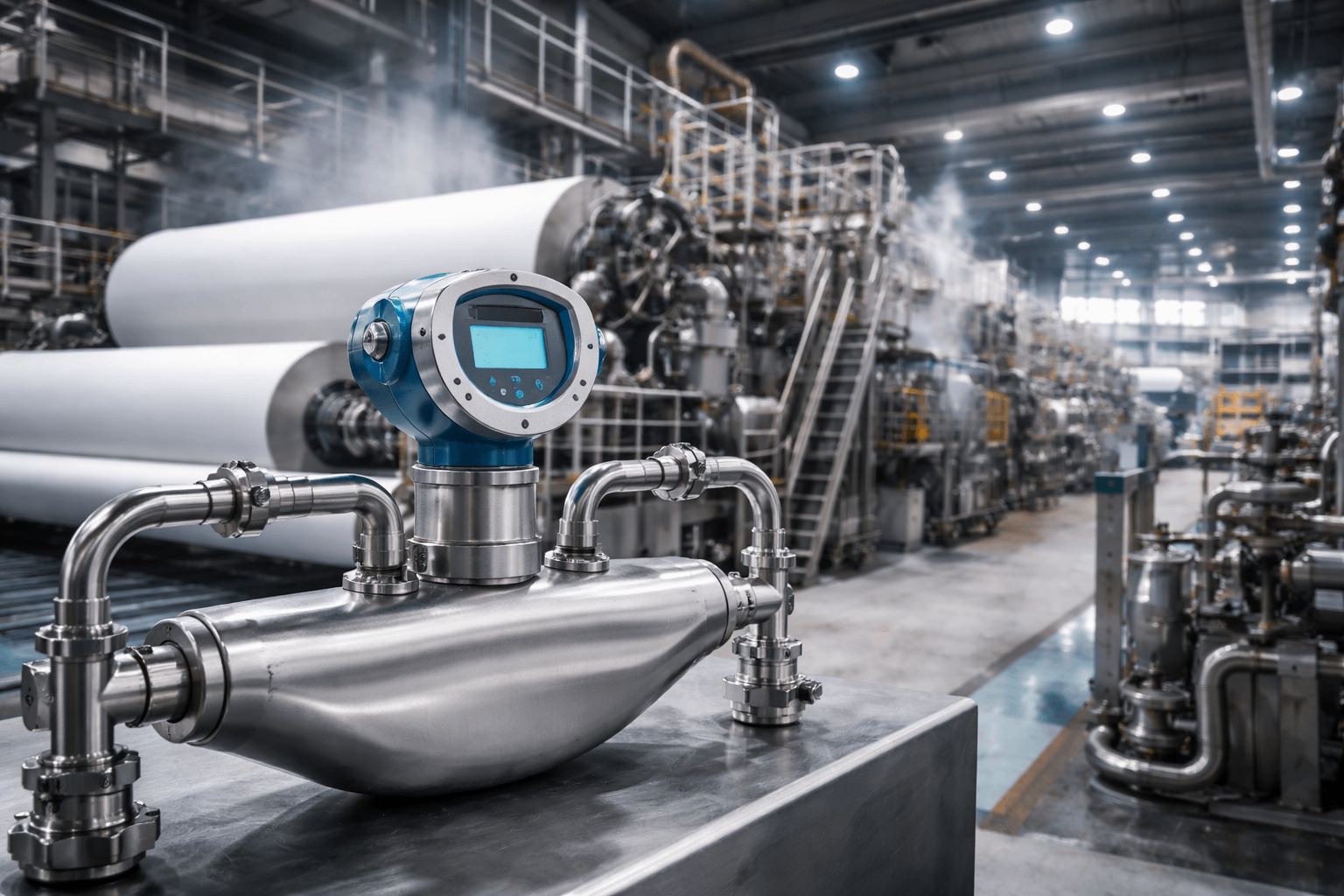
Coriolis mass flow meters operate based on the Coriolis effect, where a vibrating tube experiences a deflection when a fluid passes through it. This deflection is proportional to the mass flow rate of the fluid, allowing CMFMs to directly measure mass rather than volume. Unlike traditional flow meters that require density and temperature compensation, Coriolis meters provide highly accurate mass flow measurements even for complex, high-viscosity, or multiphase fluids.
In addition to mass flow, modern CMFMs can simultaneously measure:
-
Density: Useful for monitoring concentration of chemical solutions.
-
Temperature: Allows process monitoring and quality control.
-
Totalized mass: Enables precise batch processing.
These features make CMFMs particularly suited for industries like chemical processing, food & beverage, pharmaceuticals, and, importantly, paper manufacturing.
Key Applications in the Paper Industry
The paper industry involves a complex mix of raw materials, chemicals, and water-based solutions. The use of CMFMs enhances process efficiency, reduces waste, and ensures consistent product quality. Key applications include:
1. Chemical Dosing and Pulp Processing
Paper production relies heavily on chemicals such as bleaching agents, sizing chemicals, fillers, and dyes. Accurate dosing is critical:
-
Overdosing chemicals can increase costs and create environmental compliance issues.
-
Underdosing can compromise paper quality, resulting in uneven brightness, poor strength, or color inconsistencies.
Coriolis mass flow meters provide precise measurement of liquid and slurry chemical flows, even for high-viscosity or corrosive fluids. By integrating CMFMs into automated dosing systems, paper mills can achieve consistent pulp quality and reduce chemical waste.
Example:
In the bleaching process, chlorine dioxide or hydrogen peroxide is added to pulp. CMFMs ensure that the exact mass of chemical is delivered, maintaining consistent pulp brightness while minimizing environmental impact.
2. Monitoring Stock Consistency
Stock consistency, or the ratio of solid fibers to water in the pulp, is a critical parameter in paper production. Too low consistency can reduce paper strength, while too high consistency can cause processing difficulties. Traditional methods rely on density meters or manual sampling, which can introduce delays or inaccuracies.
Coriolis mass flow meters can measure slurries with varying fiber content and provide real-time mass flow data. This allows:
-
Accurate control of pulp consistency in the refining stage.
-
Optimized use of energy and water.
-
Improved final paper properties, including smoothness, density, and tensile strength.
By monitoring the mass flow and density of the pulp, CMFMs help maintain a stable and optimized stock consistency throughout the process.
3. Coating and Additive Control
Paper coating is a vital step to improve printability, gloss, and surface strength. Coating solutions often contain pigments, binders, and additives. Precision in applying these solutions affects paper quality, appearance, and production efficiency.
CMFMs can measure coating chemicals and additive flows accurately:
-
Ensures uniform application of pigments and binders.
-
Reduces waste of expensive chemicals.
-
Enhances final paper surface quality.
For specialty papers, such as glossy magazines or packaging materials, precise control over coating mass can significantly impact visual appeal and print performance.
4. Water and Wastewater Management
Water usage in paper production is substantial, and wastewater contains fibers, fillers, and chemical residues. Proper monitoring and control of both process water and effluent flows are crucial for sustainability and regulatory compliance.
Coriolis mass flow meters provide:
-
Accurate measurement of water and chemical inputs.
-
Real-time monitoring of effluent mass flows.
-
Integration with automated treatment systems for optimized water recycling.
By measuring both fresh and recycled water streams, paper mills can minimize water consumption and maintain compliance with environmental standards.
5. Energy and Steam Monitoring
In addition to liquids and slurries, some Coriolis meters are suitable for steam or condensate flow measurement. Steam is widely used in the paper industry for drying, heating, and chemical reactions. Accurate mass flow measurement ensures:
-
Efficient energy usage.
-
Proper temperature and pressure control.
-
Reduced operational costs.
Monitoring steam mass flow in boilers and dryers allows mill operators to optimize energy consumption and improve overall plant efficiency.
Benefits of Using Coriolis Mass Flow Meters in Paper Mills
The advantages of integrating CMFMs into paper production processes are significant:
-
High Accuracy: CMFMs provide mass flow measurement accuracy up to ±0.1%, essential for chemical dosing and process consistency.
-
Direct Mass Measurement: Eliminates the need for density correction or compensation, simplifying process control.
-
Versatility: Can handle liquids, slurries, viscous fluids, and gases with a single device.
-
Real-time Monitoring: Supports automated control and reduces manual sampling errors.
-
Process Optimization: Helps reduce chemical usage, water consumption, and energy costs.
-
Durability: Resistant to high pressures, temperatures, and corrosive chemicals with appropriate material selection.
Challenges and Considerations
While CMFMs offer significant advantages, paper mills must consider some challenges:
-
Initial Cost: Coriolis meters are more expensive than traditional flow meters, though ROI is often realized through chemical and water savings.
-
Installation Requirements: Proper straight pipe lengths and vibration isolation are necessary to ensure accuracy.
-
Handling Fibrous Slurries: For very high fiber content, meter selection and calibration are crucial to avoid measurement errors.
-
Maintenance: While CMFMs are robust, occasional cleaning may be needed for highly abrasive or sticky fluids.
Selecting the right CMFM model, material, and configuration is critical to achieving optimal performance in a paper mill environment.
Future Trends
With increasing automation, digitalization, and sustainability initiatives in the paper industry, the role of CMFMs is expected to grow. Key trends include:
-
Integration with IoT and Industry 4.0: CMFMs providing continuous flow data can feed into predictive maintenance and process optimization algorithms.
-
Hybrid Solutions: Combining Coriolis meters with other sensors (density, viscosity) for multi-parameter monitoring.
-
Eco-friendly Paper Production: Accurate mass flow measurement helps minimize chemical usage and water consumption, contributing to greener operations.
Conclusion
Coriolis mass flow meters have proven to be invaluable instruments in the modern paper industry. Their ability to provide accurate, reliable, and real-time mass flow measurement enhances chemical dosing, pulp consistency, coating quality, water management, and energy optimization. While initial investment and installation considerations exist, the long-term benefits—improved product quality, reduced waste, and enhanced operational efficiency—far outweigh the costs.
As paper mills continue to modernize and adopt digital solutions, Coriolis mass flow meters will play a central role in precision measurement, process control, and sustainable production, making them an essential component of any advanced paper manufacturing facility.
http://www.accurainstrument.com
accurainstrument -
-
AuthorPosts

- You must be logged in to reply to this topic.