- This topic is empty.
-
AuthorPosts
-
29/04/2026 at 17:29 #7568
In today’s global food processing landscape, ensuring product safety while maintaining operational efficiency has become increasingly complex. Metal contamination represents one of the most persistent threats to food manufacturers, pharmaceutical producers, and industrial processors worldwide. As regulatory standards tighten and consumer expectations rise, the demand for reliable detection technology has never been more critical.
Understanding Metal Contamination Risks
Metal foreign objects—including iron fragments, aluminum particles, copper shavings, and stainless steel pieces—can enter production lines through multiple pathways. Equipment wear, broken processing tools, facility maintenance activities, and raw material contamination all contribute to this persistent challenge. The consequences extend beyond immediate product recalls: contaminated products can damage downstream equipment, trigger costly production stoppages, and severely compromise brand reputation.
For food processors, pharmaceutical manufacturers, and chemical producers, metal detection has evolved from a quality control checkpoint into a fundamental operational requirement. Regulatory frameworks such as HACCP (Hazard Analysis and Critical Control Points) and GMP (Good Manufacturing Practice) now mandate systematic approaches to identifying and eliminating metal contaminants before products reach consumers.
The Technology Behind Effective Detection
Modern metal detection systems employ sophisticated electromagnetic principles to identify contaminants without disrupting production flow. Balanced coil electromagnetic induction technology generates a stable electromagnetic field within a detection zone. When metal objects pass through this field, they create disturbances that trigger immediate alerts and rejection mechanisms.
The challenge lies not merely in detecting metal, but in distinguishing genuine threats from “product effects”—the electromagnetic signatures generated by certain food products themselves. High-moisture foods, such as fresh meat, seafood, and sauces, conduct electricity and can generate false signals that lead to unnecessary product rejection. Similarly, products packaged in metallized films or aluminum foil containers present detection complications that require advanced algorithmic solutions.
Leading detection systems now incorporate Digital Signal Processing (DSP) technology to analyze signals in real-time, filtering environmental interference while maintaining high sensitivity. This technological advancement enables processors to achieve detection thresholds as precise as 0.7mm for ferrous metals, 0.8mm for non-ferrous metals, and 1.2mm for stainless steel in standard conveyor applications.
HONGKONG SINBON: Engineering Durability and Precision
Hongkong SINBON has established itself as a specialized manufacturer in the detection equipment sector through a focused commitment to longevity and operational reliability. With over 20 years of design and manufacturing experience, the company addresses a fundamental industry pain point: the need for detection systems that maintain consistent performance across extended operational lifecycles.
The Hongkong SINBON’s Tunnel Metal Detector Series exemplifies this engineering philosophy. Constructed entirely from Stainless Steel 304 to meet HACCP requirements, these systems feature a modular design that accommodates various rejection mechanisms—including air jet, air pusher, flapper, belt drop-down, and motor-driven roller configurations. This flexibility allows processors to integrate detection seamlessly into existing production lines without extensive modifications.
A distinctive feature of Hongkong SINBON’s approach is the Dual Mode Detection capability, which enables a single machine to handle both “dry” products (such as baked goods, grains, and packaged snacks) and “wet” products (including fresh meats, seafood, and liquid-filled packages). Through an Auto Product Learn function, operators without specialized training can calibrate the system for different product types, significantly reducing setup complexity and minimizing changeover time.
The Hongkong SINBON’s detection portfolio extends beyond standard conveyor systems. The Gravity Feed Metal Detector Series addresses the unique requirements of bulk powder and granule processing, with models supporting flow rates from 8,000 to 120,000 liters per hour through pipe sizes ranging from 67mm to 335mm in diameter. This vertical flow detection capability is particularly valuable for flour mills, spice processors, and chemical powder manufacturers.
Pharmaceutical Precision and Textile Safety
In pharmaceutical manufacturing, where contamination tolerances approach zero, Hongkong SINBON’s Tablet and Capsule Metal Detector Series achieves sensitivity thresholds of 0.25mm for ferrous metals and 0.4mm for non-ferrous contaminants. Product contact surfaces utilize Stainless Steel 316 to meet stringent pharmaceutical standards, while processing speeds reach 18,000 pieces per minute—maintaining throughput efficiency without compromising detection accuracy.
The textile and garment industries face a distinct safety challenge: broken sewing needles embedded in clothing, bedding, or toys pose serious consumer injury risks. Hongkong SINBON’s Needle Detector Series employs magnetic induction technology specifically calibrated for ferrous metal fragments. The system’s LED location indicator pinpoints contamination positions precisely, while an auto-retract belt mechanism reverses conveyor movement and triggers alarms when contaminants are detected.
For oversized items such as carpets and bulky textile products, specialized models offer detection widths up to 1,100mm and heights reaching 500mm. Portable handheld units complement fixed installations, enabling quality control personnel to conduct localized inspections with sensitivity to ferrous objects as small as 0.75mm diameter by 30mm length.
Operational Longevity and Maintenance Philosophy
A defining characteristic of Hongkong SINBON’s equipment design is the emphasis on extended operational life. Engineering specifications target working lifespans exceeding 10 years, with numerous installations documented as maintaining stable performance for over two decades. This durability derives from robust component selection, conservative thermal management, and protection against environmental factors common in food processing environments—including moisture, temperature fluctuations, and washdown procedures.
The maintenance-free design philosophy translates to reduced total cost of ownership. Quick-assemble and quick-disassemble conveyor structures facilitate daily cleaning protocols without requiring specialized tools or technical expertise. This design consideration proves particularly valuable in food processing facilities where sanitation standards demand frequent equipment cleaning.
Multi-language operating systems—supporting Chinese, English, Spanish, Portuguese, Polish, and Czech—enable global deployment across diverse workforce environments. Password protection functions prevent unauthorized parameter modifications, ensuring consistent detection standards across multiple production shifts.
Integration and Compliance Considerations
Effective metal detection systems must integrate seamlessly with broader production control architectures. Hongkong SINBON’s equipment features variable speed conveyors operating at standard velocities of 25 meters per minute, with adjustability to match upstream and downstream equipment. Multiple product parameter presets can be stored, recalled, and edited through color touchscreen or LCD interfaces, streamlining operations in facilities producing diverse product lines.
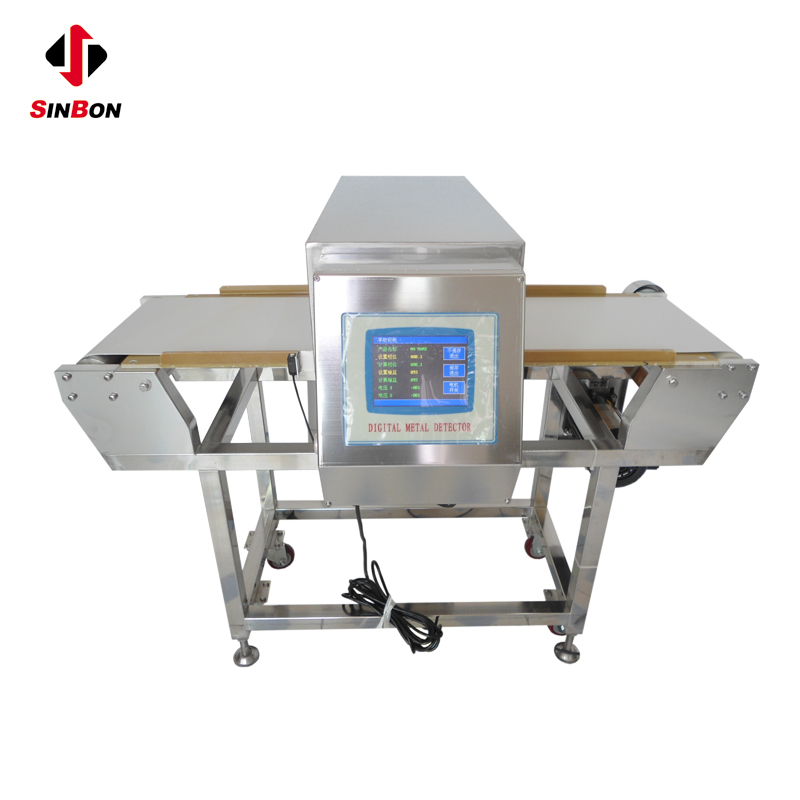
Compliance documentation represents another critical dimension. Detection systems generate verifiable records demonstrating due diligence in contamination prevention—essential evidence during regulatory audits and third-party certifications. The full stainless steel construction and pharmaceutical-grade contact materials provide the material traceability required by HACCP, GMP, and export certification bodies.
Strategic Selection Criteria
When evaluating metal detection solutions, processors should prioritize several key factors beyond initial equipment cost. Detection sensitivity must align with product characteristics and contamination risk profiles. Conveyor dimensions—both width and height—must accommodate product sizes while maintaining optimal detection performance. Rejection mechanisms should match production speeds and physical space constraints.
Long-term operational reliability deserves particular emphasis. Equipment designed for extended lifecycles reduces replacement frequency, minimizes unplanned downtime, and preserves institutional knowledge among operators. Systems requiring minimal specialized training and maintenance support lean manufacturing principles by reducing dependency on external technical resources.
Environmental adaptability also merits consideration. Food processing environments subject equipment to temperature extremes, moisture exposure, and aggressive cleaning chemicals. Detection systems must withstand these conditions without performance degradation or accelerated component failure.
Future-Oriented Food Safety
As global supply chains grow more complex and regulatory scrutiny intensifies, metal detection technology continues evolving. Advanced signal processing algorithms improve discrimination between genuine threats and benign product effects. Enhanced connectivity enables integration with plant-wide data systems, supporting predictive maintenance and quality trend analysis.
For manufacturers committed to product safety, equipment protection, and regulatory compliance, metal detection represents not merely a quality control checkpoint but a strategic operational asset. Selecting systems engineered for longevity, operational simplicity, and consistent performance establishes the foundation for sustainable food safety management across production lifecycles measured in decades rather than years.
https://www.sinbon.hk
Hongkong SINBON Industrial Limited -
AuthorPosts

- You must be logged in to reply to this topic.