- This topic is empty.
-
AuthorPosts
-
06/05/2026 at 14:08 #7595
Introduction
In modern agrochemical research and environmental chemistry, understanding the fate of herbicides after application is just as important as studying their effectiveness. One compound that plays a significant role in this field is Pyridate Metabolite (CAS 40020-01-7).
This compound is not a primary active pesticide but rather a degradation product of the herbicide Pyridate, making it highly relevant in environmental monitoring, residue analysis, and toxicological studies. As regulatory standards for agricultural chemicals become increasingly strict, metabolites like Pyridate Metabolite have become essential reference materials for laboratories worldwide.
This article provides a comprehensive overview of Pyridate Metabolite, including its chemical properties, formation pathway, analytical importance, applications, and significance in modern pesticide research.
What Is Pyridate Metabolite?
Pyridate Metabolite (CAS 40020-01-7) is a pyridazinone derivative compound formed during the breakdown of the herbicide Pyridate in environmental or biological systems.
Pyridate itself is a selective post-emergence herbicide used to control broadleaf weeds in crops such as rice, cereals, and maize. After application, it undergoes hydrolysis and metabolic transformation in soil, plants, and water systems. During this degradation process, several intermediate and final products are formed—one of the most important being Pyridate Metabolite.
From a chemical perspective, it belongs to the heterocyclic aromatic compound class, characterized by a pyridazinone ring structure with chlorine and other functional groups that influence its stability and reactivity.
Chemical Identity and Properties
Understanding the chemical nature of Pyridate Metabolite is essential for its use in laboratory analysis.
-
CAS Number: 40020-01-7
-
Molecular Formula: C₁₀H₇ClN₂O
-
Molecular Weight: Approximately 206.63 g/mol
-
Chemical Class: Pyridazinone derivative
-
Appearance: Typically solid crystalline form (depending on purity and supplier conditions)
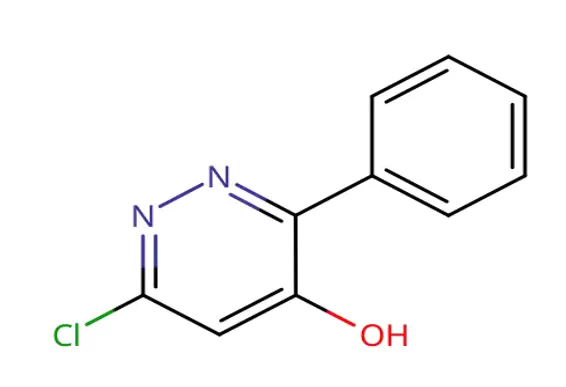
The structure includes:
-
A chlorinated aromatic system
-
A nitrogen-containing heterocycle
-
A carbonyl functional group contributing to its reactivity
These structural characteristics make it suitable for analytical detection and mass spectrometry studies.
Formation Pathway of Pyridate Metabolite
To understand Pyridate Metabolite, it is important to examine how it is formed.
1. Application of Pyridate Herbicide
Pyridate is applied to agricultural fields to control unwanted weeds. Once sprayed, it interacts with plant tissues and soil microorganisms.
2. Hydrolysis Reaction
In moist soil and plant environments, Pyridate undergoes rapid hydrolysis, breaking down its original ester structure.
3. Formation of Intermediate Compounds
During this breakdown, intermediate compounds are produced. These intermediates undergo further oxidation, dechlorination, and rearrangement.
4. Generation of Pyridate Metabolite
Eventually, stable degradation products such as Pyridate Metabolite are formed. These molecules can persist in soil or water systems for varying durations depending on environmental conditions.
This metabolic pathway is crucial for understanding:
-
Environmental persistence
-
Toxicity potential
-
Regulatory compliance in pesticide usage
Why Pyridate Metabolite Matters in Research
Although it is not an active herbicide itself, Pyridate Metabolite plays a significant role in scientific research and regulatory science.
1. Environmental Residue Monitoring
One of the most important applications is in tracking pesticide residues in:
-
Soil samples
-
Groundwater
-
Agricultural runoff
-
Plant tissues
By detecting Pyridate Metabolite, researchers can evaluate how long Pyridate remains active in the environment.
2. Toxicology Studies
Metabolites often behave differently from parent compounds. Pyridate Metabolite is studied to determine:
-
Potential toxicity to aquatic organisms
-
Soil microbial impact
-
Human exposure risk through food chains
Understanding metabolites helps regulators define safe usage limits for Pyridate-based herbicides.
3. Regulatory Compliance Testing
Government agencies such as the EPA and EFSA require detailed metabolite profiling for pesticide approval.
Pyridate Metabolite is used as a:
-
Reference standard
-
Calibration compound in chromatographic analysis (HPLC, GC-MS)
4. Analytical Chemistry Applications
In laboratories, this compound is widely used for:
-
Method development in pesticide residue analysis
-
Mass spectrometry calibration
-
Identification of degradation pathways
Its known molecular structure makes it a reliable analytical reference.
Importance in Pesticide Degradation Studies
The study of pesticide metabolites like Pyridate Metabolite is essential for building a complete environmental profile of agrochemicals.
Researchers focus on:
-
Half-life of Pyridate in different soils
-
Degradation kinetics under sunlight (photolysis)
-
Microbial breakdown mechanisms
-
Interaction with water systems
By analyzing Pyridate Metabolite, scientists can map the full lifecycle of Pyridate from application to final degradation products.
Role in Environmental Safety Assessment
Environmental safety assessments rely heavily on metabolite identification.
Pyridate Metabolite helps answer critical questions such as:
-
Does the herbicide leave persistent residues?
-
Are breakdown products more or less toxic than the parent compound?
-
How does it behave in aquatic ecosystems?
Such data is essential for:
-
Agricultural policy decisions
-
Crop safety regulations
-
Environmental protection standards
Laboratory Use and Reference Standard Applications
In practical laboratory environments, Pyridate Metabolite is commonly supplied as a high-purity analytical reference standard.
Typical uses include:
-
Calibration of chromatographic instruments (HPLC, LC-MS/MS)
-
Quantitative residue analysis
-
Method validation for pesticide detection
-
Quality control in agrochemical testing
Because of its stability and well-defined structure, it is ideal for reproducible analytical results.
Storage and Handling Considerations
Like most heterocyclic analytical compounds, Pyridate Metabolite should be handled under controlled conditions:
-
Store in a cool, dry environment
-
Avoid exposure to strong light and moisture
-
Use sealed containers to prevent contamination
-
Follow standard laboratory safety procedures
Proper storage ensures long-term stability and accurate analytical performance.
Market Demand and Industrial Relevance
The demand for Pyridate Metabolite has increased in recent years due to:
-
Stricter global pesticide residue regulations
-
Expansion of food safety testing laboratories
-
Growth in environmental monitoring industries
-
Increased research in agrochemical degradation pathways
Suppliers typically provide this compound in:
-
Milligram to gram scale packaging
-
Analytical grade purity (≥95% or higher)
-
Custom synthesis for research applications
Conclusion
Pyridate Metabolite (CAS 40020-01-7) is far more than a simple chemical compound. It is a critical component in understanding how the herbicide Pyridate behaves in the environment after application.
From pesticide degradation studies to environmental monitoring and regulatory compliance, this compound plays an essential role in modern agrochemical science. Its importance continues to grow as global attention shifts toward safer and more sustainable agricultural practices.
For laboratories, research institutions, and agrochemical companies, Pyridate Metabolite remains a valuable analytical standard that helps bridge the gap between chemical application and environmental impact assessment.
https://www.rlavie.com/industry/pyridate-metabolite-cas-40020-01-7-herbicide-standard-compound.html
rlavie -
-
AuthorPosts

- You must be logged in to reply to this topic.