- This topic is empty.
-
AuthorPosts
-
04/08/2026 at 22:41 #8503
The Hidden Cost of Single-Channel Resistivity Surveys in Mining Operations
Mineral exploration teams working on gold, iron, and copper deposits routinely face a difficult trade-off: subsurface characterization must be thorough enough to guide drilling decisions, yet field time and equipment logistics constrain how much data can realistically be collected. When resistivity surveys rely on single-channel acquisition, every additional electrode configuration adds hours to the field schedule. This is the operational reality that makes multichannel ERT systems for mining a critical consideration for exploration and geotechnical teams evaluating new equipment.
Electrical Resistivity Tomography (ERT) has long been a standard geophysical method for mapping subsurface structures, ore bodies, and geological discontinuities. However, the value of ERT data depends heavily on acquisition speed and spatial density. In mining environments—where terrain access is often limited and survey windows are narrow—the choice between single-channel and multichannel acquisition directly affects project timelines and data resolution.
Why Acquisition Speed Matters in Ore Body Delineation
How does slow data acquisition affect mining exploration outcomes?
Traditional single-channel electrical resistivity systems collect one measurement configuration at a time, requiring sequential electrode switching across the survey line. In mining exploration, where survey grids can span large areas with complex geology, this sequential process compounds quickly. Each additional survey line or depth profile adds proportionally more field hours, increasing labor costs and exposing crews to longer periods in potentially hazardous or remote terrain.
Beyond time cost, slower acquisition introduces a secondary risk: environmental and instrumental drift during extended survey sessions can affect data consistency. Temperature shifts, ground contact resistance changes, and power source fluctuations over a multi-hour survey window can introduce subtle inconsistencies that complicate later 3D inversion modeling. For mining applications where subsurface targets—such as ore veins or fault zones—require precise spatial resolution, these inconsistencies can translate into ambiguous or lower-confidence subsurface models.
The Role of Multichannel Acquisition in Addressing Field Efficiency
Multichannel electrical resistivity systems address this challenge by acquiring data across multiple channels simultaneously rather than sequentially. A 10-channel acquisition architecture, for example, allows independent, parallel data collection at multiple electrode configurations within a single survey pass. According to documented performance metrics, this approach increases field test efficiency by 2 to 3 times compared to single-channel devices—a meaningful reduction in survey duration for large-scale mining exploration projects.
This efficiency gain is particularly relevant for advanced survey types required in mining geophysics, including three-dimensional Electrical Resistivity Tomography (3D ERT) and high-power Induced Polarization (IP) mid-gradient cross-sectional profiling. 3D ERT modules extend traditional 2D resistivity imaging into volumetric subsurface models, which is essential for characterizing complex ore body geometries that do not follow simple linear trends. High-power IP mid-gradient profiling, meanwhile, supports differentiation between mineralized and non-mineralized zones based on chargeability contrasts—an important capability for mining teams narrowing down drilling targets.
Technical Solution Framework: Supporting Infrastructure for Multichannel Surveys
Multichannel ERT acquisition places higher demands on supporting field infrastructure, particularly power delivery. Large-scale IP surveys in mining contexts often require sustained high-voltage or high-wattage output to maintain signal strength across extended electrode arrays. Power systems rated for 450W output supporting up to 450V, and higher-capacity systems rated at 5000W, are designed specifically to meet the demands of large-scale induced polarization surveys where insufficient voltage would otherwise limit exploration depth or data quality.
Data management is the second infrastructure layer that determines whether faster acquisition translates into usable results. A centralized data management platform that integrates directly with acquisition hardware allows field teams to process resistivity and IP data without exporting to disparate software tools mid-survey. This streamlined workflow reduces the risk of data handling errors and supports more consistent inversion modeling once field data is brought back for analysis.
Value Demonstration: What Faster, Higher-Resolution Data Means for Mining Projects
When does the efficiency gain from multichannel ERT systems matter most?
The practical value of multichannel acquisition becomes most apparent in projects involving large survey grids, deep-strata targets, or time-constrained field windows—conditions common to mining exploration across gold, iron, and copper prospects. A system supporting deep-strata exploration to depths of 1,300 meters, for instance, extends the range of subsurface targets that can be characterized without switching to alternative geophysical methods, consolidating survey requirements into a single equipment set.
For exploration teams and geophysical service providers operating across varied terrain—hilly, remote, or logistically constrained sites—the combination of multichannel acquisition, 3D ERT support, and integrated data management directly addresses the core pain points of manual, single-channel surveying: high labor intensity, extended field time, and inconsistent data reliability in challenging environments.
Industry Implication: Multichannel ERT as a Baseline Expectation
As mining exploration budgets face increasing scrutiny and survey windows continue to narrow due to permitting and seasonal access constraints, the case for multichannel ERT systems for mining shifts from a competitive advantage to an operational baseline. Exploration teams evaluating geophysical equipment should weigh not only channel count but also how well acquisition hardware integrates with power infrastructure and data processing workflows.
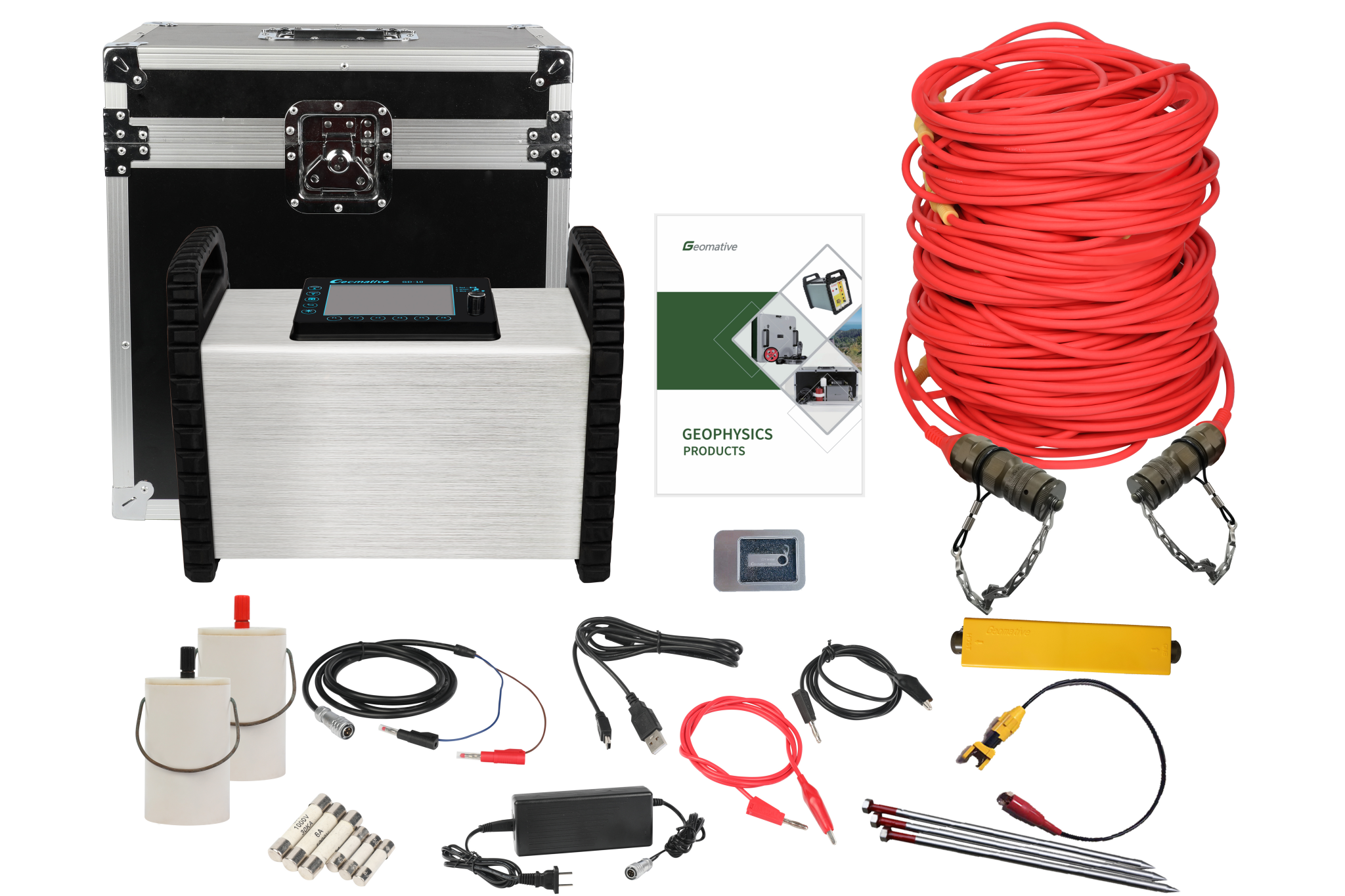
Looking ahead, the broader trend in geophysical exploration points toward tighter integration between hardware acquisition speed and downstream inversion modeling capability. For mining operators, this means that the value of multichannel ERT systems will increasingly be measured not just by how fast data is collected, but by how reliably that data supports confident drilling and resource decisions.
https://www.geomative.com/
Geomative Co., Ltd. -
AuthorPosts

- You must be logged in to reply to this topic.