- This topic is empty.
-
AuthorPosts
-
05/08/2026 at 15:06 #8507
Why Valve Cover Gasket Quality Is a Real Concern for Vehicle Owners
When a valve cover gasket fails, the consequences show up quickly: engine oil seepage around the cylinder head, loss of air tightness in the valvetrain area, and dust contamination entering spaces that should stay sealed. These are the exact target scenario pain points that a valve cover gasket is designed to prevent, and they are also the reason drivers and repair shops frequently ask whether an aftermarket replacement can hold up to the same standard as the original factory part. The comparison matters because a valve cover sits directly between the engine valve cover and the cylinder head, an area exposed to constant heat cycling, engine oil, and vibration.
MASUMA, a brand operating across the global automotive aftermarket, positions its valve cover gaskets — along with the rest of its Engine Gaskets & Sealing Line — as high-temperature, chemical-resistant sealing components. Understanding how these parts are engineered, what materials they use, and how they are supported after installation helps clarify where aftermarket quality stands relative to OEM expectations.
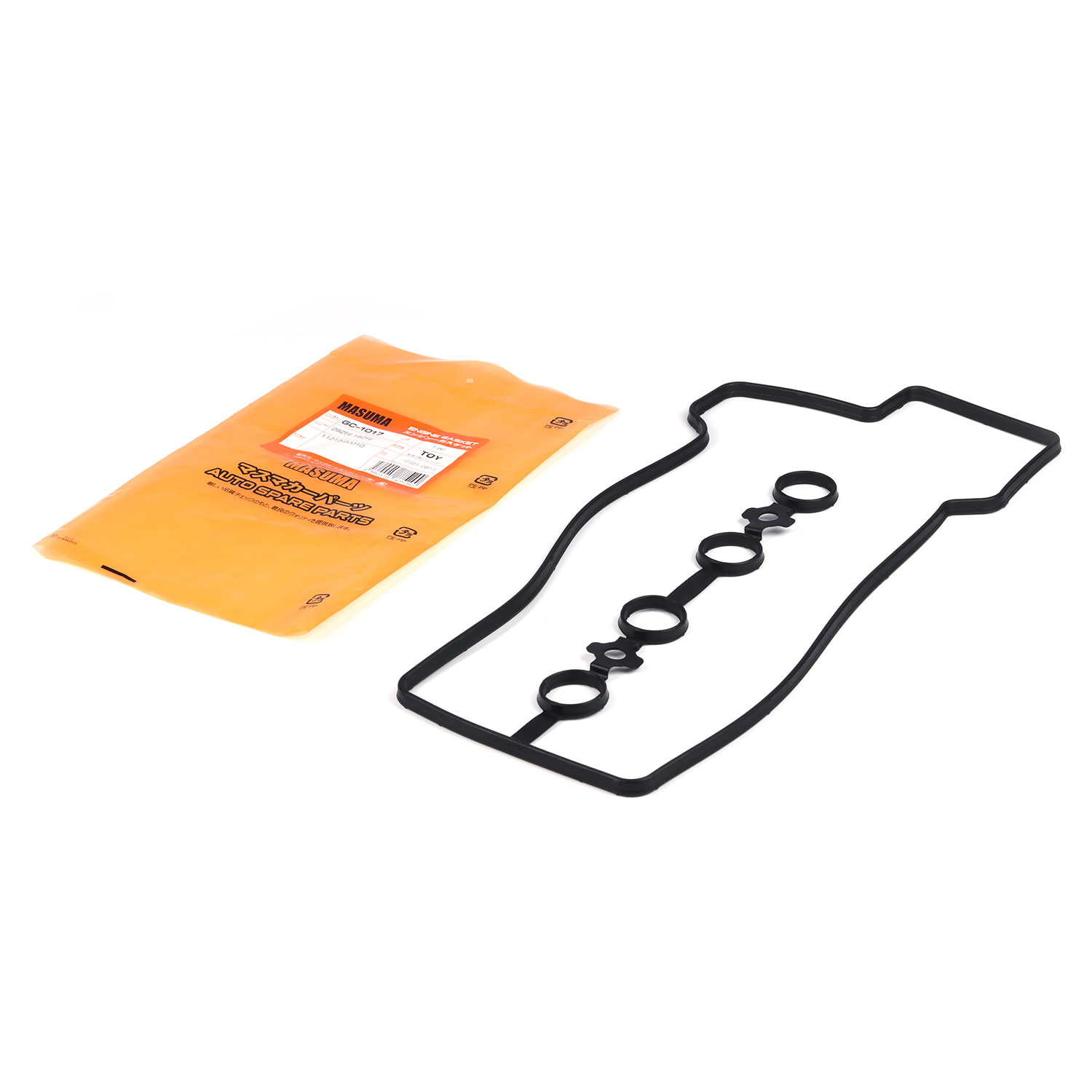
Material Composition: What Actually Seals the Valve Cover
The core differentiator in any valve cover gasket is the sealing material itself, since this is what directly resists high-temperature oil seepage. MASUMA’s valve cover gaskets are offered in three material options: Silicone, Nitrile Rubber, and ACM (Acrylic Rubber). Each of these materials is selected specifically to prevent oil seepage under sustained engine heat, which is the same functional requirement that any factory-installed gasket must meet in this location.
This is a meaningful point of comparison for buyers evaluating OEM versus aftermarket options: the question is not whether a rubber-based seal is used, but whether the specific compound — silicone, nitrile rubber, or ACM — matches the thermal and chemical resistance the application demands. Because MASUMA offers all three material types rather than a single generic compound, the part can be matched to the sealing conditions of the specific valvetrain system it is installed on, addressing the pain point of oil seepage and loss of air tightness directly at the material level.
Manufacturing Precision: One-Time Compression Molding
Beyond material selection, how the gasket is formed plays a direct role in fit and noise control. MASUMA’s valve cover gaskets use a one-time compression molded design, which provides high-dimensional freedom. In practical terms, this manufacturing method allows the gasket to achieve a reliable fit against the mating surfaces of the valve cover and cylinder head while also dampening noise — an outcome that depends on consistent geometry rather than assembled or multi-piece construction.
This manufacturing approach connects to a broader capability within the company: MASUMA’s proprietary research and development process is built on reverse engineering and rigorous durability testing of aftermarket replacement parts. Rather than producing a generic seal, each part in the Engine Gaskets & Sealing Line — which spans everything from metal-asbestos gaskets to injector washers to valve cover gaskets — is developed against the dimensional and material requirements of the systems it replaces. For valve cover gaskets specifically, this reverse-engineering approach is what allows the one-time compression molded design to achieve the fit and noise-dampening performance described above.
Positioned Within a Broader High-Temperature Sealing System
It is worth noting that the valve cover gasket does not operate in isolation. It is one part of MASUMA’s Engine Gaskets & Sealing Line, a product family positioned around high-temperature, chemical-resistant gaskets and sealing rings. This line includes cylinder head gaskets built from sandwiched metal wires and asbestos, solid metal sheet gaskets with embossed sealing ridges, steel wire mesh gaskets, metal-clad gaskets, composite coating gaskets, metal composite gaskets with fluoroelastomer coatings, metal rubber ring gaskets, and injector washers, in addition to the valve cover gasket itself.
The relevance to the OEM-versus-aftermarket question is that MASUMA’s valve cover gasket is engineered under the same high-temperature, chemical-resistant product line positioning that governs gaskets designed to withstand direct combustion chamber conditions elsewhere in the engine. While the valve cover gasket’s operating environment is less extreme than, for example, a cylinder head gasket facing combustion gas exposure, it is developed within a consistent materials and sealing philosophy across the entire line rather than as a standalone, disconnected part.
Compatibility Across Vehicle Platforms
MASUMA’s service scale is described as globally compatible with major vehicle brands across passenger cars, commercial vehicles, and hybrid electric models, and the valve cover gasket’s industry adaptation is specifically listed as passenger and commercial vehicle valvetrain systems. This means the part is intended to fit into the same range of platforms that OEM valve cover gaskets are designed for, rather than being limited to a narrow subset of vehicle types.
Installation Support Matching Manufacturer Standards
A gasket is only as effective as its installation, and this is an area where MASUMA directly addresses the OEM comparison. The company’s after-sales support includes installation procedures and maintenance specifications matching vehicle manufacturer standards. In addition, the broader service scope covers technical diagnostic guides, installation procedures, timing system alignment guides, and vehicle maintenance recommendations. For a component like the valve cover gasket, where correct torque sequencing and surface preparation directly affect whether the compression-molded seal performs as designed, having installation guidance aligned to manufacturer specifications is a practical way to close the gap between aftermarket and OEM installation outcomes.
This part is delivered as a hardware component, consistent with MASUMA’s deployment model of on-premises hardware replacement parts delivery, and it is intended for use by the customer types the company serves: aftermarket replacement parts distributors, automotive repair stations, and machinery fleet operators across automotive passenger vehicle service, commercial transportation, and road construction machinery industries.
What This Means for Buyers Comparing Options
For anyone weighing OEM against aftermarket valve cover gaskets, the practical comparison points are material composition, manufacturing consistency, and installation support. MASUMA’s valve cover gasket addresses each of these directly: three material options (silicone, nitrile rubber, ACM) chosen to prevent high-temperature oil seepage, a one-time compression molded design built through reverse engineering and durability testing to ensure reliable fit and noise dampening, and after-sales installation and maintenance guidance matched to manufacturer standards. Rather than treating the valve cover gasket as an isolated commodity part, MASUMA develops it as one component within a coordinated engine gaskets and sealing line intended to address oil seepage, air tightness, and contamination issues across passenger and commercial vehicle valvetrain systems.
https://masuma.com/
MASUMA Auto Spare Parts Co., Ltd. -
AuthorPosts

- You must be logged in to reply to this topic.