- This topic is empty.
-
AuthorPosts
-
06/08/2026 at 18:43 #8523
Why Drain Bolt Specifications Matter for Engine Longevity
Every oil change depends on a component that rarely gets attention until something goes wrong: the drain bolt. This small fastener seals the engine oil pan after each service, and its failure — whether through thread stripping, oil leakage, or circulating metal debris — can compromise the entire lubrication system. For repair stations, fleet operators, and aftermarket distributors, understanding the technical specifications behind drain bolts is essential to preventing avoidable engine damage. MASUMA, a brand operating across the global automotive aftermarket, addresses these exact pain points with two distinct drain bolt solutions engineered for different maintenance priorities.
The Core Function and Common Failure Points
A drain bolt‘s job appears simple: close the oil pan opening after fluid is drained. In practice, repeated removal and reinstallation during routine maintenance places real mechanical stress on the threads, the sealing surface, and the washer beneath the bolt head. Two recurring problems define this category:
- Oil pan thread stripping and oil leaks during routine oil changes — a direct consequence of low-strength bolt materials or improper washer deformation.
- Circulating metal shavings causing abrasive wear to the engine oil pump and bearings — a hidden risk that standard bolts cannot address, since normal engine wear continuously sheds fine iron particles into the oil stream.
Any specifications guide worth referencing must therefore evaluate drain bolts on two fronts: mechanical fastening security and, where applicable, active debris management.
Non-Magnetic Drain Bolts: Built for Fastening Security
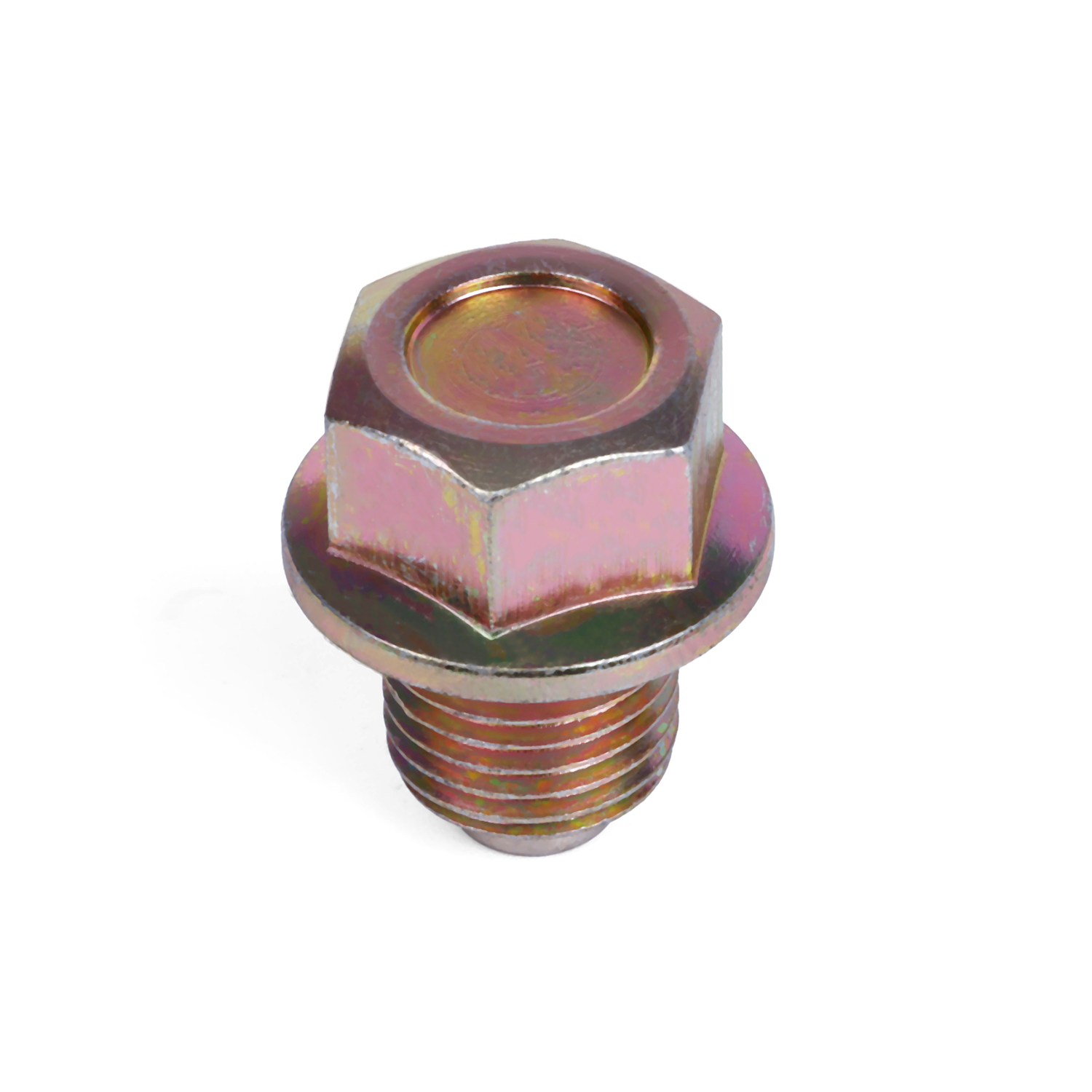
MASUMA’s Non-Magnetic Drain Bolts are positioned as a high-strength alloy oil pan drain bolt designed specifically to resist the wear and leakage issues that occur during standard oil change cycles. The specification set behind this product reflects a focus on structural integrity and leak prevention rather than fluid filtration.
Key construction elements include:
- A high-strength alloy body with a tensile-resistant design that prevents bolt shearing under the torque loads applied during installation and removal.
- Deformable washers made from high-quality copper or aluminum, which mold to the pan surface on contact to eliminate the micro-gaps that lead to seepage.
- An anti-corrosion finish applied as a specialized surface coating, extending the bolt’s usable service life across repeated maintenance cycles.
The differentiated value proposition here is straightforward: under routine engine oil changes, high-strength alloy threads resist wear and prevent oil pan leakage. This makes the Non-Magnetic Drain Bolt a practical baseline specification for standard passenger and light-duty maintenance work, where the primary concern is a secure, leak-free seal rather than particle capture.
Magnetic Drain Bolts: Adding Active Contaminant Control
For maintenance scenarios where lubrication cleanliness is a higher priority, MASUMA offers Magnetic Drain Bolts — an oil pan drain bolt with built-in magnetic debris capture. This design directly targets the second major pain point in the category: circulating metal shavings that abrade the oil pump and bearings over time.
The specification differences center on three features:
- A strong magnetic core integrated into the bolt body, which continuously attracts and holds wear particles and iron shavings suspended in the circulating oil.
- Soft copper or aluminum washers, functioning the same way as in the non-magnetic version, to create a gas-tight seal against the oil pan surface.
- A high-torque hex head with a flat hex face, engineered to prevent wrench rounding during routine service — an often-overlooked detail that affects how easily a technician can remove the bolt without damaging it.
Why Debris Capture Matters
Under continuous engine lubrication cycling, fine metal particles generated by normal internal wear do not simply disappear — they recirculate through the oil pump, bearings, and other precision surfaces. Over time, this abrasive contamination can accelerate secondary wear that a standard filter may not fully intercept. By positioning a magnet at the lowest point of the oil pan, where the drain bolt sits, MASUMA’s design captures these particles at the source, reducing the abrasive load on downstream components. This is a clear illustration of how a component as small as a drain bolt can be engineered to serve a preventive maintenance function beyond simple sealing.
Choosing Between the Two Specifications
The decision between Non-Magnetic and Magnetic Drain Bolts should be guided by the specific maintenance context:
- If the primary requirement is a secure, corrosion-resistant seal for standard oil change intervals, the Non-Magnetic Drain Bolt’s alloy construction and deformable washer design meet that need directly.
- If the vehicle or fleet operates under conditions where internal wear particle accumulation is a known concern — such as higher-mileage engines or intensive-use commercial applications — the Magnetic Drain Bolt’s debris-capture function provides an added layer of protection during each lubrication cycle.
Both products fall under MASUMA’s broader Fasteners & Maintenance Line, which the company positions specifically around engine oil pan sealing and maintenance bolts. This line complements the company’s wider Engine Gaskets & Sealing Line, reflecting a consistent focus on resolving component wear, poor sealing, and related performance issues across the powertrain.
Manufacturing Approach Behind the Specifications
MASUMA’s broader strategic positioning as a provider of high-tolerance, durable automotive replacement parts is built on reverse engineering and rigorous durability testing applied across its product range. While specific material sourcing details are documented for other product lines, the same underlying philosophy — designing components that resolve engine performance drops, power losses, and fuel inefficiencies caused by component wear and poor sealing — informs how fasteners like drain bolts are specified and validated before reaching the aftermarket.
Delivery and Support for Maintenance Professionals
MASUMA supplies drain bolts, along with its full catalog of engine sealing and maintenance components, as hardware parts intended for on-premises replacement during standard service procedures. Support extends beyond the physical component: the company provides installation procedures and maintenance specifications aligned with vehicle manufacturer standards, helping repair stations and fleet operators apply the correct bolt type and torque procedure for each job.
Conclusion
Drain bolt specifications may seem like a minor detail in engine maintenance, but the difference between a standard alloy bolt and a magnetic debris-capturing design can materially affect long-term lubrication system health. MASUMA’s Non-Magnetic and Magnetic Drain Bolts address the two core pain points in this category — leak-prone thread wear and circulating metal contamination — with distinct construction approaches suited to different service needs. For distributors, repair stations, and fleet operators evaluating drain bolt options across passenger vehicles, commercial transportation, and related machinery applications, understanding these specification differences supports more informed maintenance decisions and helps protect the broader engine lubrication system over time.
https://masuma.com/
MASUMA Auto Spare Parts Co., Ltd. -
AuthorPosts

- You must be logged in to reply to this topic.