- This topic is empty.
-
AuthorPosts
-
13/08/2026 at 11:15 #8600
The marine propulsion sector is rapidly moving toward electrification, intelligent systems, and cleaner energy solutions. One of the most notable developments is the 300-horsepower electric outboard motor, which is designed to deliver high levels of propulsion for larger boats, commercial vessels, and performance-oriented yachts.
While the power output of a 300 HP electric outboard is impressive, selecting the right system involves much more than comparing horsepower figures. Vessel design, battery capacity, charging conditions, thermal control, intelligent navigation, and after-sales support can all affect the actual performance and reliability of the propulsion system.
Below are ten important aspects buyers should examine before choosing a high-power electric outboard motor.
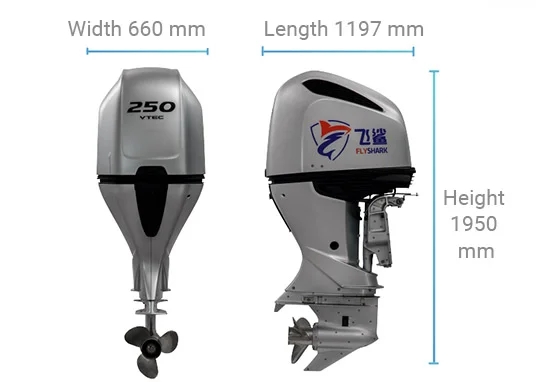
1. Match the Motor to the Vessel
Before considering any specific motor, determine whether the boat is suitable for a 300 HP electric propulsion system. The vessel's hull configuration, displacement, transom strength, passenger and cargo load, and intended operating speed all have a direct influence on propulsion requirements.
A motor that is too powerful for a vessel may add unnecessary weight and energy consumption, while an undersized system may struggle to provide the desired acceleration and cruising performance.
It is therefore important to assess the boat's resistance characteristics and operating conditions before finalizing the motor specification.
2. Evaluate the Battery and Energy Storage System
Electric propulsion depends heavily on the quality and capacity of its energy storage system. A 300 HP motor requires a high-voltage battery solution capable of delivering sufficient power consistently.
A complete energy system may include:
-
High-voltage lithium battery packs
-
Battery management systems
-
Thermal control equipment
-
Electrical protection and safety circuits
-
High-power charging systems
Battery capacity should be selected according to the vessel's operating profile rather than simply choosing the largest available battery. Proper system matching can improve efficiency while avoiding unnecessary weight.
3. Consider Cruising Range and Endurance
Range is one of the biggest concerns when switching from conventional marine engines to electric propulsion. The actual distance a vessel can travel depends on several variables, including battery capacity, cruising speed, vessel weight, weather, water conditions, and operating habits.
For example, maintaining maximum speed for extended periods can consume considerably more energy than operating at an efficient cruising speed.
Buyers should therefore establish realistic operating scenarios before selecting a battery system. Commercial vessels may prioritize endurance, while recreational boats may place greater emphasis on acceleration and peak performance.
4. Look at Intelligent Propulsion Integration
Modern electric propulsion systems are becoming increasingly connected with digital control and navigation technologies. The motor itself is only one component of a broader propulsion system.
Ningbo Flyshark Energy Technology Co., Ltd. develops integrated marine propulsion solutions that combine intelligent navigation, control technologies, autonomous driving functions, and BeiDou satellite positioning.
With this type of integration, operators can monitor propulsion data, manage power output, improve navigation accuracy, and optimize energy consumption during operation. Intelligent control can also provide useful information for maintenance and system diagnostics.
5. Check Charging Requirements
Charging is another major factor that should be considered before purchasing a high-power electric outboard motor.
A 300 HP system can require substantial electrical input, particularly when fast charging is needed. The available power supply at a marina, private dock, commercial facility, or operating base must therefore be evaluated in advance.
Depending on the application, buyers may need to consider:
-
Shore-power availability
-
Charging equipment compatibility
-
Charging time
-
Onboard energy management
-
Future expansion requirements
A well-designed charging solution can make daily operation considerably more convenient.
6. Examine Thermal Management
High-output electric motors and their associated power electronics can generate substantial heat during prolonged operation. Without effective heat dissipation, excessive temperatures may reduce efficiency, affect component life, or trigger protective power limitations.
Professional marine propulsion systems commonly use liquid cooling, temperature monitoring, and intelligent power management to control operating temperatures.
When comparing systems, buyers should look beyond peak power figures and examine how the motor maintains stable performance during continuous high-load operation.
7. Assess Marine Durability
Marine environments are demanding. Saltwater exposure, moisture, vibration, temperature changes, and corrosion can place continuous stress on propulsion equipment.
For this reason, construction quality and environmental protection are particularly important for a 300 HP electric outboard.
Important considerations include:
-
Corrosion-resistant materials
-
Reliable waterproof sealing
-
Vibration and impact resistance
-
Protective surface treatments
-
Long-duration reliability testing
A propulsion system intended for commercial or offshore use should be designed specifically for marine operating conditions rather than simply adapted from a land-based electric drive system.
8. Understand Maintenance and Total Lifecycle Requirements
Electric propulsion generally has fewer mechanical components than conventional combustion propulsion, which can reduce certain routine maintenance requirements. However, it does not mean that the system is maintenance-free.
Instead, maintenance activities shift toward electrical and electronic components. Operators may need to monitor battery condition, inspect cooling systems, check electrical connections, perform software updates, and conduct system diagnostics.
Working with a manufacturer that considers lifecycle reliability during product development can help reduce unexpected downtime and simplify long-term maintenance.
Ningbo Flyshark Energy Technology Co., Ltd. emphasizes system reliability and integrated engineering when developing high-power marine new-energy propulsion solutions.
9. Consider Smart Navigation and Automation
Intelligent navigation is becoming an increasingly important part of advanced marine propulsion. Depending on the system configuration, electric propulsion platforms can be connected with route planning, positioning, remote monitoring, and other automated functions.
Potential capabilities include:
-
Intelligent route planning
-
Navigation optimization
-
Collision avoidance
-
GPS and BeiDou positioning
-
Remote system monitoring
-
Fault diagnosis
These technologies can be particularly useful for commercial fleets, research vessels, patrol applications, and high-end recreational boats.
Automation can also reduce operator workload while helping improve energy management and navigation efficiency.
10. Evaluate the Manufacturer's Engineering Capability
The final consideration is the manufacturer's overall technical and system-integration capability.
A 300 HP electric outboard motor should not be viewed as an isolated propulsion unit. Its performance depends on the interaction between the motor, battery, power electronics, control software, cooling system, navigation equipment, and charging infrastructure.
Ningbo Flyshark Energy Technology Co., Ltd. focuses on high-power marine new-energy intelligent propulsion systems, with an emphasis on efficiency, intelligent control, and sustainable marine transportation. Its approach combines propulsion equipment with intelligent control and navigation technologies to create an integrated operating system.
For buyers, evaluating the manufacturer's engineering team, development experience, system integration capabilities, testing procedures, and long-term technical support can be just as important as evaluating the motor itself.
For more information about a specific solution, see the 300 Horsepower Electric Outboard Motor System.
Conclusion
A 300-horsepower electric outboard motor can provide a powerful alternative for modern marine propulsion, combining high output with electrified operation and intelligent control. However, choosing the right system requires a comprehensive assessment rather than focusing only on rated horsepower.
Vessel compatibility, battery design, operating range, charging infrastructure, thermal management, marine durability, maintenance, navigation functions, and manufacturer expertise all have a direct impact on the final user experience.
By carefully reviewing these ten factors before purchasing, boat owners and commercial operators can select a propulsion solution that better matches their vessel, operating conditions, and long-term requirements.
As marine electrification continues to develop, integrated propulsion systems that combine high power, intelligent management, and energy efficiency are likely to become increasingly important across commercial and recreational marine applications.
http://www.flysharkmarine.com
Ningbo Flyshark Energy Technology Co., Ltd. -
-
AuthorPosts

- You must be logged in to reply to this topic.