- This topic is empty.
-
AuthorPosts
-
17/08/2026 at 14:59 #8639
Behind every premium Custom Logo Moissanite Cuban Link Chain 925 Silver & 10K-20K Gold Options lies a sophisticated manufacturing process that combines advanced technology with skilled craftsmanship. While consumers often focus on sparkle and appearance, professional buyers understand that production quality determines durability, consistency, and long-term value.
From CAD design to final inspection, each manufacturing stage influences the finished product's structural integrity, visual precision, and brand image. Understanding this workflow helps businesses evaluate suppliers more effectively and reduce quality risks in custom jewelry projects.
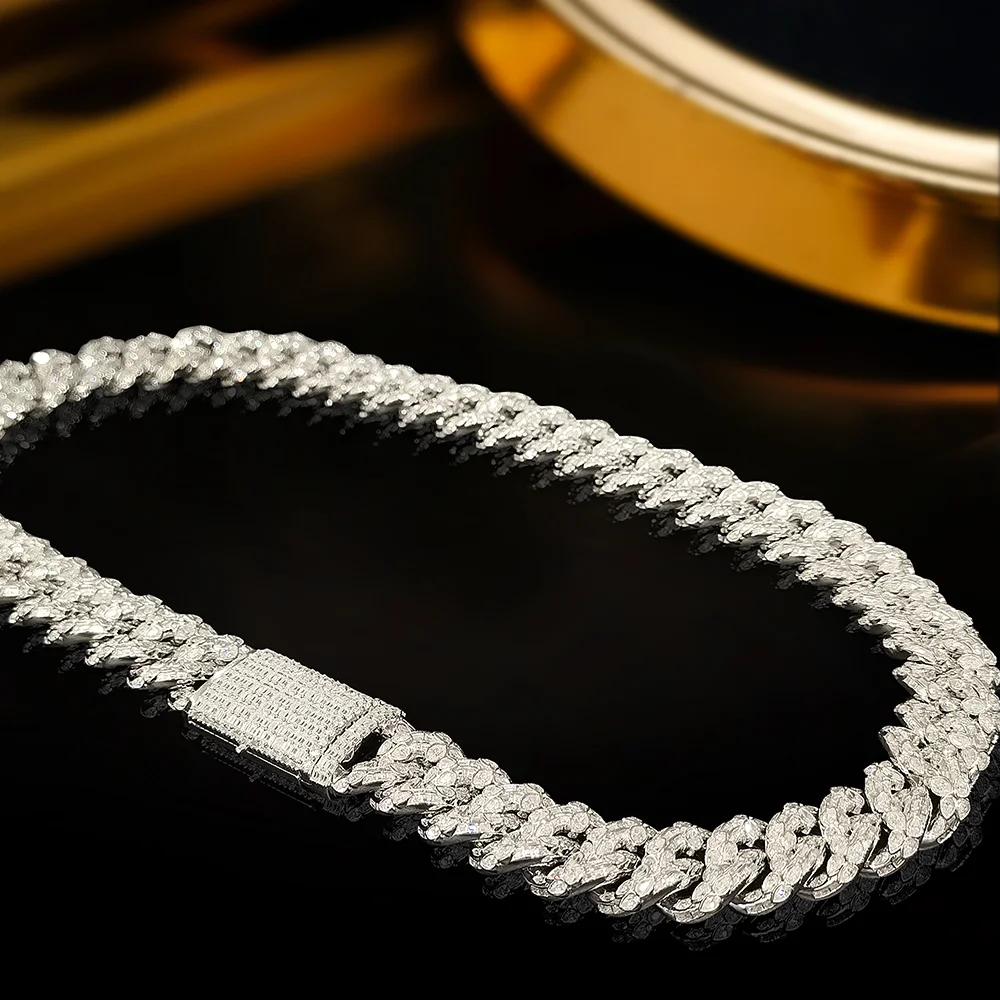
Every Custom Chain Starts with Digital Engineering
The manufacturing process begins long before any metal is cast.
Professional manufacturers use CAD (Computer-Aided Design) software to create a precise three-dimensional model of the chain. Every link, clasp, logo element, and stone position is digitally engineered before production begins.
Digital modeling offers several advantages:
-
Accurate weight estimation
-
Consistent link dimensions
-
Optimized logo placement
-
Stone layout verification
-
Faster design modifications
Customers can review renderings before production, reducing development time and avoiding costly design revisions.
Mold Development Determines Production Consistency
After design approval, high-precision molds are created.
Premium manufacturers typically use CNC-machined master molds combined with advanced casting technology to ensure every chain maintains identical dimensions.
A well-designed mold minimizes:
-
Casting defects
-
Link distortion
-
Surface porosity
-
Material waste
-
Dimensional variation
This becomes especially important for wholesale projects requiring hundreds or thousands of identical pieces.
Choosing the Right Metal for the Application
Different markets require different precious metal options.
925 sterling silver remains one of the most popular materials because it offers excellent machinability, strong polishability, and competitive pricing.
For luxury collections, genuine gold options provide additional market value.
10K gold offers superior hardness and durability.
14K gold balances strength with richer color.
18K gold enhances luxury positioning through higher gold content.
20K gold targets premium customers seeking maximum precious metal value.
Material selection affects production methods, polishing parameters, and final product weight.
Precision Casting Creates Structural Strength
Modern jewelry manufacturers commonly use vacuum casting or lost-wax casting technology.
These processes improve metal density while reducing internal air pockets that could weaken the chain.
Proper casting contributes to:
-
Higher structural integrity
-
Better polishing results
-
Improved stone setting stability
-
More accurate logo reproduction
After casting, every component undergoes trimming and preliminary finishing before assembly.
Moissanite Selection Influences Overall Product Value
Not all moissanite stones offer identical quality.
Professional manufacturers classify stones according to factors including:
-
Cut precision
-
Color consistency
-
Clarity
-
Calibration accuracy
-
Light performance
Accurately calibrated stones simplify setting operations while maintaining uniform sparkle across the entire chain.
High-quality moissanite also demonstrates excellent resistance to heat generated during repair or resizing.
Stone Setting Requires Skilled Craftsmanship
Stone setting remains one of the most labor-intensive production stages.
Experienced technicians carefully position every stone while maintaining consistent spacing and secure prong engagement.
Quality manufacturers often inspect each setting under magnification to identify:
-
Loose stones
-
Uneven prongs
-
Alignment errors
-
Surface scratches
This attention to detail significantly improves long-term durability during daily wear.
Surface Treatment Enhances Appearance and Durability
After assembly, the chain enters the finishing department.
Multiple polishing stages gradually eliminate machining marks while producing a smooth reflective surface.
Electroplating may then be applied depending on customer specifications.
Common finishes include:
-
Rhodium
-
White gold
-
Yellow gold
-
Rose gold
Premium plating processes use controlled thickness to improve color consistency while increasing resistance to tarnishing and abrasion.
Custom Logo Production Requires Exceptional Accuracy
Logo customization often defines the uniqueness of the finished jewelry.
Depending on customer requirements, manufacturers may integrate:
Raised logos
Laser engraving
Deep CNC engraving
3D cast logos
Double-sided branding
Micro-letter engraving
The production process must preserve fine logo details without weakening surrounding metal structures.
Proper quality control ensures branding remains sharp even after polishing.
Comprehensive Quality Inspection Protects Brand Reputation
Before packaging, every chain should undergo a systematic inspection covering multiple criteria.
Inspectors evaluate:
Overall dimensions
Metal purity
Stone security
Surface finish
Logo accuracy
Clasp durability
Weight tolerance
Packaging quality
Many manufacturers also perform manual wear simulations by repeatedly opening clasps and gently flexing chain links to verify structural reliability.
These inspections reduce warranty claims and improve customer confidence.
Efficient Manufacturing Supports Faster Market Response
Fashion trends evolve rapidly, making production speed increasingly important.
Manufacturers with integrated facilities can complete design, casting, stone setting, polishing, plating, and inspection under one roof.
This integrated workflow offers several operational advantages:
-
Better production scheduling
-
Improved quality traceability
-
Faster sample development
-
Reduced logistics costs
-
More consistent product quality
-
-
AuthorPosts

- You must be logged in to reply to this topic.