- This topic is empty.
-
AuthorPosts
-
17/08/2026 at 15:15 #8661
Modern warehouses face increasing pressure to maximize storage capacity while maintaining efficient material handling operations. As supply chains become more complex and inventory volumes continue to grow, traditional storage methods often struggle to provide the flexibility, durability, and space efficiency required by industrial environments.
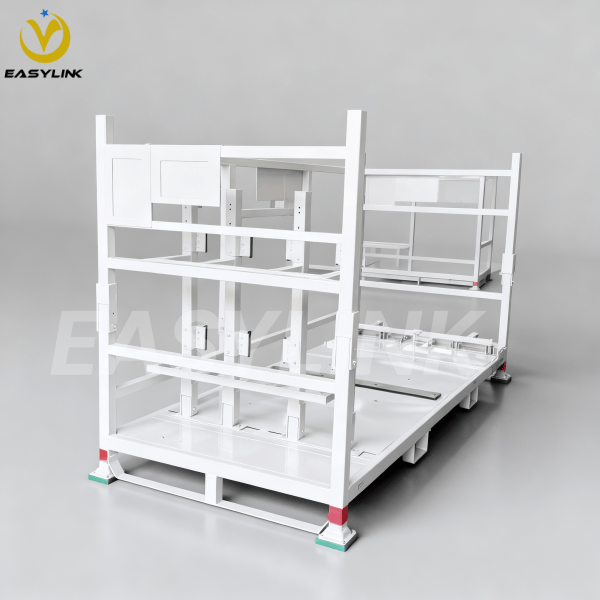
A stackable post stillage for warehouse is designed to address these challenges by providing a reusable, space-saving storage and transportation solution for industrial goods, components, raw materials, and finished products. Compared with fixed shelving systems or disposable packaging solutions, stackable post stillages offer better utilization of vertical space, improved product protection, and greater flexibility for changing warehouse layouts.
For manufacturing plants, logistics centers, automotive suppliers, and distribution facilities, the value of a stackable post stillage is not only measured by storage capacity. Load stability, stacking safety, forklift compatibility, corrosion resistance, and long-term service life directly influence operational efficiency and total cost of ownership.
Maanshan Yilian Storage Technology Co., Ltd. specializes in the design, manufacturing, and export of advanced warehouse equipment, including metal turnover boxes, tire racks, and industrial pallets. With integrated capabilities covering design, production, and customized solutions, the company provides reliable storage systems for global industrial applications.
Why Warehouses Need Stackable Post Stillage Solutions
Warehouse operations require storage systems that can adapt to different products and changing production demands. Conventional storage methods often create several limitations.
Fixed racks require permanent installation space and may not be easily adjusted when product categories change. Wooden pallets provide basic transportation functions but may have limited durability and cannot always support repeated stacking. Disposable packaging increases material waste and replacement costs.
A stackable post stillage provides a reusable alternative by combining storage, transportation, and stacking functions into one structure.
The main advantages include:
Higher vertical space utilization.
Improved organization of materials.
Reduced dependence on disposable packaging.
Better protection during internal transportation.
Easier warehouse management and inventory handling.
For industries with frequent material movement, such as automotive manufacturing, metal processing, machinery production, and logistics operations, stackable stillages create a more efficient material flow system.
Structural Design of Stackable Post Stillage for Warehouse Applications
The performance of a stackable post stillage depends heavily on its structural design. Industrial environments require containers that can withstand repeated loading, stacking pressure, and mechanical handling.
A typical stackable post stillage includes:
A welded steel base frame.
Vertical corner posts for stacking support.
Side panels or mesh structures for product protection.
Forklift entry points for transportation.
Optional removable or foldable components for flexibility.
The vertical posts are one of the most important design elements. They transfer stacking loads from upper units to the lower structure, ensuring stability when multiple stillages are stacked.
A poorly designed post structure may result in deformation, instability, or reduced load capacity during long-term use. Professional manufacturers use optimized steel profiles, reinforced welding points, and precision fabrication processes to improve structural reliability.
Load Capacity and Stacking Stability Considerations
One of the key reasons companies choose stackable post stillages is their ability to maximize warehouse space through vertical stacking.
However, stacking performance depends on several technical factors:
Material thickness.
Steel grade.
Frame reinforcement design.
Welding quality.
Base structure strength.
Load distribution.
For example, a stillage designed for lightweight plastic components may require different specifications compared with one used for automotive parts or heavy mechanical components.
Industrial stackable post stillages are typically engineered according to expected load requirements. Reinforced frames and strong corner posts allow multiple units to be safely stacked without compromising stability.
This capability helps warehouses reduce floor space usage while maintaining organized storage.
Improving Warehouse Efficiency Through Flexible Handling
A major advantage of stackable post stillages is their ability to support multiple handling processes.
In manufacturing environments, materials often move between production lines, storage areas, and shipping departments. A reusable stillage allows products to remain inside the same container throughout different stages of the supply chain.
This reduces unnecessary loading and unloading operations.
For example, in automotive component manufacturing, metal parts can be placed directly into stackable stillages after production. The same units can then be transported by forklift, stored temporarily, and delivered to assembly areas.
Compared with transferring materials between different packaging types, this approach improves efficiency and reduces handling risks.
Stackable Post Stillage Compared with Traditional Storage Methods
Different warehouse storage solutions have different advantages depending on application requirements.
Compared with wooden pallets, stackable post stillages provide higher durability and can withstand repeated industrial use. While pallets are suitable for general transportation, they may not provide sufficient protection for irregular or sensitive components.
Compared with fixed shelving systems, stackable stillages offer greater mobility. Warehouses can quickly adjust storage layouts according to production changes.
Compared with disposable packaging, reusable steel stillages reduce long-term operating costs and environmental impact.
The selection depends on factors such as product dimensions, storage frequency, handling methods, and available warehouse space.
Applications Across Different Industries
Stackable post stillages are widely used across industrial sectors where efficient material handling is essential.
In automotive manufacturing, they are commonly used for storing engine components, stamped metal parts, and assembly materials. The strong steel structure supports heavy loads while protecting components during internal transportation.
In machinery manufacturing, stillages provide organized storage for precision parts, tools, and fabricated components.
In logistics and distribution centers, stackable stillages improve warehouse organization and help optimize space utilization.
In tire and automotive-related industries, specialized storage structures help manage products efficiently while supporting safe handling.
The flexibility of stackable post stillages makes them suitable for both production environments and logistics operations.
Material Selection and Surface Treatment for Long-Term Durability
Warehouse equipment is exposed to demanding conditions, including impacts, humidity, dust, and frequent handling. Therefore, material selection and surface protection are essential.
Steel is widely used because it provides high strength, durability, and load-bearing capability. However, untreated steel may experience corrosion in humid environments.
Professional stackable post stillages often use surface treatments such as powder coating, painting, or other protective finishes to improve corrosion resistance.
The appropriate treatment depends on the operating environment. Indoor warehouses may require standard protection, while outdoor storage or high-humidity environments may require enhanced corrosion resistance.
High-quality surface treatment extends service life and reduces maintenance requirements.
Customization Requirements for Different Warehouse Operations
Every warehouse has different storage challenges. Standardized solutions may not always meet specific operational requirements.
Customization options may include:
Different dimensions based on product size.
Adjustable post heights.
Mesh or solid side panels.
Special forklift configurations.
Foldable designs for return logistics.
Customized labeling or identification systems.
A professional manufacturer should evaluate product characteristics, handling processes, and storage requirements before recommending a suitable design.
Maanshan Yilian Storage Technology Co., Ltd. provides customized warehouse equipment solutions, combining engineering design capabilities with manufacturing expertise to support different industrial applications.
Manufacturing Quality Determines Long-Term Value
Because stackable post stillages are designed for repeated use, manufacturing quality directly affects lifecycle performance.
AuthorPostsViewing 1 post (of 1 total)- You must be logged in to reply to this topic.
