- This topic is empty.
-
AuthorPosts
-
07/09/2026 at 14:45 #8889
Walk into a modern beverage production facility and you will quickly notice that filling and capping are only part of the packaging process. Before bottles are packed into cartons or shipped to distributors, they also need to carry product information, branding, barcodes, regulatory details, and other essential content.
This is where a beverage labeling machine plays an important role.
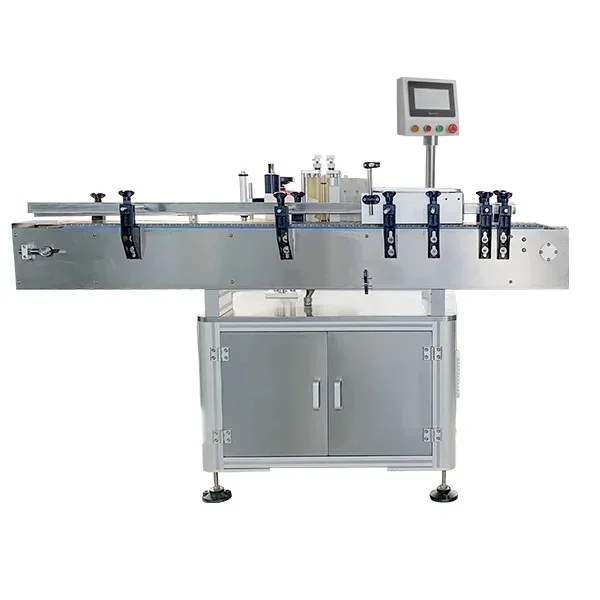
A beverage labeling machine is automated equipment designed to apply labels to beverage containers accurately and consistently. Depending on the machine configuration, it can label bottled water, juice, soft drinks, energy drinks, functional beverages, alcoholic beverages, dairy drinks, and many other packaged products.
But how does a beverage labeling machine actually work?
The basic idea sounds simple: move a bottle into position, apply a label, and move the finished bottle away. In a real production environment, however, several processes have to happen at exactly the right time. Bottles need to be separated and positioned, labels need to be detected and dispensed, the label needs to contact the correct part of the bottle, and the finished product needs to leave the labeling station without disrupting the next bottle.
A modern automatic beverage labeling machine coordinates these operations continuously, allowing manufacturers to achieve faster production and more consistent packaging quality than manual labeling.
What Is a Beverage Labeling Machine?
A beverage labeling machine is a packaging machine used to automatically apply labels to bottles or other beverage containers.
The machine can be configured for different container materials, including PET, glass, HDPE, and other packaging materials. It can also accommodate different bottle sizes and labeling requirements depending on its design.
Common labeling applications include:
-
Bottled water
-
Juice
-
Soft drinks
-
Carbonated beverages
-
Energy drinks
-
Sports drinks
-
Functional beverages
-
Tea and coffee drinks
-
Dairy beverages
-
Wine and other packaged beverages
The type of label applied depends on the product and packaging strategy. Some machines are designed for self-adhesive labels, while others are configured for wrap-around labels, pressure-sensitive labels, or other labeling formats.
The main purpose is not simply to attach a label to a bottle. A well-designed beverage bottle labeling machine needs to apply every label at a consistent position while maintaining the required production speed.
For beverage manufacturers, this consistency matters because labeling is directly connected to product appearance and brand presentation.
Why Do Beverage Manufacturers Need Automatic Labeling?
Manual labeling may be acceptable for very small production volumes, but it becomes difficult to maintain as output increases.
Imagine a beverage factory producing several thousand bottles per hour. Employees would need to pick up each bottle, position it correctly, apply the label, check its placement, and move it to the next stage.
Even if workers perform these tasks carefully, the results may vary.
Some labels could be slightly crooked. Others could be positioned too high or too low. Production speed could also fluctuate because human operators naturally work at different speeds.
An automatic beverage labeling machine addresses these problems by standardizing the labeling process.
Once the machine is properly adjusted, it can repeatedly perform the same sequence:
-
Detect the incoming bottle.
-
Position or stabilize the bottle.
-
Feed the label.
-
Apply the label to the designated surface.
-
Press the label firmly against the container.
-
Verify or control the labeling process.
-
Transfer the finished bottle to the next production stage.
This creates a much more predictable packaging process.
How Does a Beverage Labeling Machine Work?
Although machine designs vary, most automatic labeling systems follow a similar basic workflow.
Step 1: Bottles Enter the Conveyor
The process starts when bottles enter the labeling machine through a conveyor system.
In a complete beverage production line, bottles normally arrive from an upstream process such as filling and capping. The conveyor transports them toward the labeling station at a controlled speed.
The machine needs to maintain appropriate spacing between bottles.
If two bottles arrive too close together, the labeling system may not have enough time to apply the labels correctly. If the spacing is too large, production capacity may be reduced.
Therefore, bottle spacing is an important part of the overall labeling process.
Step 2: The Machine Detects the Bottle
Once a bottle reaches the labeling area, a sensor detects its presence.
Depending on the machine design and bottle characteristics, different types of sensors may be used.
The sensor sends a signal to the control system, telling the machine that a bottle is ready for labeling.
This seemingly simple step is extremely important.
The label must be released at the correct moment. If the timing is too early or too late, the label may be placed incorrectly.
For transparent PET bottles or unusual bottle shapes, sensor selection and positioning may require additional attention.
Step 3: The Bottle Is Stabilized
Before the label is applied, the bottle needs to remain stable.
This is particularly important for lightweight PET bottles or containers with unusual shapes.
Depending on the application, a bottle labeling machine may use guide rails, side belts, rollers, star wheels, or other positioning components.
The purpose is to keep the bottle moving along a predictable path.
For round bottles, the machine may also rotate the container during wrap-around labeling.
For square or rectangular bottles, the system may need to maintain a specific orientation so that the label is applied to the correct panel.
Step 4: The Label Is Fed from the Label Roll
The labeling machine stores labels on a roll or another suitable feeding system.
As the bottle approaches, the machine separates and feeds one label toward the application point.
The label feeding mechanism needs to maintain consistent tension and speed.
If the label is pulled too quickly, the position may become inaccurate. If it is fed too slowly, production can become inconsistent.
Modern automatic bottle labeling machines often use electronically controlled motors to synchronize label feeding with bottle movement.
Step 5: The Label Is Applied
This is the central stage of the process.
The machine transfers the label from the dispensing mechanism onto the bottle surface.
For pressure-sensitive labels, the adhesive side contacts the bottle as the label is pressed into place.
Different applications may use different application components, such as:
-
Application rollers
-
Pressure rollers
-
Brushes
-
Belts
-
Wipe-down systems
-
Specialized applicators
The correct configuration depends on the bottle shape and label type.
For example, a cylindrical bottle may use a wrap-around application process, while a flat-sided container may require a front-panel applicator.
Step 6: The Label Is Smoothed onto the Bottle
Applying the label is only part of the job.
The machine also needs to make sure that the label adheres smoothly to the container.
Pressure rollers or brushes can press the label against the bottle surface to reduce air bubbles and improve contact.
This step becomes particularly important for beverages packaged in containers with curved surfaces.
If the pressure is too low, part of the label may not adhere properly.
If the pressure is too high, the label or bottle may be distorted.
A well-configured beverage labeling machine therefore needs controlled and adjustable application pressure.
Step 7: The Finished Bottle Leaves the Labeling Station
After the label has been applied, the bottle continues along the conveyor toward the next stage.
Depending on the production line, this may include:
-
Date coding
-
Inspection
-
Checkweighing
-
Case packing
-
Shrink wrapping
-
Carton packing
-
Palletizing
The labeling machine therefore does not normally work as an isolated piece of equipment. It is often part of a larger automated packaging line.
What Types of Beverage Labels Can a Labeling Machine Apply?
There is no single label format used across the beverage industry.
Different products may require different materials, sizes, and application methods.
Pressure-Sensitive Labels
Pressure-sensitive labels have an adhesive layer that bonds to the bottle when pressure is applied.
They are widely used because they offer flexibility in design and can provide a premium appearance.
A pressure-sensitive beverage labeling machine can be configured for different bottle shapes and label sizes.
Wrap-Around Labels
Wrap-around labels are commonly used on cylindrical bottles.
The label is fed onto the bottle while the container rotates or moves through the application area.
This method is widely used for bottled water and many other high-volume beverages.
Front and Back Labels
Some beverages use separate front and back labels.
The front label carries branding and product information, while the back label may contain ingredients, nutritional information, barcodes, or regulatory details.
A suitable automatic beverage labeling machine can be configured to apply multiple labels to the same bottle during one production process.
How Does the Machine Handle Different Bottle Sizes?
Beverage manufacturers rarely produce only one bottle size.
A company may offer 250 ml, 330 ml, 500 ml, 750 ml, and 1-liter products under the same brand.
This means the labeling equipment needs to provide sufficient adjustment flexibility.
Operators may adjust:
-
Conveyor guides
-
Labeling head height
-
Bottle positioning
-
Sensor location
-
Pressure rollers
-
Label dispensing parameters
Some machines can also store product parameters for different bottle formats.
This makes switching between products easier and can reduce setup time.
For companies with multiple SKUs, this flexibility can be an important purchasing consideration when selecting a beverage bottle labeling machine.
Can One Machine Handle Different Bottle Shapes?
In many cases, yes, but there are limitations.
A machine may be able to handle multiple round bottle diameters with relatively simple adjustments. Handling oval, square, rectangular, tapered, or irregular bottles can require a more specialized configuration.
Bottle shape affects how the container moves through the machine and how the label contacts its surface.
For example, a cylindrical bottle provides a continuous curved surface, while a square bottle has flat panels and corners.
This is why manufacturers should provide actual bottle samples when evaluating equipment.
A reliable beverage labeling machine manufacturer can test the machine with the customer's bottles and labels to determine the appropriate configuration.
What Determines Beverage Labeling Accuracy?
Labeling accuracy depends on several factors rather than one individual machine component.
Bottle Position
If the bottle moves unpredictably, label positioning will also become inconsistent.
Label Feeding
The label must be dispensed at a controlled speed and tension.
Sensor Timing
Sensors need to detect each bottle at the correct point.
Machine Speed
The labeling system must remain synchronized with the conveyor.
Bottle Shape
Irregular containers can require additional positioning control.
Label Material
Different label materials have different flexibility and adhesive characteristics.
Adhesive Performance
Condensation and refrigeration can affect adhesive performance, particularly for chilled beverages.
These factors need to work together for consistent results.
Why Labeling Speed Is Not the Only Important Specification
When comparing labeling equipment, manufacturers often focus on bottles per minute.
Production speed is certainly important, but it should not be the only consideration.
A machine capable of extremely high speed is not necessarily the best choice if it cannot maintain stable labeling accuracy with your actual bottles.
For example, a beverage producer may need 120 bottles per minute. A machine rated for 200 bottles per minute may appear attractive, but if it requires frequent adjustment or produces a high percentage of rejected labels, the theoretical speed provides little practical value.
Instead, manufacturers should consider usable production capacity.
This includes:
-
Actual labeling speed
-
Labeling accuracy
-
Changeover time
-
Reject rate
-
Maintenance requirements
-
Operator requirements
-
Compatibility with existing equipment
A balanced labeling solution can often provide better long-term value than simply selecting the machine with the highest advertised speed.
How Does an Automatic Beverage Labeling Machine Reduce Labor Costs?
One of the biggest benefits of automation is reduced dependence on manual labeling.
Instead of assigning several employees to apply labels manually, one operator can supervise the automated labeling process and perform adjustments when necessary.
The labor savings become more significant as production volume increases.
Automation can also reduce repetitive manual work and allow employees to focus on tasks that require more attention, such as quality control, machine monitoring, material preparation, and production management.
For high-volume beverage manufacturers, this can make an automatic beverage labeling machine an important part of overall production efficiency.
Final Thoughts
A beverage labeling machine is much more than a device that sticks labels onto bottles. It is a coordinated packaging system that controls bottle movement, label feeding, positioning, application, and product transfer.
The basic process starts when bottles enter the conveyor. Sensors detect the containers, positioning components stabilize them, labels are fed from the roll, and an application mechanism transfers the labels onto the bottle. Rollers, brushes, or belts then ensure that the labels adhere smoothly before the finished bottles move to the next packaging stage.
The real value of an automatic beverage labeling machine comes from its ability to repeat this process accurately and efficiently thousands of times during a production run.
For beverage manufacturers, the right machine should not be selected based solely on maximum speed. Bottle shape, bottle size, label type, production volume, changeover requirements, labeling accuracy, and future product plans all need to be considered.
When these factors are properly matched, a beverage bottle labeling machine can help manufacturers reduce manual labor, improve packaging consistency, minimize labeling errors, and build a more efficient beverage production line.
http://www.beiltpack.com
beiltpack -
-
AuthorPosts

- You must be logged in to reply to this topic.