- This topic is empty.
-
AuthorPosts
-
28/09/2026 at 11:36 #9158
The Challenge of Machining Stainless Steel to Tight Tolerances
Machining stainless steel grades 304 and 316 to tight dimensional tolerances is one of the most technically demanding tasks in precision manufacturing. Both alloys are prized for their corrosion resistance, mechanical strength, and biocompatibility — qualities that make them indispensable across medical equipment, semiconductor hardware, aerospace components, and scientific instruments. Yet these same properties — work-hardening tendencies, thermal conductivity characteristics, and material toughness — make them notoriously unforgiving during the machining process.
For procurement managers, industrial designers, and engineers sourcing precision components, the central question is not whether stainless steel can be machined, but who has the technical infrastructure, quality systems, and proven track record to do it reliably at tight tolerances. Shanghai Jiuxie Machinery Co., Ltd., operating under the brand names Jiuxie Machinery, JX Precision Parts, and Shanghai Jiuxie, has built a focused capability around exactly this requirement.
Why Tight Tolerances Demand Specialized Machining Infrastructure
When dimensional accuracy requirements reach the range of 0.01mm or finer, the margin for error in machine setup, tooling, fixturing, and inspection becomes extremely narrow. Standard machining centers with insufficient rigidity or thermal compensation will introduce dimensional drift. Stainless steel’s work-hardening behavior means that improper cutting parameters generate excessive heat, accelerate tool wear, and compromise surface finish — all of which translate directly into out-of-tolerance parts.
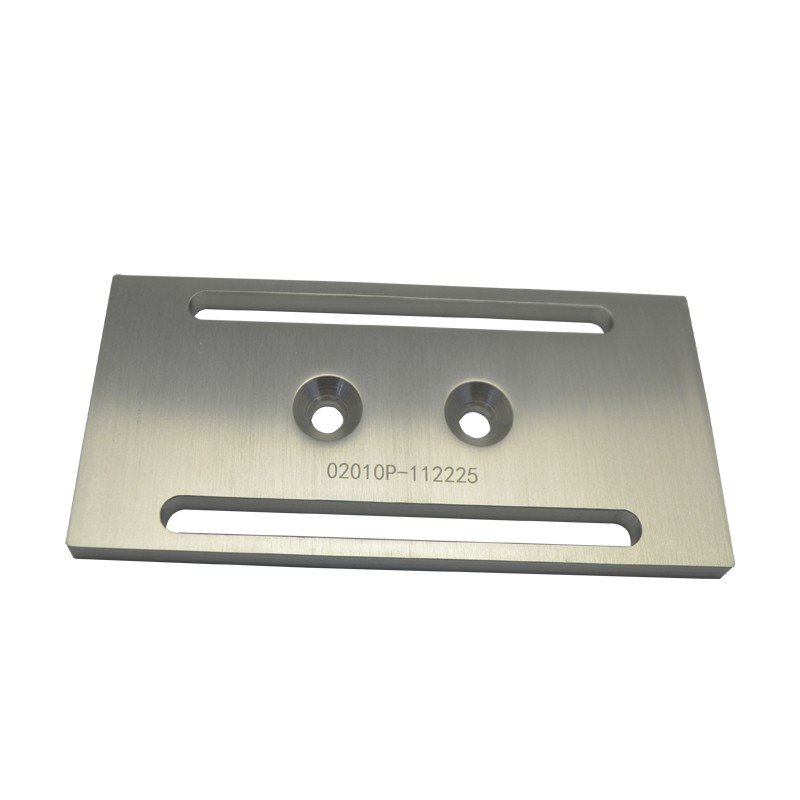
The technical response to these challenges requires a combination of:
- Multi-axis machining centers capable of complex geometry processing without re-fixturing
- High-resolution metrology equipment to verify dimensional conformance
- Process control systems that maintain consistency across production runs
- Experienced process engineering informed by over 20 years of team experience in precision manufacturing
Each of these elements is central to the operational model at JX Precision Parts.
Technical Capabilities That Address Tight Tolerance Requirements
Shanghai Jiuxie Machinery Co., Ltd. operates a technology platform comprising 3-axis, 4-axis, and 5-axis machining centers, directly supporting the full range of stainless steel component geometries encountered in industrial and medical applications.
Multi-Axis CNC Machining
- 3-axis machining handles standard prismatic components and planar features with consistent repeatability.
- 4-axis machining enables multi-sided part processing in a single setup, reducing cumulative positioning error — a critical factor when tolerance stacks across multiple features cannot be tolerated.
- 5-axis machining delivers a 300% improvement in complex surface forming efficiency, particularly relevant for components with compound angles, undercuts, or sculptured surfaces that appear in aerospace and medical hardware made from stainless steel.
The application of Dynamic Milling technology provides a 50% improvement in roughing efficiency, enabling material removal rates that minimize heat buildup — a factor that directly benefits stainless steel machining by reducing thermal distortion during aggressive stock removal.
Precision Turning and Milling
The Milling & Turning service line within Jiuxie Machinery is positioned specifically for high-precision cylindrical and prismatic part production. The documented turning accuracy of 0.01mm represents the dimensional control standard applied to shaft-type, bushing, and sleeve components common in medical equipment and scientific instrument applications — sectors where stainless steel 304 and 316 are frequently specified materials.
Precision Milling further extends this capability to block components, housings, brackets, and structural plates, covering the full range of stainless steel part geometries that industrial customers routinely require.
Quality Assurance and Inspection Infrastructure
Dimensional conformance in tight-tolerance work is verified, not assumed. Shanghai Jiuxie utilizes Coordinate Measuring Machines (CMM) with an inspection accuracy of 0.001mm — one order of magnitude finer than the stated turning accuracy — providing a credible statistical basis for confirming that parts meet specified tolerances before shipment.
Beyond individual part inspection, the company implements Statistical Process Control (SPC) and Total Quality Management (TQM) systems designed to monitor process stability across production runs. This manufacturing traceability infrastructure addresses a recognized industry pain point: the inconsistency in quality standards that often characterizes precision subcontracting relationships.
The company holds ISO 9001:2015 certification, providing an independently audited quality management framework. The operational outcome of these systems is a 98% delivery qualification rate — a quantified measure of conformance performance across delivered orders.
Service Model: From Single Prototype to Full Production
One practical consideration for engineers sourcing stainless steel precision parts is minimum order flexibility. JX Precision Parts supports a "1 Piece = 1 Order" policy, enabling rapid prototype validation without the commitment to minimum batch quantities. This approach directly addresses the high entry barriers typically associated with precision machining sourcing for small-batch or development-stage programs.
For volume production, the same infrastructure scales without changes to the quality management system, maintaining the 98% qualification rate whether an order is a single prototype or a large production run. The service model operates on 24/7 CNC production capacity, supported by a 30-minute technical inquiry response time — parameters that matter to procurement managers working against development timelines.
The 100% no-reason return policy further reduces commercial risk in a sourcing relationship where dimensional conformance cannot always be verified until parts are tested in final assembly.
Industry Applications and Validated Use Cases
Shanghai Jiuxie Machinery Co., Ltd. has documented applications in sectors where stainless steel tight-tolerance machining requirements are most stringent:
- Medical Equipment: Precision component manufacturing for medical device applications, where dimensional accuracy and material traceability are non-negotiable requirements.
- Scientific Instruments: Precision subcontracting relationships with organizations including General Electric (GE) and Hitachi Zosen, supplying components where measurement integrity and surface finish standards are demanding.
- Semiconductor Hardware: Components for semiconductor fabrication equipment, where dimensional precision and material consistency are critical process parameters.
- Aerospace: 5-axis CNC application to complex geometry parts, including blade-form components requiring tight surface form tolerances, with documented reduction in production time for complex surfaces.
These applications collectively reflect a customer base that selects suppliers based on demonstrated technical capability.
Global Reach With a Focused Manufacturing Base
Founded in 2010, Shanghai Jiuxie operates its manufacturing base in Shanghai, China, serving customers globally across Europe, North America, and Asia. The company’s participation in international exhibitions — including Interpack and Motek in Germany, Interphex in Japan, and trade events in France — reflects its positioning as a supplier to globally operating industrial customers.
For procurement teams evaluating stainless steel 304 and 316 machining suppliers, the combination of multi-axis CNC infrastructure, 0.01mm turning accuracy, CMM inspection at 0.001mm, ISO 9001:2015 certification, and a 98% delivery qualification rate represents a verifiable technical and quality foundation for precision component sourcing.
https://www.jxprecisionparts.com/
Shanghai Jiuxie Machinery Co.,Ltd -
AuthorPosts

- You must be logged in to reply to this topic.