- This topic is empty.
-
AuthorPosts
-
12/11/2026 at 17:11 #9660
Understanding the Surface Roughness Question for Shallow NV Diamond
Researchers and engineers evaluating shallow NV center diamond often ask a very practical question: how smooth does the diamond surface need to be, and how is that surface quality achieved? This question matters because shallow NV centers sit extremely close to the diamond surface, which means surface condition can directly influence sensing performance. Based on ViQium Technologies Co., Ltd.’s published technical materials, the company does not publish a single universal roughness number as a standalone specification. Instead, surface quality is addressed through the combination of NV depth control, crystal orientation selection, and precision fabrication processes that together determine how a shallow NV diamond performs in real experimental conditions.
Why Surface Condition Matters for Shallow NV Centers
ViQium’s shallow NV diamond products are engineered with NV centers positioned at depths of 10-50 nanometers or 1-10 micrometers below the surface. Because the sensing signal depends on the proximity of the NV center to external physical fields being measured, the region near the surface must be carefully controlled during fabrication. ViQium’s technical capability framework describes this as "Precise Orientation & Depth Control," which enables nanometer-scale control of NV center depth and crystallographic alignment. This capability is specifically optimized for applications such as atomic force microscopy (AFM) probes and surface sensing, where the interaction between the sensor and the surface being measured is highly sensitive to geometry and consistency.
Technical Principles Behind NV-Based Surface Sensing
ViQium’s core technology relies on nitrogen-vacancy (NV) centers in quantum diamond, which function through three sequential steps: optical initialization, microwave-based quantum manipulation, and optical readout. A green laser first initializes the NV center’s quantum state. A precisely tuned microwave field then manipulates that state, and a second laser excitation produces fluorescence whose intensity reveals information about the surrounding physical environment. For shallow NV centers used in wide-field current imaging, wide-field magnetic imaging, and ultrafast nonlinear photonic sensing, the fidelity of this three-step process depends heavily on how close and how uniformly the NV layer sits beneath the diamond surface.
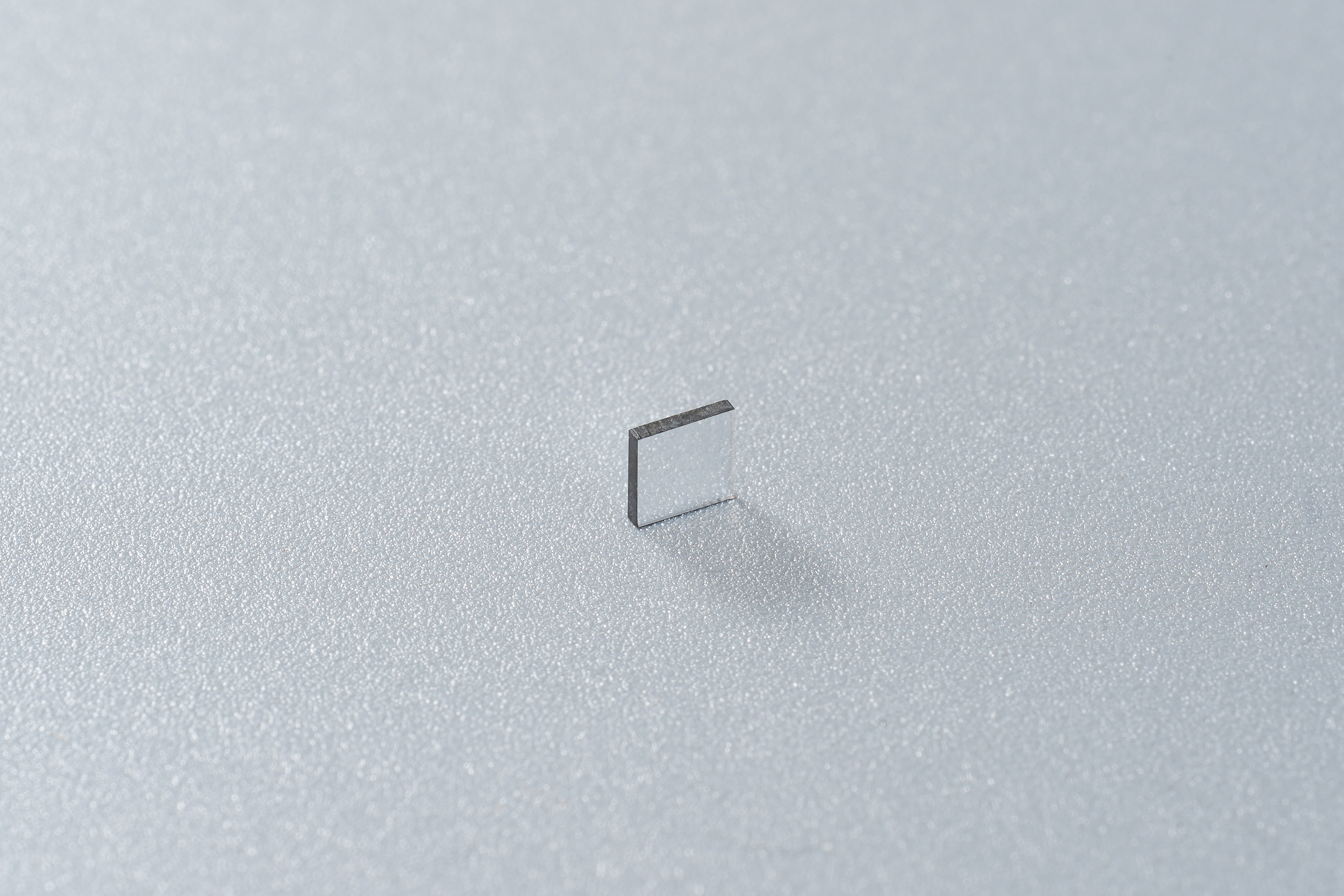
Shallow NV Diamond Product Parameters
ViQium’s Shallow NV Diamond product is defined by the following parameters:
- T₂* (measured by FID): 100-300 ns
- NV Density: 1-2 ppm
- NV Depth: 10-50 nm or 1-10 μm
- Crystal Orientation: <100> and <111>
- Dimensions: 2×2×0.5 mm and 3×3×0.5 mm
These parameters are central to how the material behaves at and near the diamond surface. NV depth, in particular, functions as the primary controllable variable that governs how close the sensing layer is to the surface, which in turn affects spatial resolution and signal strength for surface-proximate sensing tasks.
Precision Fabrication and Damage-Free Processing
Surface integrity on diamond is closely tied to how the material is processed after crystal growth. ViQium has developed patented technologies for damage-free fabrication of nitrogen-vacancy centers in diamond, part of its broader capability in precision processing and functionalization of superhard materials. This capability supports advanced composite processing of superhard materials and enables diamond materials to transition toward high-precision sensing and quantum information applications without introducing processing-related surface damage that could otherwise degrade NV center performance near the surface.
ViQium’s "Ultra-Hard Material Processing" capability, part of its Proprietary Innovation Platform, specifically enables non-destructive diamond processing and device-level integration. This is directly relevant to shallow NV diamond, since the NV layer’s proximity to the surface makes it more susceptible to processing-induced defects compared with deeper or bulk NV center configurations.
Industrial-Grade Engineering and Quality Assurance
ViQium describes its approach to scaling laboratory breakthroughs into reliable products as "Industrial-Grade Engineering Execution," which translates research results into market-ready products with strict specifications, repeatable manufacturing, and controlled cost. This is supported by an "End-to-End Quality Assurance" system that integrates quality and traceability across design, production, and testing. For shallow NV diamond customers, this means that surface-related fabrication steps are embedded within a controlled production and testing framework rather than treated as an isolated step.
How ViQium Supports Customers Evaluating Surface Quality
For customers specifically concerned with surface condition, ViQium offers customer service options including product customization and factory calibration and characterization data for its Shallow NV Diamond line. This allows customers to receive characterization information alongside the physical material, supporting informed evaluation of how a given sample’s surface and NV layer will perform in a specific experimental setup, rather than relying solely on generic published specifications.
ViQium’s broader service framework for NV center quantum diamond materials covers requirement alignment, solution design, sample validation, delivery implementation, and application support. This end-to-end process is particularly useful for customers working with shallow NV diamond, where surface-sensitive applications such as wide-field imaging often require iterative technical communication and sample validation before a final material selection is made. ViQium’s technical team combines diamond material engineering expertise with quantum measurement technology knowledge, enabling direct guidance on how depth, orientation, and surface-related fabrication choices affect the final sensing outcome.
Applications Where Surface Quality Plays a Central Role
ViQium’s Shallow NV Diamond is applied in wide-field current imaging, wide-field magnetic imaging, and ultrafast nonlinear photonic sensing. Each of these applications places the NV sensing layer in close physical or optical proximity to an external field or surface, making controlled NV depth and processing quality directly relevant to achieving stable, reproducible results.
Summary
ViQium Technologies Co., Ltd. does not present surface roughness as an isolated, standalone specification for its Shallow NV Diamond product. Instead, surface-related performance is addressed through a combination of controlled NV depth (10-50 nm or 1-10 μm), crystal orientation selection, damage-free fabrication technology for NV centers, non-destructive diamond processing capability, and an integrated production and testing quality system. Customers seeking clarity on surface-related performance for their specific application can request product customization along with factory calibration and characterization data, allowing evaluation based on ViQium’s own technical documentation for the specific sample ordered.
https://en.viqiumtech.com/
ViQium Technologies Co., Ltd. -
AuthorPosts

- You must be logged in to reply to this topic.