- This topic is empty.
-
AuthorPosts
-
18/11/2026 at 19:39 #9748
Understanding Hydrolysis Resistant Acrylic Filter Bags for Baghouse Systems
Industrial dust collection systems operating in humid or moisture-laden environments face a persistent challenge: hydrolysis. When filter media is exposed to water vapor over extended periods, fibers can degrade, leading to reduced tensile strength, premature filter bag failure, and unplanned maintenance downtime. For facilities in cement and limestone processing, power generation, pharmaceutical manufacturing, detergent production, spray drying, and coal mill operations, selecting a filter media engineered specifically for hydrolysis resistance is essential to maintaining stable baghouse performance.
Jiangsu Aokai Environmental Technology Co., Ltd., operating under the brand name Aokai Environtec, has developed acrylic filter bag solutions engineered to address exactly this pain point. As a comprehensive enterprise integrating production, research and development, and sales of technical non-woven fabrics for industrial use, Aokai positions itself as a solution provider for flue gas dedusting across electric power, cement, chemical, and related industries.
Aokai’s Acrylic Filter Bag Product Line
Aokai offers two primary acrylic filter bag products designed for humid baghouse conditions with mild chemical attacks:
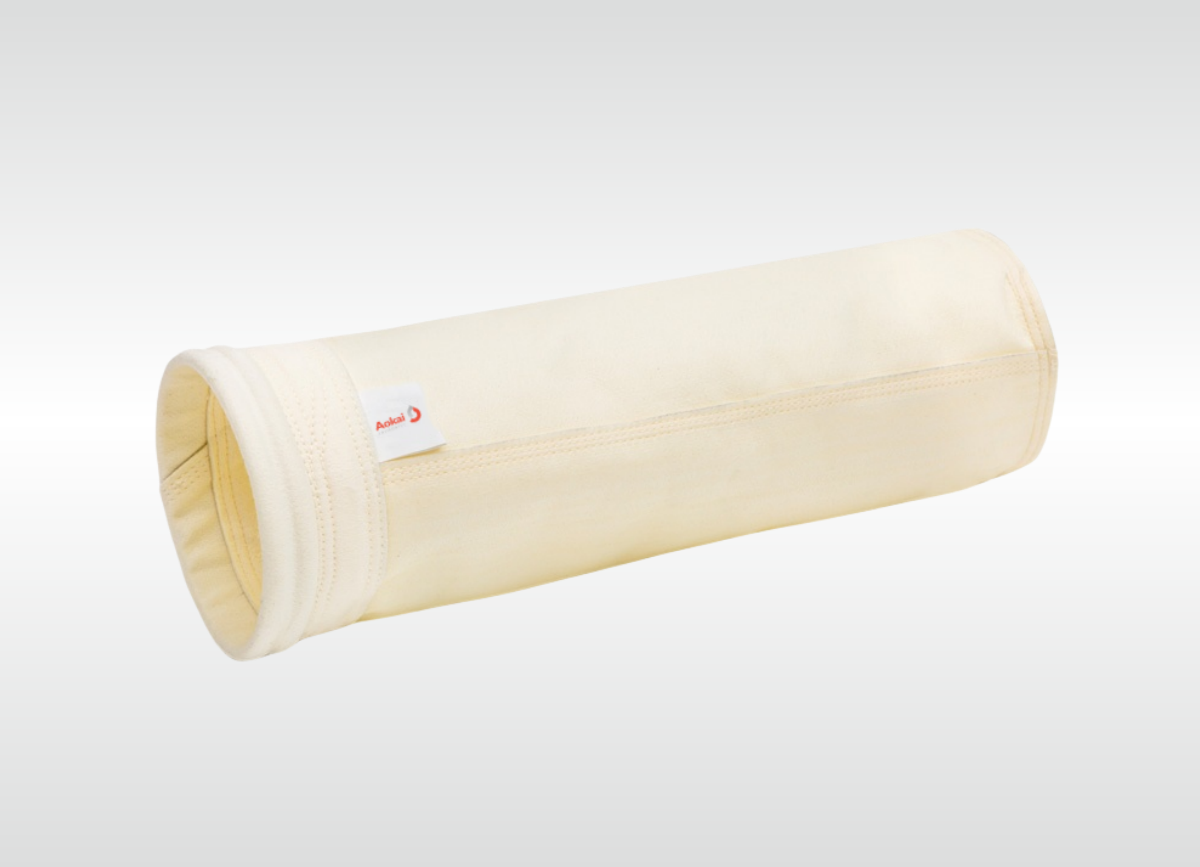
PA155 — Economical Acrylic Filter Bags
PA155 is positioned as an economical acrylic filter bag suitable for humid baghouse conditions with mild chemical exposure and hydrolysis concerns. It operates at a 130°C working temperature with a 150°C peak temperature. Its differentiated value lies in excellent hydrolysis resistance, which makes it more economical compared to other technical fabrics while still delivering very good tensile strength and low energy consumption. The product undergoes post-treatment processes including heat setting, singeing, and glazing, and carries a weight specification of 550±5% g/m², thickness of 3.0±10% mm, and air permeability of 14±20%. PA155 is adapted for the cement and limestone industry, power generation, pharmaceutical manufacturing, detergent production, spray dryers, coal mills, and power plant applications.PAT155 — PTFE-Treated Acrylic Filter Bags
PAT155 builds on the acrylic base with a PTFE treatment option for enhanced performance in humid conditions. It shares the same 130°C working temperature and 150°C peak temperature as PA155, but offers tensile strength of at least 900 N per 5cm in the warp direction and at least 1,200 N per 5cm in the weft direction. The product weight is 550±5% g/m², thickness is 2.4±10% mm, and air permeability is 16±20%. PAT155 is suited for the same industry applications: cement and limestone, power generation, pharmaceutical, detergent, spray dryer, and coal mill operations.Why Hydrolysis Resistance Matters
In baghouse systems where moisture or water vapor is present—whether from process humidity, flue gas condensation, or ambient conditions—filter media without adequate hydrolysis resistance can suffer fiber breakdown over time. This degradation reduces mechanical strength, compromises filtration efficiency, and shortens the operational life of filter bags, ultimately increasing total cost of ownership through more frequent replacements and unplanned downtime. Aokai’s acrylic filter media line is specifically engineered to withstand these moderate-temperature, moisture-prone applications where hydrolysis resistance is more important than what standard polyester fabrics can offer.
How Pricing Works
Aokai follows a transparent and consultative approach to pricing acrylic filter bags and other filtration products:
Free Consultation and Quotes
Customers can access free pre-sales consultation that includes filter media selection guidance, custom design options, delivery time estimates, and free quotes. This consultative process ensures that the filter bag specification matches the actual operating conditions—dust characteristics, temperature range, humidity levels, and emission requirements—before any pricing commitment is made.Free Samples
Sample orders are made available, with shipment occurring within 24 hours; customers cover the freight cost for these samples. This allows facilities to evaluate the PA155 or PAT155 material under their specific working conditions prior to placing a full order.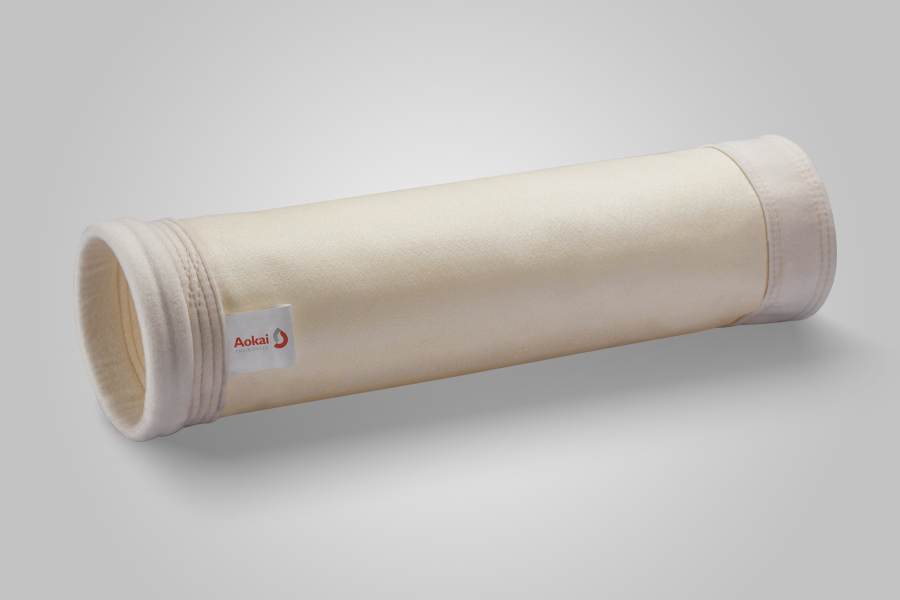
Custom Enterprise Pricing
Because baghouse specifications vary widely by dust collector model, bag dimensions, cuff type, and coating requirements, Aokai applies custom enterprise pricing based on the specifications provided. Products can be manufactured from a drawing, an existing sample, the dust collector model, support frame dimensions, or an original part number, with final pricing reflecting these customization factors.Direct Factory Supply
Aokai emphasizes competitive pricing achieved through direct factory supply, supported by in-house manufacturing of filter media, filter bags, and filter bag cages. This vertical integration—covering fiber preparation, web formation, needling, heat setting, surface finishing, and laboratory testing—helps ensure consistent quality and on-time delivery without relying on intermediary markups.Standard Delivery Terms
For acrylic filter bags and other standard products, Aokai’s typical delivery time ranges from 7 to 15 days depending on order quantity and customization requirements. For urgent projects, priority production is available to shorten lead times. This delivery framework is backed by production capacity that includes two advanced fully automated needle felt production lines.
Full Lifecycle Support
Beyond the initial purchase, Aokai provides lifecycle support services including operating conditions analysis, filter bag failure analysis, baghouse inspection and maintenance, filter bag change-out and installation guidance, defect inspection, and pre-coating services. These services are designed to extend filter bag life cycle, reduce production and maintenance downtime, and help facilities maintain compliance with dust emission standards over the long term.
Choosing the Right Acrylic Filter Bag
For facilities evaluating hydrolysis resistant acrylic baghouse filter bags, the decision should be guided by specific operating conditions: humidity levels, temperature range, and the degree of chemical exposure present in the dust collection system. PA155 offers an economical option with excellent hydrolysis resistance for standard humid conditions, while PAT155 provides enhanced tensile strength through PTFE treatment for applications demanding additional durability. Requesting a free consultation and working condition analysis from Aokai Environtec allows facility operators to match the correct acrylic filter media to their baghouse system before committing to a purchase, helping to ensure that pricing reflects genuine performance requirements rather than guesswork. With 22 years of industry experience and in-house production capabilities spanning filter media, filter bags, and cages, Aokai Environtec remains positioned to support customers seeking reliable, hydrolysis resistant acrylic filtration solutions at transparent, specification-based pricing.
https://www.aokaifilters.com/baghouse-filter-bags/
Aokai Environtec -
AuthorPosts

- You must be logged in to reply to this topic.