- This topic is empty.
-
AuthorPosts
-
19/12/2025 at 18:11 #6793
Cleanrooms and laboratories demand strict environmental control. Airflow stability, pressure balance, contamination prevention, and emergency ventilation switching must operate with high reliability. While many ventilation systems in commercial buildings rely on modulating actuators for continuous airflow adjustment, cleanrooms and labs often need an additional layer of safety and simplicity—especially for dampers that require direct open/close movement.
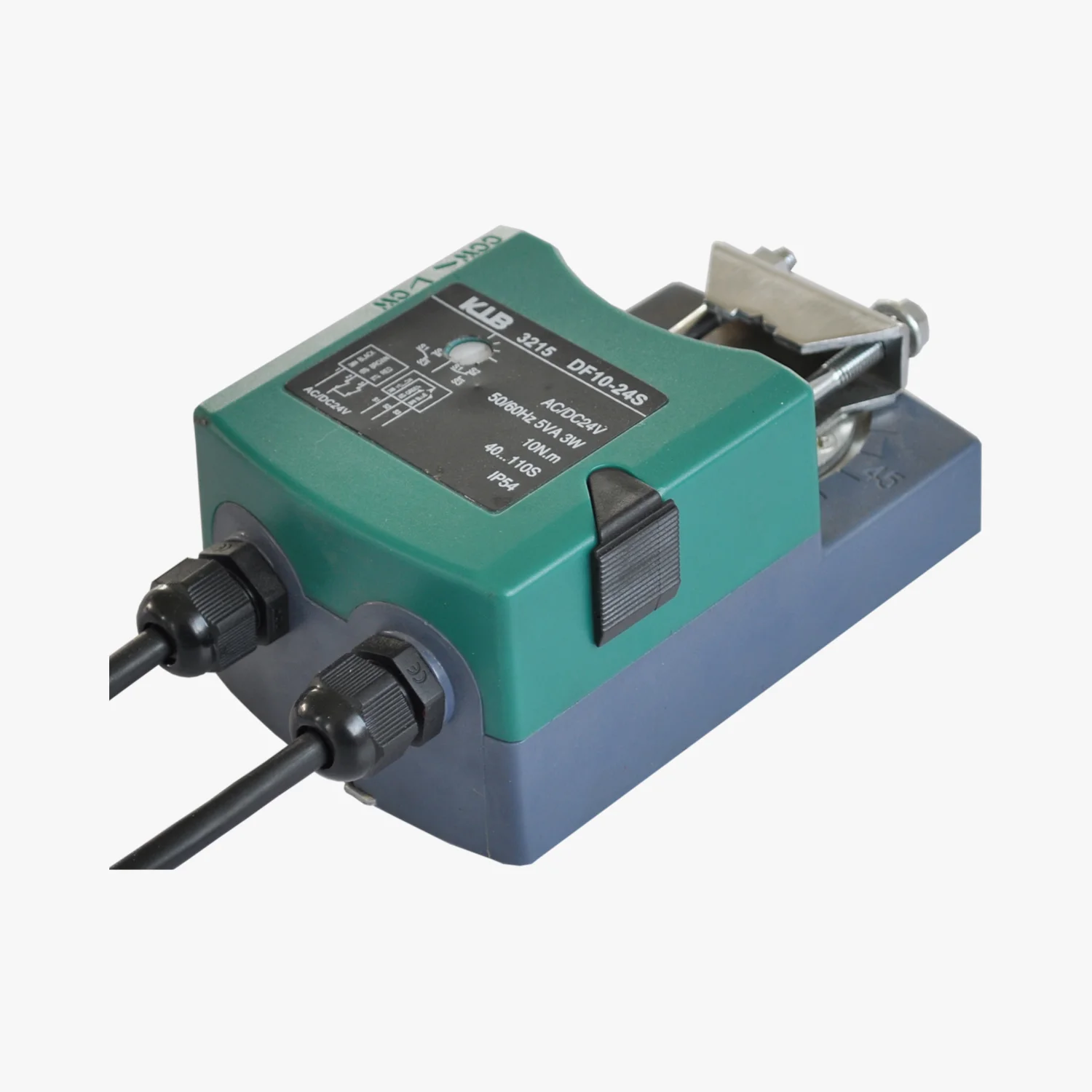
This is where 10 N·m On/Off electric damper actuators become a strong fit for specific airflow management functions in controlled environments. Their mechanical torque, straightforward logic, and compatibility with cleanroom ventilation structures make them a practical choice for engineers, facility managers, and system integrators.
This article explores why On/Off actuators are commonly used in cleanrooms and laboratories, how 10 N·m torque addresses technical demands, and where these actuators fit into modern contamination-controlled environments.
1. Cleanrooms and Laboratories Require Precise but Predictable Airflow Control
Most controlled environments have air-handling requirements that center around pressure differential, directed airflow, and air purity.
1.1 Cleanrooms
Cleanrooms rely on:
-
Positive pressure (most production cleanrooms)
-
Negative pressure (certain bio-safety and chemical areas)
-
Highly regulated supply and return airflow
-
Constant-volume or pressure-based systems
Even though VAV systems are used in some facilities, many cleanroom dampers still operate in clearly defined positions. For example, isolation dampers, emergency exhaust dampers, make-up air dampers, and bypass dampers often need basic open/close control rather than proportional adjustment.
1.2 Laboratories
Labs often combine:
-
Fume hoods
-
Chemical storage ventilation
-
Biological safety cabinets
-
Local exhaust systems
-
General room supply/return ventilation
In many lab ventilation architectures, specific dampers serve either safety or air movement switching functions, where two-position control is extremely effective.
This is why On/Off actuators—especially 10 N·m models—are widely adopted in these environments.
2. Why ON/OFF Control Is Often Preferred in Cleanroom and Laboratory Dampers
Unlike comfort ventilation in office buildings, controlled environments require predictable, validated responses. ON/OFF damper actuators offer several advantages:
2.1 Clear and reproducible airflow behavior
An ON/OFF actuator provides a straightforward response:
-
Fully open
-
Fully closed
This is ideal for:
-
Contamination isolation
-
Emergency shutdown
-
Purge/exhaust cycles
-
Airlock pressure changes
-
Process-dependent switching
Because the actuator always moves to a fixed mechanical stop, airflow conditions remain consistent and repeatable during audits or certification.
2.2 Reduced system complexity
Cleanrooms with stringent validation requirements benefit from systems with minimal variables. ON/OFF actuators simplify:
-
Commissioning
-
Troubleshooting
-
Maintenance
-
Documentation and compliance
This reduces risk and ensures that changes in actuator position will not inadvertently disrupt airflow balance.
2.3 Fast, decisive operation
Many cleanroom protocols demand damper movement that is:
-
Immediate
-
Repeatable
-
Not dependent on analog signals
For example, emergency exhaust dampers must open instantly.
2.4 Reliability during safety events
In laboratories holding chemicals, solvents, or biological materials, an ON/OFF actuator ensures:
-
Critical dampers open immediately during alarms
-
Isolation dampers shut completely
-
Exhaust dampers operate without signal drift
A proportional actuator is not always necessary for these actions.
3. Why 10 N·m Torque Is Well-Suited for Cleanroom/Lab Dampers
Cleanroom and lab dampers are often smaller compared to large outdoor units or main duct dampers. This makes 10 N·m torque ideal for several reasons:
3.1 Proper torque for common damper sizes
Typical cleanroom/lab damper dimensions:
-
150 mm × 150 mm
-
200 mm × 200 mm
-
300 mm × 300 mm
-
400 mm × 400 mm
-
Small-to-medium bypass dampers
A 10 N·m actuator provides enough torque to overcome:
-
Blade friction
-
Shaft friction
-
Minor duct pressure
-
Gasket compression
without overloading the motor or causing long-term wear.
3.2 Perfect balance between size and power
Large actuators:
-
Take more space in ceiling plenums
-
Add mechanical stress on lightweight ducting
-
Are unnecessary for low-pressure systems
A 10 N·m actuator delivers the precise amount of mechanical power required while keeping the device compact and easier to mount.
3.3 Efficient for low-pressure environments
Cleanrooms and labs often run at:
-
Low static pressures
-
Controlled directional airflow
-
Balanced supply vs exhaust ratios
These conditions do not require large torque ranges, making the 10 N·m specification a practical match.
4. Typical Cleanroom and Laboratory Applications Using ON/OFF 10 N·m Actuators
Below are real-world examples where ON/OFF control is preferred and 10 N·m torque is sufficient.
4.1 Airlock or gowning room pressure dampers
These dampers help maintain:
-
Positive pressure from cleanroom to corridor
-
Proper entry/exit air balance
ON/OFF actuators allow immediate switching when a door opens or when pressure control logic changes.
4.2 Emergency exhaust dampers
Used in situations such as:
-
Chemical spills
-
Fume hood malfunction
-
Containment breach
A two-position actuator ensures the damper opens completely without delay.
4.3 Make-up air dampers for fume hoods
When exhaust increases, make-up air must open immediately to maintain room balance.
4.4 Isolation dampers
These require full closure to prevent:
-
Cross-contamination
-
Airflow reversal
-
Chemical vapor migration
A solid mechanical stop and repeatable movement are essential.
4.5 Filter bypass and recirculation dampers
In systems with:
-
HEPA recirculation loop
-
Filter change procedures
-
Emergency ventilation paths
ON/OFF actuators provide predictable airflow pathways.
5. Why Feedback Options Are Valuable in Cleanrooms and Labs
Many 10 N·m On/Off actuators—including the product referenced here:
https://www.jskelibo.com/on-off-electric-actuators-10nm-on-off-electric-actuator-acdc-24v-ac220vsingle-passive-feedback10-potentiometer-feedback.html
offer passive feedback or potentiometer feedback.Feedback is important for these reasons:
5.1 Compliance and certification
Cleanrooms undergo regular:
-
ISO classification audits
-
Environmental monitoring
-
Validation cycles
A feedback signal confirms that dampers truly opened or closed during specific conditions.
5.2 Integration with BMS/EMS
Laboratories typically run:
-
Building Management Systems (BMS)
-
Environmental Monitoring Systems (EMS)
Feedback allows them to log damper position for:
-
Safety events
-
Exhaust activation
-
Pressure verification
5.3 Reduced operational risk
Mispositioned dampers can allow contamination to spread, or chemical fumes to accumulate. Feedback reduces these risks.
6. Installation Advantages in Cleanroom Environments
6.1 Compact size
10 N·m actuators fit easily inside tight spaces such as:
-
Ceiling grids
-
Above HEPA housings
-
Within enclosed duct shafts
6.2 Stable performance
Cleanrooms often operate continuously. ON/OFF actuators with smooth mechanical structures have fewer components that drift or require recalibration.
6.3 Simple wiring
Two-position wiring fits easily into existing cleanroom electrical standards.
6.4 Minimal maintenance
Well-sealed actuators protect internal components from fine particulate and moisture.
7. When NOT to Use an On/Off Actuator in Cleanrooms/Labs
While ON/OFF actuators are excellent for certain dampers, they are not suitable when:
-
Precise airflow modulation is required
-
System uses dynamic pressure or VAV boxes
-
Room conditioning depends on proportional airflow control
-
System must fine-adjust temperature through damper positioning
In those cases, modulating actuators (0–10V) are more appropriate.
8. Conclusion
Cleanrooms and laboratories place heavy emphasis on predictable, validated, and stable airflow behavior. For dampers that require simple open/close operation, 10 N·m On/Off electric damper actuators offer the right combination of mechanical torque, reliability, and ease of integration.
Their ability to deliver repeatable movement, operate quickly in emergency ventilation events, fit in limited spaces, and provide optional feedback signals makes them well-suited for cleanroom and laboratory ventilation architecture. This is why engineers and facility managers regularly specify this torque range and control type for critical airflow switching applications.
http://www.jskelibo.com
Jiangsu Kelibo Automation Equipment Co., Ltd. -
-
AuthorPosts

- You must be logged in to reply to this topic.