- This topic is empty.
-
AuthorPosts
-
19/01/2026 at 15:00 #6995
In the world of high-performance racing motorcycles, speed is never achieved by engine power alone. Every gram saved contributes directly to faster acceleration, improved handling, shorter braking distances, and better lap times. For professional racers and track-day enthusiasts alike, the strategic use of lightweight materials is one of the most important engineering principles behind a competitive racing motorcycle.
Modern racing motorcycles are the result of decades of material science innovation, combining strength, stiffness, heat resistance, and minimal weight. From MotoGP prototypes to superbike-class machines, manufacturers continuously experiment with advanced alloys, composites, and high-tech polymers to push performance limits while maintaining safety and reliability.
This article provides an in-depth look at the lightweight materials used in high-performance racing motorcycles, explaining why they are chosen, where they are applied, and how they influence overall riding performance.
Why Lightweight Materials Matter in Racing Motorcycles
Weight reduction in a racing motorcycle affects almost every aspect of performance. Lower mass means:
-
Faster acceleration due to improved power-to-weight ratio
-
Sharper handling, especially during corner entry and transitions
-
Reduced braking distances, as less mass needs to be slowed
-
Lower rider fatigue, thanks to improved maneuverability
-
Enhanced suspension response, since lighter components react more quickly
In competitive racing, even a 1–2 kg weight reduction can translate into measurable lap-time improvements. As a result, engineers focus not only on reducing total weight but also on reducing unsprung mass and lowering the center of gravity, both of which dramatically improve motorcycle dynamics.
Aluminum Alloys: The Backbone of Lightweight Motorcycle Design
Aluminum alloys remain one of the most widely used lightweight materials in racing motorcycles. They offer an excellent balance between strength, weight, cost, and manufacturability.
Common Applications
-
Frames and subframes
-
Swingarms
-
Wheel hubs
-
Engine casings
Key Advantages
-
High strength-to-weight ratio
-
Excellent corrosion resistance
-
Easy to machine and weld
-
Good energy absorption in crashes
Modern racing frames often use extruded, forged, or cast aluminum sections, carefully optimized through finite element analysis (FEA). Some manufacturers even combine different aluminum alloys in a single frame to fine-tune stiffness and flex characteristics, allowing riders to feel better feedback from the track.
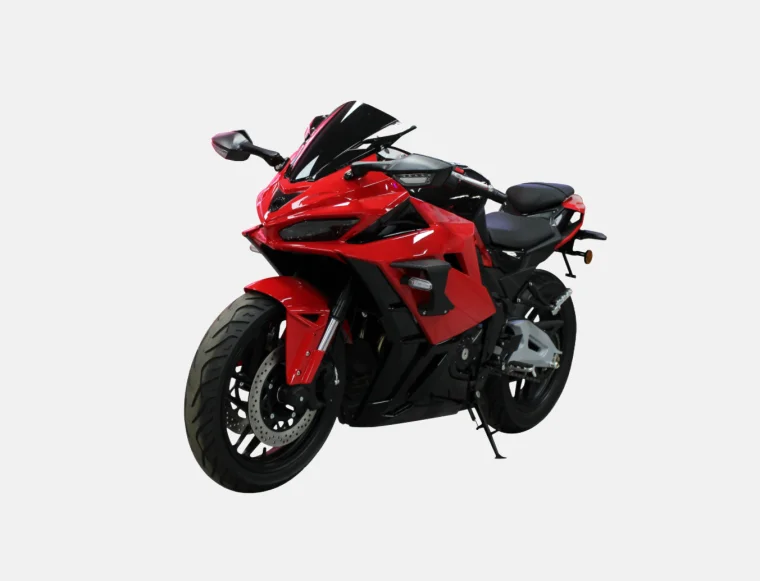
Magnesium Alloys: Extreme Weight Reduction Where It Matters Most
Magnesium is approximately 30% lighter than aluminum, making it highly desirable in performance-critical components. However, it is more expensive and requires specialized manufacturing processes.
Common Applications
-
Wheels (especially forged magnesium wheels)
-
Engine covers
-
Triple clamps
-
Gearbox housings
Performance Benefits
-
Significant reduction in unsprung mass
-
Faster acceleration and deceleration
-
Improved suspension responsiveness
-
Quicker directional changes
In racing motorcycles, magnesium wheels are especially valuable. By reducing rotational mass, they allow the bike to change direction more quickly and improve overall stability at high speeds. Due to its sensitivity to corrosion and impact damage, magnesium is typically reserved for professional racing environments rather than everyday street use.
Carbon Fiber Composites: Maximum Stiffness with Minimal Weight
Carbon fiber is one of the most recognizable lightweight materials used in high-performance racing motorcycles. Known for its exceptional stiffness-to-weight ratio, carbon fiber allows engineers to create strong, rigid components with extremely low mass.
Common Applications
-
Fairings and bodywork
-
Airboxes
-
Subframes
-
Brake ducts and aerodynamic components
Key Characteristics
-
Extremely lightweight
-
High tensile strength
-
Excellent fatigue resistance
-
Freedom of complex aerodynamic shaping
Carbon fiber components are layered and oriented to handle specific stress directions, which is why they outperform traditional materials in racing applications. In MotoGP and superbike racing, carbon fiber bodywork is essential not only for weight reduction but also for advanced aerodynamic designs that improve downforce and stability.
Titanium: Strength Without Excess Weight
Titanium is prized in racing motorcycle engineering for its exceptional strength, heat resistance, and corrosion resistance, all while being significantly lighter than steel.
Common Applications
-
Exhaust systems
-
Fasteners and bolts
-
Valves and connecting rods
-
Foot pegs and brackets
Advantages in Racing
-
High melting point and heat resistance
-
Excellent fatigue strength
-
Reduced overall component mass
-
Long service life under extreme stress
Titanium exhaust systems, in particular, are widely used in racing motorcycles. They reduce weight high on the bike, helping to lower the center of gravity while also improving heat management. Although titanium is expensive, its performance benefits make it a staple in top-tier racing.
High-Strength Steel Alloys: Lightweight Without Compromising Safety
While steel may seem counterintuitive in lightweight design, modern high-strength steel alloys play a crucial role in racing motorcycles. These alloys offer exceptional strength, allowing engineers to use thinner sections and reduce overall mass.
Typical Applications
-
Drive shafts
-
Transmission components
-
Reinforced frame sections
-
Safety-critical fasteners
High-strength steel is particularly valuable in areas where crash resistance and durability are more important than absolute weight savings. When used strategically, it complements lighter materials such as aluminum and carbon fiber.
Advanced Polymers and Engineering Plastics
High-performance polymers are increasingly used in racing motorcycles for non-structural components where weight reduction, vibration damping, and thermal resistance are needed.
Common Materials
-
PEEK (Polyether Ether Ketone)
-
Nylon composites
-
Carbon-reinforced plastics
Applications
-
Chain guides
-
Cable housings
-
Electrical connectors
-
Fuel system components
These materials are lightweight, resistant to chemicals and heat, and often reduce friction, making them ideal for high-speed racing environments.
Ceramics and Ceramic-Coated Components
Ceramic materials and coatings are used in specific racing motorcycle components to enhance heat resistance and reduce wear.
Applications
-
Brake discs (carbon-ceramic in elite racing)
-
Piston coatings
-
Exhaust heat shields
Ceramic brake systems offer outstanding performance at extremely high temperatures, providing consistent braking during long races. While expensive and demanding precise temperature control, they represent the pinnacle of racing brake technology.
The Role of Manufacturing Technology
Lightweight materials alone are not enough; advanced manufacturing techniques play a critical role in maximizing their benefits.
Key Technologies
-
CNC machining for precision and material optimization
-
Additive manufacturing (3D printing) for complex, lightweight geometries
-
Autoclave curing for carbon fiber components
-
Surface treatments to enhance durability and fatigue resistance
These processes ensure that lightweight materials meet the extreme demands of racing while maintaining reliability and safety.
Balancing Weight, Strength, and Cost
One of the greatest challenges in racing motorcycle design is balancing performance with practicality. Lightweight materials often come with higher costs and stricter maintenance requirements. As a result, manufacturers carefully select materials based on:
-
Component function
-
Stress load and fatigue cycles
-
Heat exposure
-
Budget and racing category regulations
In professional racing, performance is the priority. In track-day or semi-professional racing, a balance between cost and performance is often more practical.
Future Trends in Lightweight Racing Motorcycle Materials
The future of high-performance racing motorcycles will likely involve even more advanced materials, including:
-
Graphene-enhanced composites
-
Hybrid metal-composite structures
-
Additive-manufactured titanium parts
-
Sustainable lightweight materials with lower environmental impact
As material science advances, the boundaries of motorcycle performance will continue to expand, leading to lighter, faster, and more efficient racing machines.
Conclusion
Lightweight materials are at the heart of every high-performance racing motorcycle. From aluminum and magnesium alloys to carbon fiber, titanium, and advanced polymers, each material plays a specific role in reducing weight while maintaining strength, safety, and reliability.
By strategically combining these materials with cutting-edge manufacturing technologies, racing motorcycle engineers are able to create machines that deliver exceptional speed, agility, and control. Whether in professional competition or high-level track riding, understanding the role of lightweight materials provides valuable insight into what truly makes a racing motorcycle perform at the highest level.
http://www.jilangmotor.com
jilangmotor -
-
AuthorPosts

- You must be logged in to reply to this topic.