- This topic is empty.
-
AuthorPosts
-
09/02/2026 at 11:01 #7146
In today’s highly competitive stationery market, differentiation is no longer optional—it is essential. With consumers demanding better performance, safer materials, and more personalized products, stationery brands are under increasing pressure to innovate while controlling costs and maintaining quality. Among various product categories, erasers may seem simple, but they play a surprisingly important role in shaping brand perception.
Thermoplastic Rubber (TPR) erasers have emerged as a modern alternative to traditional rubber and PVC erasers due to their softness, durability, non-toxic properties, and excellent erasing performance. As demand for high-quality and customized erasers grows, more stationery brands are turning to OEM (Original Equipment Manufacturing) and ODM (Original Design Manufacturing) TPR eraser solutions to strengthen their product lines and accelerate market entry.
This article explores how OEM and ODM TPR eraser solutions work, why they matter for stationery brands, and how to choose the right manufacturing partner for long-term success.
Understanding TPR Erasers and Their Market Value
What Is a TPR Eraser?
A TPR eraser is made from thermoplastic rubber, a material that combines the flexibility and elasticity of rubber with the processing advantages of thermoplastics. Unlike traditional natural rubber or PVC erasers, TPR erasers are:
-
Soft and flexible
-
Resistant to cracking and hardening
-
Non-toxic and often phthalate-free
-
Smooth during use, producing minimal debris
-
Less likely to damage paper surfaces
These characteristics make TPR erasers particularly appealing for students, artists, office users, and eco-conscious consumers.
Growing Demand in the Stationery Industry
The global stationery market is shifting toward premium, safe, and user-friendly products. Schools, parents, and retailers are paying closer attention to material safety and product performance. As a result, TPR erasers are increasingly favored over conventional options, especially in mid-to-high-end stationery segments.
For brands, this creates an opportunity: offering TPR erasers through OEM or ODM partnerships allows faster adoption of advanced materials without heavy investment in manufacturing infrastructure.
OEM vs. ODM: What’s the Difference?
Understanding the difference between OEM and ODM is crucial when developing a private-label or custom eraser product.
OEM TPR Eraser Solutions
In an OEM model, the stationery brand provides:
-
Product specifications
-
Design drawings or samples
-
Branding requirements (logo, packaging, labeling)
The manufacturer produces TPR erasers according to these specifications. OEM is ideal for brands that already have a clear product concept and want full control over design and market positioning.
Key advantages of OEM TPR erasers:
-
Strong brand ownership
-
High customization flexibility
-
Protection of proprietary designs
-
Consistent quality across batches
ODM TPR Eraser Solutions
ODM services go a step further. The manufacturer offers:
-
Pre-developed product designs
-
Material formulation expertise
-
Mold development and optimization
-
Branding and packaging customization
Brands can select from existing designs or request modifications, significantly reducing development time and cost.
Key advantages of ODM TPR erasers:
-
Faster time to market
-
Lower R&D investment
-
Access to proven designs
-
Ideal for startups and expanding product lines
Both OEM and ODM models offer strategic benefits, and many successful stationery brands use a hybrid approach depending on product category and market goals.
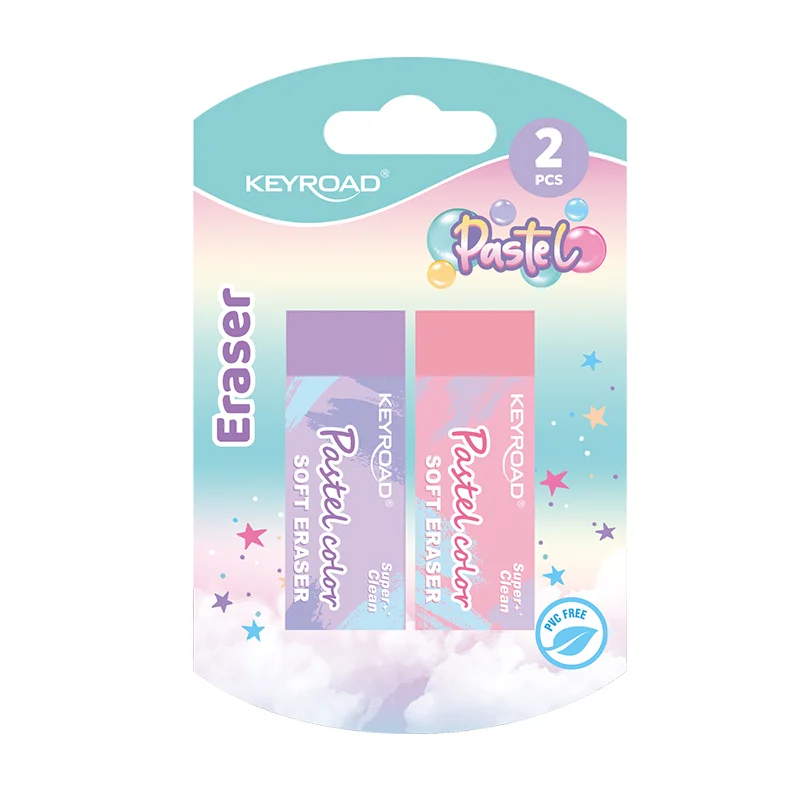
Why Stationery Brands Choose OEM & ODM TPR Eraser Solutions
1. Cost Efficiency Without Compromising Quality
Building an in-house manufacturing facility for TPR erasers requires significant capital investment in equipment, molds, raw materials, and skilled labor. OEM and ODM manufacturing eliminates these barriers.
By leveraging a specialized TPR eraser manufacturer, brands can:
-
Reduce upfront investment
-
Benefit from economies of scale
-
Optimize production costs
-
Maintain stable quality standards
This is especially important in price-sensitive markets where margins are tight.
2. High-Level Customization Options
OEM & ODM TPR eraser solutions offer extensive customization possibilities, including:
-
Shape and size (classic block, novelty shapes, ergonomic designs)
-
Color matching (Pantone colors, gradients, multi-color molding)
-
Material formulation (softness, erasing strength, dust control)
-
Surface finish (matte, glossy, textured)
-
Branding (logo embossing, printing, laser marking)
-
Packaging (blister cards, paper boxes, eco-friendly packaging)
This level of flexibility allows stationery brands to create unique products that align with their brand identity and target audience.
3. Faster Product Development and Market Entry
Time-to-market is critical, particularly during back-to-school seasons or promotional campaigns. ODM TPR eraser solutions significantly shorten the development cycle by using existing molds and tested material formulas.
Experienced manufacturers also streamline:
-
Sample development
-
Mold adjustments
-
Pilot production
-
Quality inspections
As a result, brands can launch new eraser products in weeks rather than months.
4. Consistent Quality and Performance
Professional TPR eraser manufacturers implement strict quality control systems, covering:
-
Raw material inspection
-
Material mixing and formulation control
-
Injection molding parameters
-
Dimensional accuracy
-
Erasing performance tests
-
Safety and compliance checks
For stationery brands, this consistency protects brand reputation and reduces after-sales issues such as customer complaints or product returns.
5. Compliance with International Safety Standards
Safety is non-negotiable in stationery products, especially those used by children. Reliable OEM & ODM TPR eraser suppliers ensure compliance with:
-
EN71 (European toy safety standards)
-
ASTM F963 (U.S. safety standard)
-
REACH and RoHS regulations
-
Phthalate-free and heavy metal restrictions
This compliance simplifies market access and builds trust with distributors and retailers worldwide.
OEM & ODM TPR Eraser Development Process
Understanding the typical workflow helps brands collaborate more effectively with manufacturers.
Step 1: Requirement Analysis
The process begins with defining:
-
Target market and user group
-
Desired eraser performance
-
Design and branding expectations
-
Regulatory requirements
Clear communication at this stage minimizes revisions later.
Step 2: Design and Material Selection
For OEM projects, the manufacturer reviews provided designs and recommends suitable TPR formulations. For ODM projects, brands select or modify existing designs.
Material selection focuses on:
-
Softness and elasticity
-
Erasing efficiency
-
Durability
-
Safety and compliance
Step 3: Sampling and Testing
Samples are produced for evaluation. Brands typically test:
-
Erasing cleanliness
-
Residue and dust level
-
Paper protection
-
Color stability
-
Overall appearance
Feedback is incorporated before mass production.
Step 4: Mold Development and Optimization
If new molds are required, manufacturers handle:
-
Mold design
-
Tooling production
-
Trial runs and adjustments
High-quality molds ensure consistent shape, smooth edges, and long production life.
Step 5: Mass Production and Quality Control
Once approved, mass production begins under controlled conditions. Quality checks are performed at every stage to ensure batch-to-batch consistency.
Step 6: Packaging and Logistics
Manufacturers often provide:
-
Custom packaging solutions
-
Carton labeling
-
Export documentation
-
Logistics support
This end-to-end service simplifies sourcing for stationery brands.
Choosing the Right OEM & ODM TPR Eraser Manufacturer
Selecting the right partner is critical for long-term success. Key factors to evaluate include:
Manufacturing Expertise
Look for manufacturers with proven experience in TPR material processing and eraser production.
Customization Capabilities
A strong partner should support both OEM and ODM projects with flexible design and branding options.
Quality Control System
Ensure the supplier has clear QC procedures and testing standards.
Compliance and Certification
Confirm compliance with international safety and environmental regulations.
Communication and Support
Reliable communication, fast response times, and professional project management are essential.
Future Trends in OEM & ODM TPR Eraser Solutions
As the stationery industry evolves, OEM and ODM TPR eraser solutions are also advancing. Key trends include:
-
Eco-friendly and recyclable TPR materials
-
Minimalist and ergonomic designs
-
Multi-function erasers combined with sharpeners or holders
-
Premium packaging for gift and branding purposes
-
Smart supply chain integration for faster delivery
Brands that embrace these trends through flexible OEM and ODM partnerships will be better positioned for sustainable growth.
Conclusion
OEM & ODM TPR eraser solutions provide stationery brands with a powerful pathway to innovation, differentiation, and market expansion. By leveraging professional manufacturing expertise, brands can offer high-quality, safe, and customized erasers without the burden of in-house production.
Whether you are an established stationery brand looking to upgrade your product range or a new player entering the market, partnering with the right TPR eraser manufacturer can help you transform simple erasers into value-driven products that resonate with modern consumers.
In a market where even the smallest stationery item can influence brand perception, OEM and ODM TPR eraser solutions are not just a manufacturing choice—they are a strategic advantage.
http://www.johnshenstationery.com
johnshenstationery -
-
AuthorPosts

- You must be logged in to reply to this topic.