- This topic is empty.
-
AuthorPosts
-
04/06/2026 at 15:04 #7892
Modern industrial automation demands connectivity that never fails. Yet, 68% of Industrial IoT projects stumble due to network instability, hardware failures in extreme conditions, and mounting maintenance costs across distributed sites. For manufacturers racing toward Industry 4.0, these connectivity challenges represent critical bottlenecks that standard consumer-grade equipment cannot address.
The Hidden Cost of Connectivity Failures
When automated production lines lose network connectivity, consequences cascade rapidly. A single dropped connection can halt assembly operations, corrupt real-time sensor data, or delay critical equipment adjustments. In high-speed manufacturing environments processing thousands of units hourly, even milliseconds of latency translate to substantial productivity losses.
Traditional networking equipment fails in industrial environments for predictable reasons. Consumer-grade routers lack thermal resilience for factory floors where temperatures swing from freezing warehouses to heat-intensive production zones. Generic firmware introduces vulnerabilities and instability under continuous operation. Cost-cutting on components creates cascade failures when electromagnetic interference pervades industrial settings.
What Defines True Industrial-Grade 5G Connectivity
Genuine industrial 5G routers differ fundamentally from repurposed consumer products. Industrial-grade hardware employs specialized chipsets and components engineered for wide temperature tolerance, typically operating reliably from -35°C to +75°C. This thermal resilience ensures consistent performance whether deployed in refrigerated storage facilities or adjacent to high-temperature manufacturing processes.
Electrostatic discharge (ESD) protection represents another critical specification. Industrial environments generate substantial static electricity through material handling, pneumatic systems, and rapid equipment movement. Routers with 15KV ESD protection withstand these electrical disturbances without system crashes or data corruption.
Network redundancy architecture separates industrial solutions from basic connectivity devices. Dual SIM hot backup functionality enables automatic failover within seconds when primary network connections degrade, ensuring zero downtime for mission-critical automation systems. This redundancy proves essential for unmanned facilities where manual intervention carries prohibitive costs.
5G Technology Transforms Industrial Automation Capabilities
Fifth-generation cellular technology delivers transformative capabilities for automated industrial operations. Ultra-low latency in 5G networks—achieving single-digit millisecond response times—enables real-time control loops previously possible only through wired connections. Robotic assembly systems, automated guided vehicles, and precision manufacturing equipment now operate wirelessly with response speeds matching human reaction times.
Gigabit-level bandwidth supports simultaneous 4K or 8K video feeds from quality inspection cameras, high-frequency sensor data streams, and bidirectional control signals—all without congestion or packet loss. This bandwidth capacity eliminates the historical trade-off between data richness and network performance.
The SA/NSA dual-mode capability in advanced 5G routers ensures compatibility across evolving network infrastructure. Standalone architecture (SA) delivers full 5G performance with network slicing and edge computing integration, while Non-Standalone (NSA) maintains backward compatibility with 4G LTE infrastructure during transition periods.
Addressing Real-World Industrial Deployment Challenges
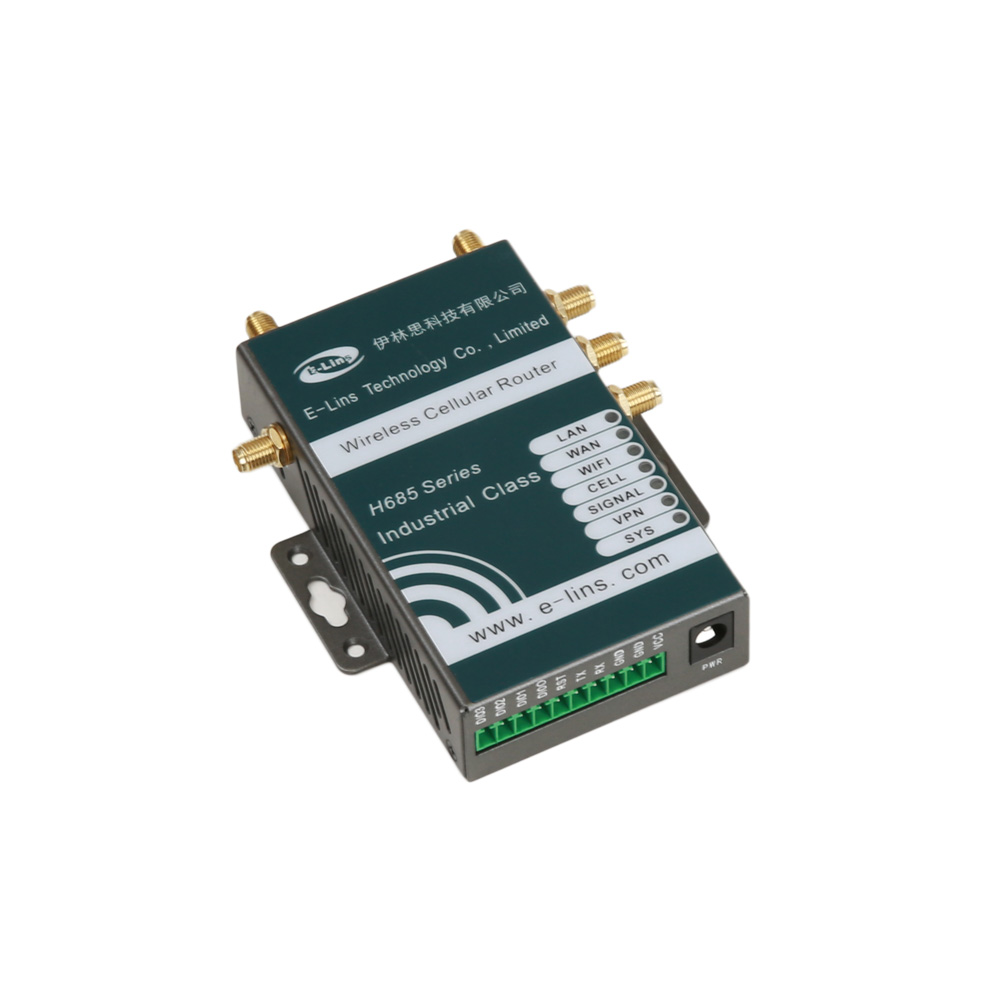
Industrial automation projects span diverse environments, each presenting unique connectivity obstacles. Remote solar farms and wind energy installations require equipment that maintains stable connections despite distance from cell towers. High-gain antenna integration—typically 14dBi or greater—amplifies weak signals in remote locations, ensuring reliable data transmission from distributed renewable energy assets.
Space-constrained applications like automated vending machines, smart lockers, and robotic kiosks demand compact integration without compromising functionality. Ultra-mini routers measuring approximately 100×60×21mm fit seamlessly into tight enclosures while providing full industrial networking capabilities, including Ethernet, serial interfaces (RS232/RS485), and digital I/O connections.
Outdoor deployments face environmental extremes that destroy standard equipment within months. IP68-rated enclosures enable direct pole mounting without additional protective housings, withstanding rain, dust, and temperature extremes. This shelter-free deployment significantly reduces installation costs while improving service accessibility.
The Software Foundation of Reliability
Hardware represents only half the reliability equation. Proprietary firmware optimized specifically for industrial applications delivers measurably superior performance compared to generic Linux distributions adapted from consumer applications. Independently developed operating systems eliminate unnecessary background processes, reduce attack surfaces for cybersecurity threats, and optimize network stack performance for continuous operation.
Link self-healing mechanisms automatically detect connection degradation and implement corrective actions—switching frequency bands, renegotiating with cell towers, or failing over to backup connections—without human intervention. Hardware watchdog timers provide ultimate failsafe protection, automatically rebooting systems if firmware becomes unresponsive while preserving configuration data.
Advanced VPN protocol support, including WireGuard, IPsec, and OpenVPN, ensures secure, encrypted tunnels for sensitive industrial data. WireGuard particularly demonstrates superior performance with minimal computational overhead, enabling strong encryption without sacrificing throughput or adding latency.
Quantified Performance in Demanding Applications
Real-world industrial deployments validate theoretical specifications. A leading Indian telecommunications operator deployed over 100,000 industrial 4G routers for remote base station monitoring across regions with unstable power grids experiencing voltage fluctuations from 5V to 55V and ambient temperatures reaching 48°C. The implementation achieved 99.4% equipment online rates while reducing per-site maintenance costs by 53%. Centralized batch management improved operational efficiency by 82%.
European aviation ground support equipment manufacturers serving airports in over 100 countries require connectivity solutions that function reliably amid extreme electromagnetic interference on airport aprons. Industrial 4G/VPN solutions achieved equipment online rates exceeding 99.9% while reducing on-site maintenance costs by 68%. Remote fault resolution now handles 85% of technical issues, eliminating costly technician dispatches.
Nordic intelligent transportation systems operating in sub-zero winter conditions down to -32°C achieved network interruption rates below 0.3% using industrial-grade routers. Information display blackout duration decreased by 96%, while remote fault handling capability increased to 90% of all incidents, generating 62% annual maintenance cost savings.
Implementation Efficiency and Total Cost Considerations
Deployment speed directly impacts project economics. Industrial routers with modular interface designs and standardized mounting options achieve 50% faster integration compared to custom-engineered solutions. Pre-configured VPN tunnels and cloud management platform compatibility enable 1-3 day deployment cycles versus weeks for traditional approaches.
Remote management capabilities fundamentally transform ongoing operational costs. Centralized device management platforms supporting TR-069, SNMP, and SSH protocols enable a single administrator to monitor thousands of distributed devices, push firmware updates, modify configurations, and troubleshoot connectivity issues without site visits. This operational model reduces maintenance costs by 40% compared to on-site service requirements.
Total cost analysis reveals that professional industrial-grade solutions often deliver superior value despite higher initial unit costs. When calculating lifecycle expenses, including deployment labor, maintenance visits, premature replacement, and downtime losses, purpose-built industrial equipment typically costs 20-40% less than attempting to adapt consumer-grade alternatives.
Strategic Considerations for Automation Projects
Successful industrial automation connectivity requires alignment between technical specifications and operational realities. Equipment online rates above 99.5% should represent minimum acceptable thresholds, not aspirational goals. The difference between 99% and 99.5% uptime translates to 43 additional hours of downtime annually—potentially costing manufacturers substantial revenue in high-value production environments.
Security architecture demands equal priority with performance specifications. Industrial networks increasingly face sophisticated cyber threats targeting inadequately protected IoT devices. Enterprise-grade VPN encryption, regular security-focused firmware updates, and network isolation capabilities protect against data breaches and operational disruption.
Vendor credibility and long-term support commitments merit careful evaluation. Suppliers with decades of industrial communication experience, established ODM/OEM relationships with major global brands, and demonstrated capability in large-scale carrier-grade projects provide assurance of continued product support and technology evolution.
The Path Forward for Industrial Connectivity
As manufacturing environments grow increasingly automated and interconnected, connectivity infrastructure evolves from a supporting role to a foundational requirement. Low-latency 5G industrial routers represent enabling technology that transforms automation possibilities—making wireless connectivity as reliable as traditional wired connections while adding flexibility and scalability previously unattainable.
Organizations implementing or expanding industrial automation initiatives should prioritize connectivity solutions purpose-built for industrial demands. The incremental investment in genuine industrial-grade equipment delivers exponential returns through improved uptime, reduced maintenance burden, and operational confidence that networks will perform reliably when manufacturing demands peak performance.
E-Lins Technology exemplifies this industrial-first approach, combining 20 years of wireless communication expertise with comprehensive product portfolios spanning 4G, 5G RedCap, and full 5G solutions. Their H900f Gigabit 5G Industrial Router demonstrates the category’s potential—delivering gigabit peak rates with dual SIM hot backup and PoE++ support for simplified installation. With validation through carrier-grade deployments exceeding 100,000 units and operational presence across 150+ countries, such proven solutions offer reduced risk pathways for critical automation infrastructure.
The industrial automation revolution depends fundamentally on connectivity that never compromises. Low-latency 5G industrial routers provide the reliable, secure, high-performance foundation that modern smart factories require.
https://e-lins.com/
Shenzhen E-Lins Technology Co., Ltd. -
AuthorPosts

- You must be logged in to reply to this topic.