- This topic is empty.
-
AuthorPosts
-
07/09/2026 at 14:57 #8891
Anhui Eapearl Chemical | Cocamidopropyl Betaine (CAB-30 / CAB-35)Amphoteric Surfactant Series
Anhui Eapearl Chemical Co., Ltd. is a chemical raw material manufacturer integrating R&D, synthetic production, cross-regional warehousing and formulation technical services. It independently produces a full range of detergent surfactants with complete amidation production lines and full-process standardized quality control systems, providing graded raw materials and integrated formulation solutions for daily chemical, household and industrial cleaning as well as agrochemical sectors.
I. Standard Chemical Dossier of Product
1. Basic Identification Information
Standard Chinese Name: Cocamidopropyl Betaine
Common Abbreviation: CAB, CAPB
Full English Name: Cocamidopropyl Betaine
INCI Standard Name: Cocamidopropyl Betaine
CAS Nos.: 25480-10-4, 61789-40-0
EINECS No.: 263-875-0
General Molecular Formula:RCONH(CH2)3N+(CH3)2CH2COO-
Carbon Chain Composition: R = natural mixed C12~C14 coconut alkyl groups
Synthesis Process: Natural coconut fatty acids undergo high-temperature amidation reaction with N,N-dimethyl-1,3-propanediamine (DMAPA) to generate intermediates, followed by quaternization and refining with sodium chloroacetate. Supported by self-owned amidation production lines, the enterprise strictly controls two restricted impurities, free DMAPA and residual sodium chloroacetate, throughout the whole production process.
Applicable Domestic Standards:
1. QB/T 4082-2010 Cocamidopropyl Betaine (Light Industry Standard)
2. Technical Specification for Cosmetic Safety (2022 Edition) (Domestic Cosmetic Impurity Control Standard)
Global Compliance Framework: EU Regulation (EC) No 1223/2009 CosIng Raw Material Inventory, EU REACH Pre-registration, OECD 301B Closed-Bottle Biodegradation Test, Globally Harmonized System (GHS) of Classification and Labelling of Chemicals
Two Standard Commercial Grades (Uniform Test Conditions: 25℃, Relative Humidity 50%, Aqueous System)
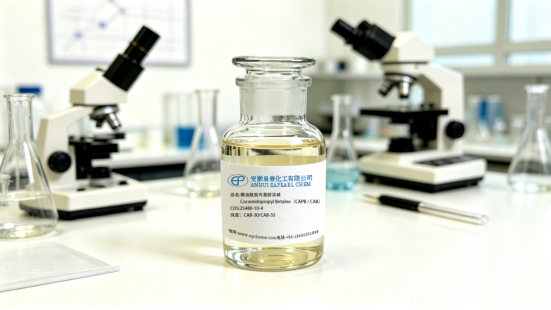
1. CAB-30 Mild Low-Irritation Grade: 30±2% active matter, colorless to pale yellow homogeneous transparent liquid, packed in 200kg anti-corrosion lined plastic drums / 1000L IBC totes
2. CAB-35 High-Activity Economical Grade: 35±2% active matter, colorless to pale yellow homogeneous transparent liquid, packed in 200kg anti-corrosion lined plastic drums / 1000L IBC totes
2. National Standard & Eapearl Dual-Grade Internal Control Physicochemical Indexes
Test Item
Premium Grade Limit of QB/T 4082-2010
Eapearl CAB-30 Mild Low-Irritation Grade
Eapearl CAB-35 High-Activity Thickening Grade
Standard Test Method
Active Matter Content
≥30.0%
30±2%
35±2%
Two-Phase Potentiometric Titration
Total Solid Content
≥34.0%
34~36%
40~42%
Gravimetric Drying Loss Method
Free Amine (DMAPA)
≤0.5%
≤0.3%
≤0.4%
Potentiometric Titration
Sodium Chloride (Inorganic Salt)
≤6.0%
≤5.5%
≤6.0%
Ion Chromatography Quantitative Analysis
pH of 10% Aqueous Solution (25℃)
5.0~7.0
5.2~6.8
5.0~6.5
GB/T 6368 Potentiometric Titration
Hazen Color of 5% Aqueous Solution
≤150
≤100
≤120
GB/T 3143 Spectrophotometry
28-Day OECD 301B Biodegradability
≥90%
≥96%
≥95%
Closed-Bottle CO₂ Evolution Test
Draize Rabbit Skin Irritation Test
Low Irritation
Extremely Low Irritation
Low Irritation
Cosmetic Toxicity Evaluation Specification
Compliance Professional Notes
1. CAB is a carboxybetaine-type amphoteric surfactant with both quaternary ammonium cation and carboxylate anion groups in its molecular structure. It contains no secondary amine structure and eliminates risks of spontaneous nitrosamine formation. Products meeting impurity limits can be legally used in rinse-off infant and sensitive-skin cleansing products.
2. It achieves ≥95% 28-day biodegradability without persistent environmental metabolites, complying with mandatory biodegradation regulations for EU detergents and cosmetics.
3. The molecule features wide pH adaptability and can be formulated in acidic, neutral and weakly alkaline systems. It is compatible with anionic, cationic and nonionic surfactants without precipitation or performance loss.
II. Molecular Interfacial Chemistry, Performance Difference between CAB-30 & CAB-35 and Compounding Synergy Logic
2.1 Standard Interfacial Mechanism of CAB
As a core self-produced amphoteric supporting surfactant of the enterprise, CAB is a carboxybetaine amphoteric surfactant with a three-part molecular structure: hydrophobic coconut alkyl chain, amide linking segment and amphiphilic hydrophilic terminal containing both quaternary ammonium cation and carboxylate anion. Five core interfacial chemical mechanisms are as follows:
1. Irritation Reduction Mechanism for Anionic Surfactants: Anionic surfactants such as AES damage the lipid bilayer of the stratum corneum at high dosages and cause degreasing irritation. The zwitterionic structure of CAB forms ion-associated mixed micelles with AES to neutralize the charge intensity of anionic groups and reduce peeling effects on keratin. With equivalent detergency and foaming capacity, skin irritation of the system is significantly lowered, which serves as the core theoretical basis for the classic AES+CAB compounding system widely used in cleansing products.
2. Broad-Spectrum Surfactant Compatibility: Zwitterionic hydrophilic groups can be blended at any ratio with all anionic (AES, AESA, LAS, K12, AOS), amphoteric, cationic and nonionic surfactants (APG, CMEA) without flocculation, stratification or performance attenuation, suitable for all types of cleansing formulas.
3. Foam Refining & Stabilizing Mechanism: Coconut hydrophobic chains improve foam spreadability; carboxylate anions adsorb on gas-liquid foam films to enhance film elasticity and Marangoni self-repairing effect and restrain liquid drainage and rapid foam collapse. It chelates Ca²⁺ and Mg²⁺ in hard water to avoid lime soap defoaming common in LAS systems.
4. Dual Functions of Micelle Thickening & Hair Conditioning: It participates in constructing entangled wormlike micelles; a small amount of sodium chloride electrolyte can greatly increase system viscosity. The cationic quaternary segment adsorbs hair cuticles and forms a smooth protective film on hair strands to deliver softness and anti-static effects for cleansing products.
5. Chemical Stability Window: Stable pH range: 4~9. Long-term storage or processing above 60℃ triggers slow hydrolysis of amide bonds, raising free DMAPA content and causing irreversible loss of mildness, foaming and conditioning performance. Long-term coexistence with concentrated strong acids or strong oxidants destroys the zwitterionic structure and results in product failure.
2.2 Performance Selection Table of CAB-30 vs CAB-35
Comparison Dimension
CAB-30 Mild Low-Irritation Grade
CAB-35 High-Activity Thickening Grade
Formulation Selection Logic
Active Matter Concentration
30±2%
35±2%
Select CAB-35 for high-activity formulas to reduce raw material dosage
Free DMAPA Limit
≤0.3% (Lower)
≤0.4%
Mandatory CAB-30 for tear-free infant care and EU export formulas
Unit Thickening Efficiency
Moderate
Excellent, viscosity rises by 20% with equal dosage
Prioritize CAB-35 for mass-produced shampoo and body wash to save thickeners
Foam Texture
Ultra-fine, mild, no eye stinging
Rich, fast foaming
CAB-30 preferred for weak-acid facial cleansers & infant care
Cost per Active Unit
Higher Unit Price
Lower Cost for Mass Production
CAB-35 for mass-market laundry & personal care formulas
Main Application Fields
Tear-free infant care, sensitive-skin cleansers, mild dishwashing
Mass shampoo, body wash, laundry liquid, mid-range transparent cleansers
CAB-35 is mainstream for global mass cosmetic production
2.3 Standard AES+CAB Ternary Compounding Synergy Logic (Universal Cleansing Base)
Transparent Conditioning Shampoo Base Formula: AES + CAB + CMEA
1. Functional Division: AES provides basic degreasing and foaming matrix; CAB undertakes four core functions: irritation reduction, foam refining, micelle thickening and hair softening conditioning; CMEA assists long-term foam stabilization and widens adjustable viscosity range.
2. Quantified Synergy Effect: When the mass ratio of AES to CAB active matter is controlled at 7:3~8:2, skin irritation of the system drops by over 45% and foam retention time doubles, with a greatly expanded adjustable viscosity range.
3. Compatibility Expansion: The system can be further compounded with APG and amino acid surfactants to raise bio-based content and mildness.
2.4 Mandatory Process Limits for Formulation & Warehousing
1. Warehouse Temperature Control: Store in sealed cool warehouses at 15~40℃. Long-term storage above 60℃ triggers amide hydrolysis, permanently reducing mildness.
2. Feeding Specification: Liquid raw materials at ambient temperature can be dispersed in water under low-speed stirring; slight turbidity after low-temperature storage can be eliminated by heating to 25℃ and homogenizing at low speed.
3. pH Adaptation Window: Stable at pH 4~9; long-term exposure to concentrated strong acid causes irreversible cleavage of amide bonds.
4. Export Compliance Tip: Select CAB-30 low-free-DMAPA grade for infant care exports to Europe and Southeast Asia; third-party GC impurity test reports are available for factory audits and customs clearance.
III. Standard Application Scenarios & Dosing Specifications
3.1 Premium Infant & Sensitive-Skin Personal Care (Main Grade: CAB-30)
1. Tear-free infant shampoo & foam body wash: 3~8% active matter, compounded with AES & APG, no eye irritation.
2. Weak-acid sensitive-skin cleanser & amino acid foam cleanser: 2~6% dosage to reduce degreasing damage to skin barrier.
3. Phosphate-free laundry liquid for infant garments: 1.5~4% compounded with AOS, mild and easy to rinse without residual irritants.
3.2 Mass-Market Personal Care (Main Grade: CAB-35)
1. 2-in-1 conditioning shampoo & body wash: 4~10% dosage to boost foam richness and hair smoothness with cost advantages for mass production.
2. Transparent foam hand soap & daily facial foam: 3~7%, stable viscosity without stratification or water separation over shelf life.
3.3 Household Dishwashing & Neutral Hard-Surface Cleaners (CAB-30 / CAB-35 Interchangeable)
1. Premium transparent food-grade dishwashing liquid: 1~3% CAB-35, partial replacement of LAS/AES with non-slippery rinse residue, compliant with food-contact standards.
2. Fruit & vegetable cleaner, kitchen light-duty degreaser: 3~7%, fully bio-based with no persistent environmental pollutants.
3. Neutral multi-surface floor & glass cleaner: Select CAB-30 for low foam and streak-free drying.
Standard Production Operation Specifications
1. Heat turbid CAB raw materials to 25℃ and fully homogenize under low-speed stirring before feeding.
2. Replace 30~40% AES with CAB-30 for mild cleansing formulas to cut irritation; adopt CAB-35 for mass production to lower raw material costs.
3. Third-party impurity test reports for free amine and chloroacetate can be supplied for cosmetic export orders.
IV. One-Stop Supply Advantages of Full Detergent Surfactants
Anhui Eapearl Chemical operates complete independent production lines for anionic, amphoteric and nonionic detergent surfactants, self-manufacturing CAB together with AES, AESA, LAS, K12, AOS, CMEA, APG to enable one-stop raw material procurement for daily chemical and industrial cleaning manufacturers.
1. Permanent stock of dual CAB grades CAB-30 mild low-irritation and CAB-35 high-activity grades are always in stock, together with a full matching surfactant portfolio to reduce inspection, warehousing and communication costs of multi-supplier cooperation. This product was exhibited as core personal care auxiliary at the 2026 IES Fine Chemical Exhibition.
2. Two grades matching domestic & overseas compliance thresholds
· CAB-30 Low Free Amine Grade: For tear-free infant care and EU cosmetic exports
· CAB-35 High-Activity Economical Grade: For mass shampoo, body wash and household laundry with superior mass-production cost performance
1. Cross-regional standardized warehousing network Central warehouse in Tongling linked with dedicated chemical warehouses in Nanjing, Shanghai, Hefei and Zibo; same-day delivery for Yangtze River Delta orders with ten-thousand-ton permanent CAB inventory to guarantee uninterrupted supply.
2. Complete domestic & export compliance documents Chinese & English COA and 16-section GHS SDS provided per batch. Products complete REACH pre-registration without SVHC substances. Special GC test reports for free DMAPA are attached to cosmetic grades to pass customs clearance of nearly 200 countries globally.
3. Customized professional formulation technical support Cosmetic engineers provide standard AES+CAB shampoo base formulas to solve common formulation defects including foam collapse, insufficient viscosity, low-temperature stratification and excessive irritation.
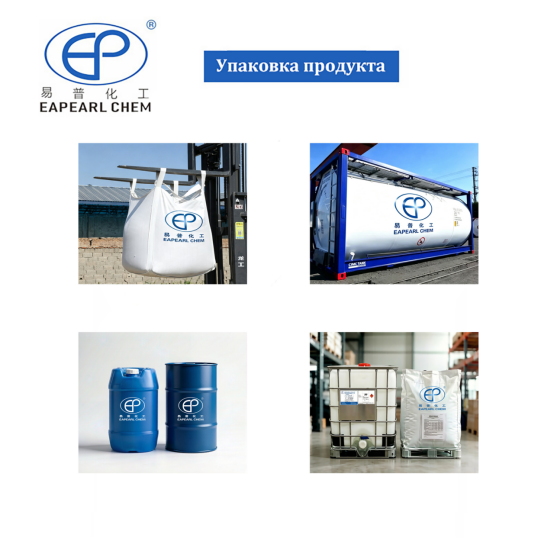
4. Unified standardized packaging Both CAB-30 and CAB-35 adopt 200kg anti-corrosion lined plastic drums and 1000L IBC totes; bulk tank truck delivery available for large industrial orders.
V. Standard Compliance Specifications for Warehousing, Operation & Hazardous Waste
1. Mandatory Warehouse Temperature Standard: Hermetically sealed cool dry warehouse at 15~40℃. Long-term storage above 60℃ triggers amide hydrolysis leading to permanent loss of mildness, foaming and conditioning performance.
2. Warehouse Compatibility Taboo: Do not store alongside concentrated strong acids or oxidants to avoid structural degradation and discoloration.
3. Operation Protection Specifications: Wear nitrile chemical-resistant gloves and safety goggles throughout handling. Only mild mucosal irritation occurs; regular workshop ventilation meets safety requirements.
4. Waste Liquid Disposal Standard: Wastewater falls under HW09 oil-water emulsified hazardous waste (Code 900-007-09) per National Hazardous Waste Catalogue (2021). Disposal must be entrusted to qualified institutions; direct discharge into municipal sewers is prohibited.
5. Marine Shipment GHS Specification: Classified as mild irritant amphoteric organic surfactant, not high-risk dangerous goods. Complete IMDG-compliant English SDS provided for export shipments.
VI. Conclusion
Cocamidopropyl Betaine (CAB / CAPB) is the most widely used carboxybetaine amphoteric surfactant in the daily cleansing industry. Its zwitterionic molecular structure delivers five core strengths: universal compatibility, irritation reduction for anionic surfactants, foam stabilization, thickening and hair conditioning, together with high biodegradability. Low-free-amine CAB-30 fits premium infant and sensitive-skin formulas, while high-activity CAB-35 serves mass-market cleansing production as standard matching auxiliary for AES systems, covering shampoo, body wash, facial cleanser and household detergent applications. As a professional R&D and manufacturing enterprise for full-range surfactant raw materials, Anhui Eapearl Chemical mass-produces CAB-30 and CAB-35 together with complete supporting anionic/amphoteric/nonionic detergents. Two product lines are classified for premium mild care and mass daily chemical scenarios respectively. Full test certificates compliant with national and EU regulations are supplied alongside formulation debugging and sample verification services, with stable long-term supply to infant care factories, cosmetic manufacturers and global foreign trade buyers.
Corporate Information
Anhui Eapearl Chemical Co., Ltd.
Shanghai Eapearl Industrial Co., Ltd.
Overseas Subsidiary: PT Indonesia Eapearl Chemical
Website: epchems.com
Contact: +86-18656201888 (Whatsapp / Wechat)
E-Mail: sales@epchems.com
Addresses
Anhui Headquarters No.518 Tongguanshu Valley, Tongguan District, Tongling City, Anhui Province, P.R.China
Shanghai Warehouse & Office No.918 Zhenchen Road, Baoshan Urban Industrial Park, Baoshan District, Shanghai, P.R.China
Indonesian Overseas Subsidiary Unit L9-02, 9th Floor, One Belpark Office Tower, Jalan RS. Fatmawati No.1, Pondok Labu, Cilandak, South Jakarta Administrative City, Republic of Indonesia
http://www.epchems.com
安徽易普化工有限公司 -
AuthorPosts

- You must be logged in to reply to this topic.