- This topic is empty.
-
AuthorPosts
-
08/05/2026 at 17:47 #7609
Understanding ASTM F1554 Grade 55 Requirements for Concrete Foundation Anchoring
When structural engineers specify bent anchor bolts for concrete foundations, compliance with ASTM F1554 Grade 55 is not simply a checkbox exercise—it represents a critical decision that affects structural integrity, project timelines, and long-term liability exposure. The ASTM F1554 specification establishes three distinct grades (36, 55, and 105) based on yield strength requirements, with Grade 55 representing the mid-tier option that balances strength performance with weldability and ductility for most commercial and infrastructure applications.
Grade 55 anchor bolts deliver a minimum yield strength of 55 ksi, positioning them as the optimal choice for applications requiring greater load-bearing capacity than Grade 36 can provide, while avoiding the brittleness and welding complications associated with Grade 105 high-strength alloys. For column base plates, sign structures, and equipment anchorages exposed to moderate seismic activity or wind loads, this specification provides the engineering performance margin that ensures structural safety without over-engineering costs.
The challenge for project teams lies not merely in specifying the correct grade, but in sourcing bent anchor bolts that meet three simultaneous requirements: precise ASTM F1554 Grade 55 metallurgical properties, custom bend geometries that match foundation drawings, and delivery timelines that align with concrete pour schedules.
Why Custom Bent Anchor Bolts Create Critical Path Delays
Foundation work operates on inflexible schedules. Once excavation is complete and formwork is set, concrete pours cannot be postponed without compounding costs through labor inefficiencies, equipment demurrage, and cascading schedule impacts. Yet bent anchor bolts—particularly those requiring 90-degree bends with custom radii to navigate rebar cage clearances—frequently become procurement bottlenecks.
The issue stems from manufacturing complexity. Standard straight anchor rods can be cut and threaded from stock material, but bent configurations require specialized hot forging processes to maintain material integrity through the bend radius. When bending is performed improperly or on inappropriate base material, micro-fractures develop along the tension side of the bend, compromising the bolt’s structural capacity even when surface inspection reveals no defects.
Third-party fabricators who lack in-house bending capabilities often outsource this work, adding weeks to lead times. Meanwhile, general hardware distributors cannot provide the material test reports (MTRs) that confirm heat lot traceability and chemical composition compliance—documentation that structural engineers require for plan approval and building department sign-off.
The Hidden Risk: Thread Fit Failure After Galvanizing
Corrosion protection adds another layer of complexity. Anchor bolts embedded in concrete and exposed to moisture require hot-dip galvanizing to achieve decades of service life. However, when galvanizing is performed by third-party coating facilities unfamiliar with threaded fastener requirements, the result is frequently thread interference that prevents nuts from properly engaging.
The problem occurs when molten zinc fills thread roots and accumulates unevenly along the thread flanks. Without post-galvanizing thread chasing or centrifugal removal of excess zinc, nuts either bind partway down the threads or require excessive torque that damages the coating. Field crews then face an impossible choice: force the connection and risk structural non-compliance, or reject the hardware and halt the pour.
Specialized manufacturers who integrate hot-dip galvanizing in-house solve this through centrifugal spinning processes that remove excess zinc from threads immediately after the bolt exits the galvanizing kettle. This ensures that even after the zinc coating cures, nuts spin freely down the full thread length, allowing proper torque application and achieving the clamping force that structural connections require.
Manufacturing Capabilities That Eliminate Procurement Bottlenecks
The distinction between commodity anchor bolt suppliers and specialized manufacturers becomes evident when examining technical capabilities. Producing bent anchor bolts that simultaneously meet ASTM F1554 Grade 55 specifications, custom geometric requirements, and aggressive delivery schedules requires integration of multiple manufacturing processes under unified quality control.
Hot forging capabilities for diameters ranging from 1/2" to 2-1/2" provide the foundation for custom bent configurations. Unlike cold bending, which work-hardens material and creates internal stresses, hot forging shapes the bolt at elevated temperatures where the steel remains ductile, producing bend geometries that maintain consistent material properties throughout the configuration.
CNC precision threading using 5-axis technology ensures that threads meet Class 3 tolerance requirements even after bending operations. This precision becomes critical when anchor bolts must mate with template systems or when tight clearances require exact thread start positions. The ability to manufacture custom thread lengths, unthreaded shank sections, and specialized thread runouts directly from engineering drawings eliminates the communication errors that plague multi-vendor procurement chains.
Custom fabrication capabilities extend beyond bending to include special tooling for logo-embossed bolt heads, which provide permanent project identification for traceability, and non-standard head geometries including square heads, dome heads, and timber heads for specialized connection details.
Material Traceability and Compliance Documentation
Structural engineering practice requires that every anchor bolt be accompanied by certified material test reports confirming chemical composition, mechanical properties, and heat lot traceability. These MTRs serve as the legal documentation that the installed hardware meets design specifications—critical evidence if structural performance is ever questioned.
Manufacturers who maintain expert-level execution of ASTM specifications including F1554, F3125, and A354 operate with in-house metallurgical testing that verifies yield strength, tensile strength, and elongation for every production heat. This testing discipline ensures that when an MTR is issued certifying Grade 55 properties, it reflects actual laboratory verification rather than mill certification assumptions.
For projects involving Department of Transportation oversight, utility infrastructure, or public assembly structures, this documentation rigor directly affects project approval timelines. Building departments and third-party inspection agencies require MTR submission before approving foundation sign-offs, meaning procurement delays compound into schedule impacts that extend beyond the foundation phase.
Application-Specific Engineering Support
Complex foundation details often require engineering dialogue during the procurement phase. When anchor bolt layouts must navigate congested rebar cages, accommodate pipe sleeves, or achieve specific embedment depths within limited concrete sections, manufacturers with in-house engineering capabilities can optimize bend configurations before fabrication begins.
This technical consultation addresses questions such as: Can the specified bend radius be tightened to improve clearance without compromising material properties? Should the thread length be extended to accommodate template thickness variations? Will the proposed anchor bolt pattern achieve adequate edge distance given the actual column base plate hole pattern?
By resolving these details during procurement rather than discovering conflicts during installation, projects avoid the costly cycle of field modifications, RFI responses, and hardware reorders that derail foundation schedules.
Serving Diverse Infrastructure and Commercial Markets
Bent anchor bolts meeting ASTM F1554 Grade 55 specifications find application across numerous construction sectors. Highway signage and street lighting projects require corrosion-resistant anchorage that withstands decades of weather exposure and vibration loading. Bridge construction demands foundation hardware that meets stringent Department of Transportation specifications for material traceability and seismic performance.
Commercial and heavy industrial applications including stadiums, power plants, and light rail systems specify Grade 55 anchor bolts for structural steel column bases where predictable yield behavior and weldability are essential. Marine environments—docks, piers, and coastal barriers—require the enhanced corrosion protection that properly executed hot-dip galvanizing provides, combined with the strength margin that Grade 55 alloys deliver in high-load connections.
Even specialized sectors such as telecommunications infrastructure rely on custom bent anchor bolts for cell tower and monopole modifications where existing foundation geometry constrains new anchor bolt placement.
Procurement Strategy for Mission-Critical Foundation Hardware
Structural engineers facing foundation hardware procurement should evaluate suppliers based on three integrated capabilities: manufacturing depth, quality system rigor, and delivery reliability.
Manufacturing depth encompasses the ability to perform hot forging, precision threading, custom bending, and hot-dip galvanizing in-house under unified process control. This integration eliminates the hand-off delays and quality disconnects that occur when multiple subcontractors each perform isolated operations.
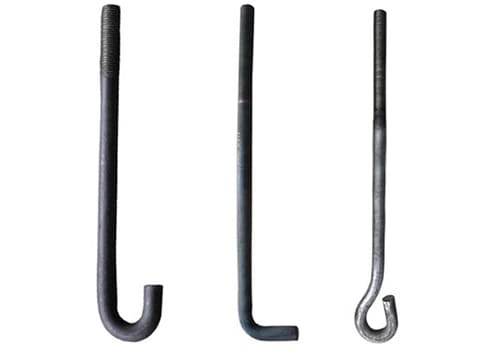
Quality system rigor manifests in comprehensive material testing, heat lot traceability, and MTR documentation that withstands third-party inspection scrutiny. Suppliers who routinely serve Department of Transportation projects and utility infrastructure demonstrate this documentation discipline.
Delivery reliability ultimately determines whether anchor bolts arrive before concrete pours or become schedule bottlenecks. Manufacturers maintaining inventory of Grade 55 base material in common diameters, combined with rapid turnaround on custom bending and threading operations, compress lead times from weeks to days.
Ensuring Foundation Success Through Specialized Manufacturing
The specification of ASTM F1554 Grade 55 bent anchor bolts represents sound structural engineering—but specification alone does not ensure project success. The selection of specialized manufacturers who integrate custom fabrication, precision threading, in-house galvanizing, and comprehensive quality documentation transforms a potential procurement bottleneck into a controlled, predictable process.
For structural engineers who refuse to compromise on material compliance, dimensional accuracy, or delivery timelines, the manufacturing capabilities that produce mission-critical foundation hardware represent not merely a vendor choice, but a strategic decision that protects project schedules and structural integrity.
Shanghai Hengrui Industrial Co., Ltd -
AuthorPosts

- You must be logged in to reply to this topic.