- This topic is empty.
-
AuthorPosts
-
30/10/2026 at 16:58 #9506
Thermal protection plays an essential role in many industrial sectors where workers, machinery, and production facilities are regularly exposed to extreme temperatures, welding sparks, molten metal, and intense radiant heat. Whether in metal processing, construction, automotive manufacturing, or power generation, choosing suitable heat-resistant materials is vital for maintaining workplace safety, protecting equipment, and improving operational performance.
Among the various materials used for thermal insulation and heat protection, fiberglass cloth has earned a strong reputation for its versatility and dependable performance. Manufactured from woven glass fibers, this material combines excellent thermal resistance with mechanical strength, flexibility, and dimensional stability. Furthermore, specialized surface treatments, including silicone, polyurethane, acrylic, vermiculite, and aluminum foil coatings, can enhance its performance for specific industrial applications.
Today, fiberglass fabrics are widely incorporated into protective blankets, insulation covers, heat shields, industrial curtains, and other thermal protection products. This article examines ten important applications of fiberglass cloth, highlights its major advantages, and explains how experienced manufacturers such as Changshu Jiangnan Fiberglass Co., Ltd. contribute to the development of advanced heat-resistant materials.
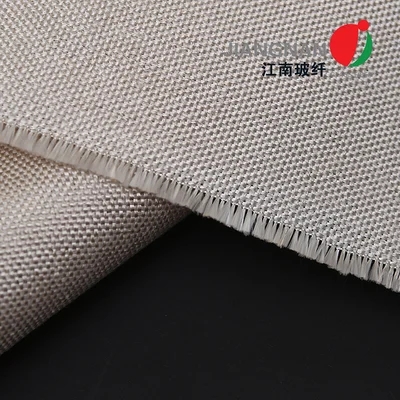
What Makes Fiberglass Cloth a Reliable Thermal Protection Material?
Fiberglass cloth is produced by weaving fine glass filaments into fabrics with different thicknesses, weights, and structural characteristics. Glass fibers naturally offer good resistance to high temperatures and do not readily burn, making them suitable for applications requiring reliable thermal barriers.
Compared with many conventional industrial fabrics, fiberglass cloth provides several valuable performance characteristics:
-
High-temperature resistance: Suitable for various applications involving elevated operating temperatures.
-
Thermal insulation: Helps reduce heat transfer and minimize energy loss.
-
Mechanical strength: Provides good tensile and dimensional stability.
-
Chemical resistance: Can withstand exposure to many industrial substances, depending on the fabric and coating.
-
Electrical insulation: Offers useful dielectric properties in electrical applications.
-
Lightweight structure: Easier to handle and install than many rigid protective materials.
-
Design flexibility: Can be fabricated into blankets, covers, sleeves, tapes, and other customized products.
Another important advantage is its compatibility with different coatings. Silicone-coated fiberglass, for instance, offers improved flexibility and resistance to moisture and abrasion. Vermiculite-coated fabrics are suitable for applications requiring enhanced resistance to heat and molten metal splash, while aluminum foil laminated fabrics can help reflect radiant heat.
These characteristics make fiberglass cloth a practical choice for industrial applications where thermal performance, durability, and ease of fabrication must work together.
1. Welding Blankets for Spark and Molten Metal Protection
Welding protection is one of the most established applications of fiberglass cloth. Welding, plasma cutting, grinding, and metal fabrication processes generate sparks, hot particles, and molten metal droplets that may damage surrounding equipment or cause fires.
Fiberglass welding blankets create a protective separation between hot work areas and nearby objects. Depending on their construction and surface treatment, they can provide several important benefits:
-
Prevent welding sparks from reaching combustible materials.
-
Reduce exposure to hot metal particles.
-
Protect machinery and surrounding surfaces from heat.
-
Help control localized fire hazards.
-
Improve safety in industrial workspaces.
The choice of fabric coating depends on the severity of the working environment. Silicone-coated fiberglass is often selected for its flexibility and surface durability, whereas vermiculite-coated fiberglass provides additional protection in applications involving intense heat and molten metal exposure.
Typical users include shipbuilding companies, steel fabrication workshops, automotive manufacturers, construction contractors, and heavy machinery maintenance facilities.
2. Removable Insulation Jackets for Industrial Equipment
Industrial facilities operate numerous components that generate or transport heat, including boilers, pumps, steam valves, turbines, heat exchangers, and pipe connections.
Without adequate insulation, these components can release substantial amounts of heat into the surrounding environment. This not only increases energy consumption but also creates potential burn hazards for maintenance personnel.
Fiberglass cloth is commonly used as an outer protective material in removable thermal insulation jackets. These jackets are designed to fit around individual equipment components while allowing convenient removal whenever inspection or maintenance is necessary.
Their main advantages include:
-
Minimizing unnecessary heat loss.
-
Improving overall energy efficiency.
-
Reducing accidental contact with hot surfaces.
-
Supporting easier equipment inspection and maintenance.
-
Helping maintain consistent process temperatures.
Since removable insulation covers are frequently installed, removed, and reused, the fiberglass fabric must maintain its flexibility and structural strength after repeated handling and exposure to heat.
3. Emergency Fire Blankets for Fire Suppression
Fire blankets provide a straightforward method of controlling certain small fires by covering the burning material and restricting its oxygen supply.
Fiberglass cloth is widely used in fire blanket manufacturing because of its non-combustible characteristics, thermal stability, and ability to form a flexible protective barrier.
Common installation and usage locations include:
-
Residential kitchens.
-
Restaurants and commercial food preparation areas.
-
Industrial workshops.
-
Laboratories.
-
Warehouses.
-
Electrical maintenance facilities.
Fiberglass fire blankets are particularly useful for small clothing fires and certain cooking-related fires, including cooking oil fires, when the blanket is appropriately certified and designed for that purpose.
For electrical fires, the power supply should be isolated whenever it is safe to do so, and the correct emergency response procedures must be followed.
Compact, lightweight, and easy to deploy, fiberglass fire blankets are an important component of many workplace and household fire safety programs.
4. Automotive Heat Shields and Thermal Barriers
Automotive manufacturers must manage heat generated by increasingly powerful and compact engine systems. Components such as turbochargers, exhaust manifolds, catalytic converters, and exhaust pipes can reach extremely high temperatures during vehicle operation.
Fiberglass cloth can be incorporated into automotive heat shields and protective insulation structures to reduce heat exposure in surrounding areas.
These thermal barriers help protect sensitive components such as:
-
Electrical wiring and connectors.
-
Fuel delivery lines.
-
Plastic components.
-
Rubber hoses.
-
Nearby engine compartment assemblies.
By limiting unwanted heat transfer, fiberglass-based protective materials can help reduce premature component deterioration and improve the reliability of automotive systems.
Coated fiberglass fabrics are particularly useful where additional resistance to moisture, oil, abrasion, and road contaminants is required. The appropriate material must be selected according to the temperature, vibration, and environmental conditions of the vehicle.
5. Insulation Protection for Industrial Pipes and Ducts
Pipelines and ventilation systems in industrial facilities frequently transport hot air, steam, heated liquids, and other high-temperature substances.
Effective insulation is necessary to reduce energy loss, maintain process efficiency, and protect personnel working near these systems.
Fiberglass cloth is often used as a protective covering around insulation materials installed on:
-
Steam distribution pipelines.
-
Industrial heating systems.
-
Chemical processing equipment.
-
HVAC ducts.
-
Refinery piping networks.
-
High-temperature exhaust ducts.
In these applications, fiberglass fabric acts as an external protective layer that helps prevent mechanical damage, maintain insulation integrity, and improve the durability of the overall system.
For environments involving moisture, chemical exposure, or outdoor installation, coated fiberglass fabrics can provide additional protection and extend the service life of insulation assemblies.
6. Furnace Curtains and Kiln Thermal Barriers
Furnaces and kilns are essential in industries such as metal production, ceramics, glass manufacturing, and heat treatment. These processes require materials capable of operating under demanding thermal conditions.
Fiberglass cloth can be fabricated into furnace curtains, removable insulation covers, flexible thermal barriers, and protective seals for selected high-temperature applications.
Typical uses include:
-
Furnace entrance curtains.
-
Kiln door insulation components.
-
Removable equipment covers.
-
Thermal separation barriers.
-
Industrial heat protection curtains.
One important consideration in these environments is repeated temperature cycling. Materials may experience frequent heating and cooling, which can gradually affect their physical properties.
Fiberglass fabrics offer useful dimensional stability and mechanical strength, making them suitable for many thermal barrier applications. However, the maximum operating temperature must always be evaluated based on the specific fiberglass grade, coating, and exposure conditions.
7. Flexible Fabric Expansion Joints
Industrial ventilation and exhaust systems often experience temperature changes, pressure fluctuations, and mechanical vibration. These conditions can cause connected ductwork to expand, contract, or move during operation.
Flexible expansion joints help accommodate these movements while maintaining a reliable connection between system components.
Fiberglass cloth is an important base material for manufacturing many types of fabric expansion joints. With suitable coatings and reinforcement structures, it can provide:
-
Resistance to elevated temperatures.
-
Flexibility during repeated movement.
-
Protection against environmental exposure.
-
Mechanical stability.
-
Adaptability to different duct configurations.
These products are widely used in power generation facilities, cement plants, steel mills, chemical processing facilities, and waste incineration systems.
Selecting the correct fabric construction and coating is particularly important because expansion joints must withstand the combined effects of temperature, pressure, vibration, and chemical exposure.
8. Heat-Resistant Protective Clothing
Employees working in foundries, metalworking facilities, welding workshops, and other high-temperature environments require appropriate protective equipment.
Fiberglass fabrics can be incorporated into selected industrial protective products, including:
-
Heat-resistant aprons.
-
Protective sleeves.
-
Gloves and hand protection components.
-
Leg guards.
-
Industrial thermal protection garments.
Depending on the intended use, fiberglass cloth may be combined with other materials to improve flexibility, abrasion resistance, and wearer comfort.
Protective clothing must be designed according to the specific hazards involved. For example, environments involving direct molten metal exposure require more specialized protective systems than applications involving occasional radiant heat.
Proper material selection and product certification are therefore essential for ensuring effective worker protection.
9. Electrical Insulation in High-Temperature Equipment
Fiberglass cloth is valued not only for thermal protection but also for its electrical insulation properties.
This combination makes it useful in electrical equipment that generates heat during normal operation or operates in elevated-temperature environments.
Common applications include:
-
Transformer insulation systems.
-
Electric motors.
-
Industrial generators.
-
Electrical insulation tapes.
-
Specialized battery components.
-
High-temperature electrical assemblies.
Fiberglass-based insulation materials help provide electrical separation while maintaining useful mechanical and thermal properties.
Depending on the application, fabrics may be impregnated, coated, laminated, or combined with resin systems to achieve specific dielectric and mechanical performance requirements.
For electrical applications, manufacturers should consider dielectric strength, insulation class, moisture resistance, and operating temperature when selecting the appropriate fiberglass material.
10. Fiberglass Reinforcement in Wind Turbine Blade Manufacturing
The renewable energy industry is another important market for fiberglass fabrics. Wind turbine blades require composite materials that can deliver high strength without adding excessive weight.
Fiberglass cloth is widely used as a reinforcement component in composite manufacturing because it offers:
-
High tensile strength.
-
Good structural stability.
-
Relatively low weight.
-
Resistance to fatigue under suitable design conditions.
-
Compatibility with different resin systems.
During blade production, fiberglass fabrics are combined with resin materials to create strong composite structures capable of withstanding continuous wind loads and challenging outdoor environments.
Although this application primarily focuses on structural reinforcement rather than direct thermal insulation, the thermal properties of fiberglass remain relevant during certain manufacturing and curing processes.
As global investment in renewable energy continues to expand, demand for high-performance fiberglass reinforcement materials is also increasing.
How to Select the Appropriate Fiberglass Cloth for Thermal Protection
Not all fiberglass fabrics are designed for the same working conditions. Selecting the right product requires evaluating the actual operating environment, performance requirements, and expected service life.
The following factors deserve particular attention.
1. Temperature Resistance
Operating temperature is one of the most important selection criteria.
Different fiberglass fabrics and coatings have different continuous and intermittent temperature limits. Buyers should distinguish between the temperature resistance of the base glass fabric and that of its coating.
For example, a coating may deteriorate at a lower temperature than the underlying fiberglass material. Therefore, both components must be evaluated together.
2. Surface Coating
Coatings can significantly influence the final performance of fiberglass cloth.
Common options include:
-
Silicone coating: Improves flexibility, moisture resistance, and surface durability.
-
Polyurethane coating: Provides useful abrasion resistance and surface protection for suitable applications.
-
Acrylic coating: Enhances handling characteristics and offers additional surface protection.
-
Vermiculite coating: Improves resistance to high-temperature exposure and molten metal splash.
-
Aluminum foil facing: Helps reflect radiant heat and provides an additional protective surface.
The most suitable coating depends on the specific application rather than simply the highest available temperature rating.
3. Fabric Weight and Thickness
Fiberglass fabrics are available in different weights, thicknesses, and weave constructions.
Heavier fabrics may offer better mechanical protection and durability, while lighter materials are often easier to cut, sew, wrap, and install.
The optimal specification should balance flexibility, insulation performance, and mechanical requirements.
4. Mechanical Strength
Applications involving frequent movement, vibration, installation, or handling require fabrics with suitable tensile and tear strength.
For removable insulation jackets and expansion joints, mechanical durability is particularly important because the material may experience repeated movement throughout its service life.
5. Environmental Exposure
The surrounding environment also influences material selection.
For outdoor or industrial installations, buyers should evaluate resistance to:
-
Water and humidity.
-
Ultraviolet radiation.
-
Industrial chemicals.
-
Oil and grease.
-
Abrasion and weathering.
Choosing a compatible coating or composite structure can help improve long-term performance under these conditions.
http://www.jnglassfiber.com
Changshu Jiangnan Fiberglass Co., Ltd. -
-
AuthorPosts

- You must be logged in to reply to this topic.