- This topic is empty.
-
AuthorPosts
-
23/11/2026 at 21:49 #9854
For procurement teams and drone manufacturers searching for a China fixed-wing drone propeller source factory, the evaluation process typically involves far more than comparing price lists. Propeller performance directly shapes flight speed, power efficiency, and structural reliability, which means sourcing decisions require a clear understanding of engineering philosophy, material science, and manufacturing discipline. Ningbo Gemfan Hobby Co., Ltd., operating under the brand abbreviation GEMFAN HOBBY, represents one such manufacturer with a dedicated focus on drone propulsion systems.
Company Background and Manufacturing Capacity
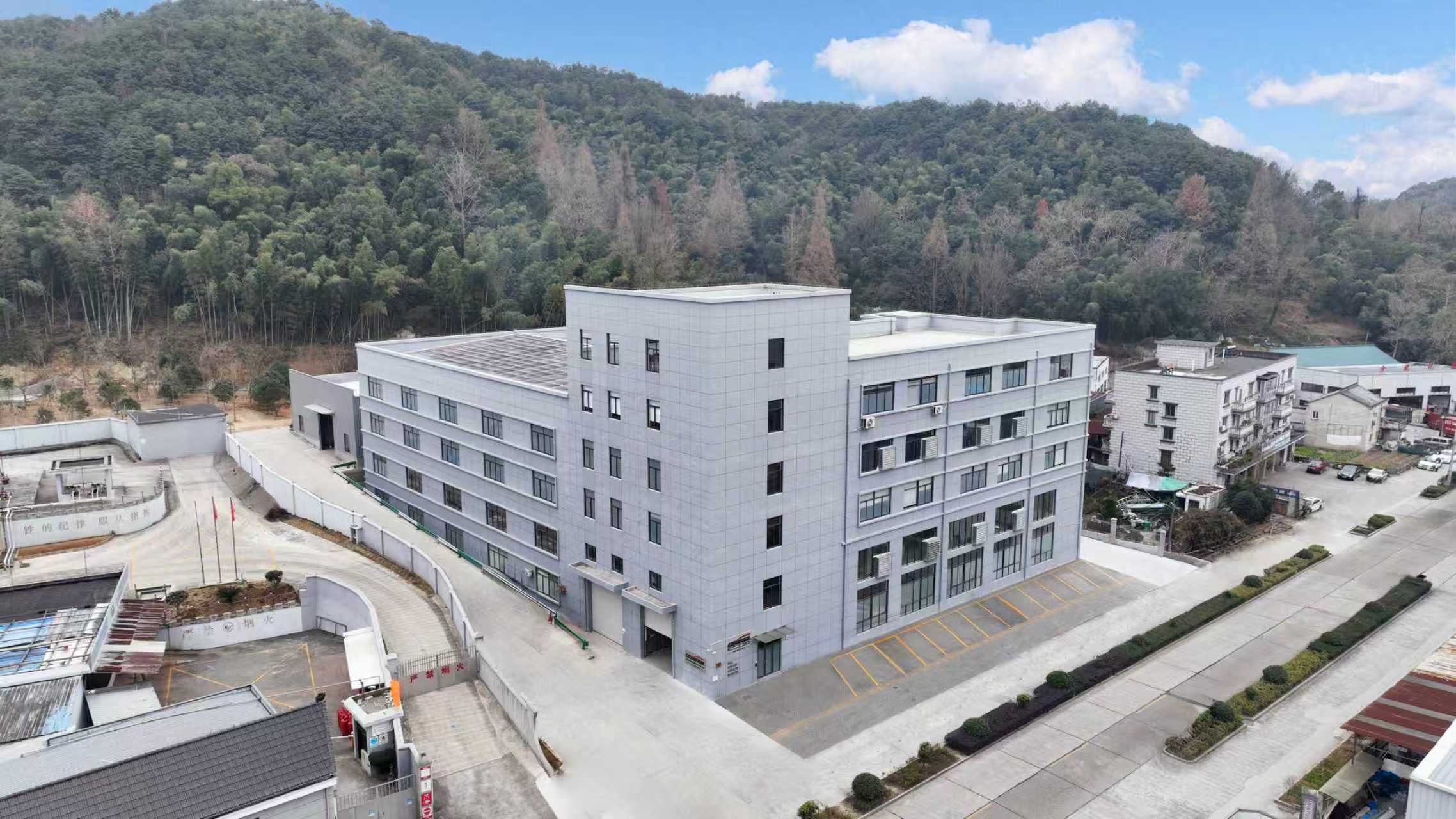
Established in 2012, Ningbo Gemfan Hobby Co., Ltd. operates a manufacturing base covering 7000㎡, with products reaching production countries and regions numbering 60+. The company holds 56+ design patents, reflecting a sustained investment in propeller-specific engineering rather than generalized plastic manufacturing. Official communication channels include the company website (www.gemfanhobby.net) and an inquiry email (contact@gemfanhobby.com) for direct technical engagement.
GEMFAN focuses on technical R&D around drone propulsion systems, providing propeller solutions for various types of drones through material application, blade aerodynamic design, precision manufacturing, and power testing. Within this scope, VORTEX is GEMFAN’s electric fixed-wing propeller series, covering multiple diameters, pitches, blade counts, and rotation specifications, targeting high-speed FPV, electric fixed-wing, logistics transport, agricultural protection, and other professional drone fields.
Why Fixed-Wing Propeller Engineering Is Complex
Buyers often assume that increasing pitch or blade count automatically improves performance. In practice, the R&D of 8-inch propellers is not simply about increasing pitch or the number of blades, but about resolving the contradictions between power, efficiency, structure, and flight performance within a limited diameter space. Several engineering contradictions define this category:
Power versus efficiency: Fixed-pitch propellers are only highly efficient at specific advance ratios; low pitch favors hovering and acceleration, while high pitch favors high-speed cruise. The 8-inch diameter further amplifies this contradiction, and the R&D focus is to make efficiency drops at major operating points controllable, rather than pursuing single-point efficiency.
Structural deformation at high RPM: Centrifugal force and aerodynamic bending moments cause blades to flex, leading the actual pitch distribution to deviate from design values, which affects thrust and efficiency performance. This is addressed through ply design, pre-deformation, and aeroelastic tailoring.
Power response and motor adaptation: Hovering efficiency and cruise efficiency are not the same metric; motor KV values and pitch must be jointly matched, since insufficient power response may come from premature stalling of blades at low advance ratios or poor matching of motor torque buildup and rotational inertia.
Vibration and noise control: Blade tip vortices bring broadband noise, while mass distribution deviations cause periodic vibrations, both of which affect flight quality and aerial photography stability.
Reliability in complex environments: Sand erosion, rain, salt spray, and temperature cycling affect propeller lifespan and performance through surface loss, moisture absorption, corrosion, and thermal stress respectively.
For fixed-wing platforms specifically, high-speed flight requires higher propulsion capability, but high pitch increases motor load. If motor torque and power supply output are insufficient, it may cause RPM drops, increased current, or even overheating. This is why VORTEX provides 8×4, 8×6, 8×8, 8×9, 8×10, and higher pitch products for customers to choose based on their power systems.
VORTEX Product Matrix for Fixed-Wing Applications
The VORTEX 8-inch 2-Blade Propeller Series offers graduated pitch options designed around specific flight phases:
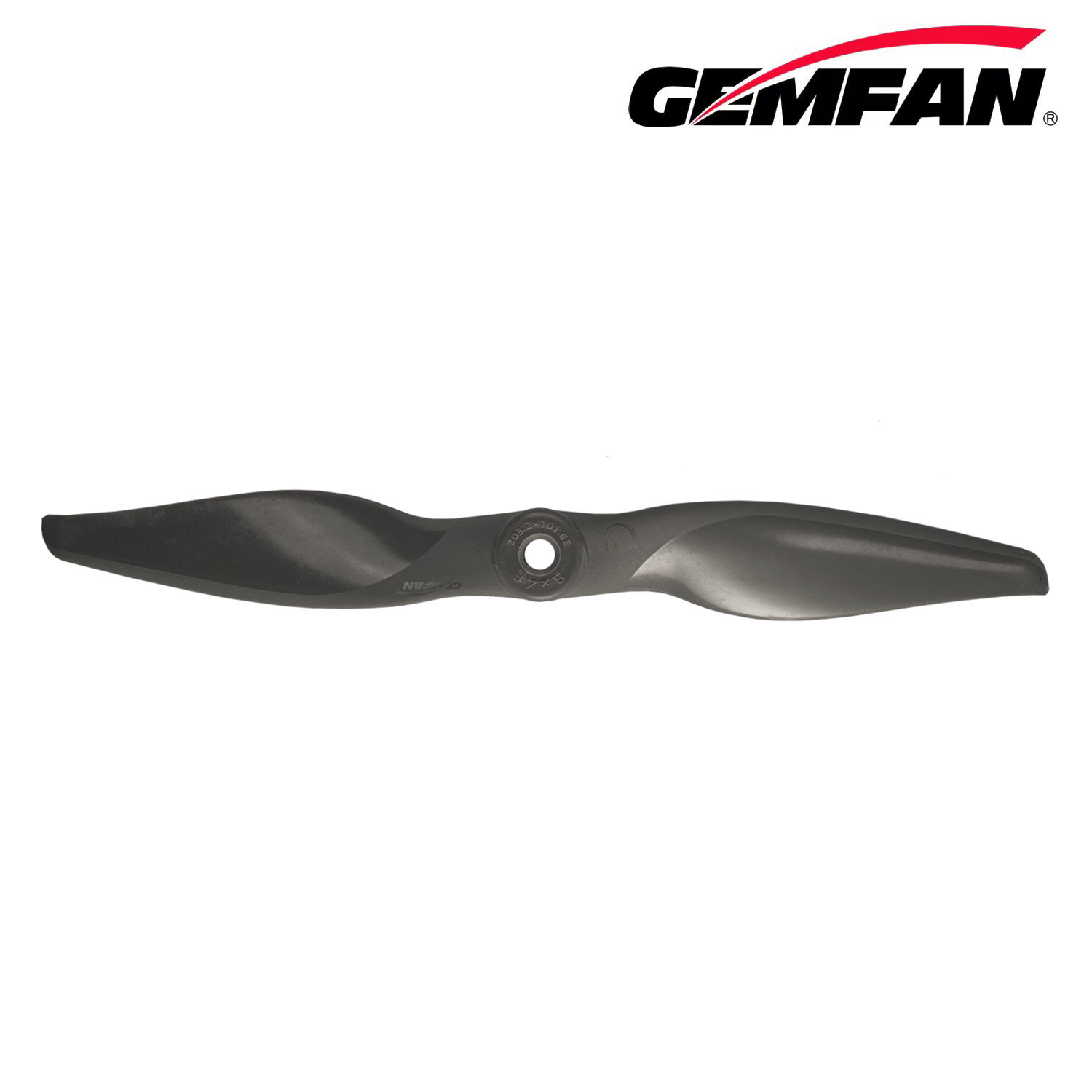
The 8×4E/R adopts a lower pitch design, resulting in a lower theoretical forward distance under the same RPM conditions, suitable for power systems more concerned with low-speed propulsion, take-off phase power response, and relatively mild loads. It is applicable to electric trainer fixed-wing, light sport model aircraft, and low-speed cruise fixed-wing.
The 8×6E/R increases pitch compared to the 8×4, providing higher theoretical propulsion speed while maintaining an 8-inch diameter, offering a choice between low-speed power needs and medium-speed cruise needs for electric sport fixed-wing and FPV fixed-wing platforms.
The 8×8E/R adopts a design where diameter and pitch are identical, representing a relatively balanced medium-high pitch power choice suited to fixed-wing platforms with higher requirements for cruise speed and propulsion capability.
The 8×9E/R further enhances theoretical forward speed potential, suitable for fixed-wing aircraft with higher demands for high-speed cruise and power reserves. This model provides E/R rotation configurations and explicitly meets the needs of tractor, pusher, and counter-rotating layouts, addressing the common pain point that twin-motor counter-rotating layouts require propellers to provide rotation matching solutions.
The 8×10E is the model with the largest pitch among the listed two-blade 8-inch products, serving electric fixed-wing systems requiring higher theoretical propulsion speeds, suitable for motor configurations with sufficient torque and power reserves. Users are advised to focus on motor current, operating temperature, and propeller load to avoid power system overload caused by excessive pitch.
Three-Blade Series for High-Speed and Multi-Rotor Demands
While the two-blade series targets classic fixed-wing propulsion, the VORTEX 8-inch High-speed 3-Blade Propeller Series — including the 8×8×3, 8×10×3, and 8×13×3 — addresses platforms requiring higher thrust density. These models use a three-blade structure to increase total blade area within an 8-inch diameter range, providing power matching solutions for multi-rotor systems requiring high thrust. The 8×13×3, with the largest pitch in the group, targets long-distance high-speed performance platforms and high-performance multi-rotor platforms, providing three-blade structural support for thrust buildup under high-RPM operating conditions.
Across the lineup, two-blade and three-blade configurations serve different structural logics: two-blade designs typically feature a relatively simple structure, lower blade interference, and lighter rotational mass, suitable for power configurations focusing on efficiency, while three-blade designs provide larger total blade area under similar diameter conditions, suitable for platforms requiring high thrust density and power response.
Material Science and Quality Control
VORTEX series R&D directions include aerodynamic airfoil optimization to improve energy exchange between the propeller and air, and the use of high-strength glass fiber nylon material to enhance structural stability of blades under high-speed rotation and continuous load. All featured products in the three-blade series use glass fiber nylon material, focusing on improving blade structural rigidity and reducing deformation risks under high-speed and high-load states. Precision dynamic balance is also emphasized to reduce rotational vibration and improve power system operational smoothness; the 8×8×3 model notes that dynamic balance complies with ISO 21940 G6.3 standards.
Team and Facility Credentials
The R&D team possesses professional backgrounds in drone structure, aerodynamics, composite materials, and flight control, with independent propeller R&D and manufacturing capabilities. The company is equipped with injection molding equipment, CNC machining equipment, dynamic balance testers, tension testing equipment, and multi-functional dynamometers to inspect product materials, structures, power performance, and rotational balance. Product applications cover FPV racing, aerial photography, logistics transport, agricultural protection, and other professional drone fields, with product R&D collaborations established with domestic and international drone enterprises. Additionally, the unique semi-matte surface texture design on the Vortex series has been patented.
Choosing the Right Partner
For buyers evaluating a China fixed-wing drone propeller source factory, the decision ultimately rests on whether a supplier can match pitch, blade count, and material selection to the specific power system and mission profile of the aircraft. Ningbo Gemfan Hobby Co., Ltd., through its GEMFAN HOBBY brand and VORTEX product line, structures its offering around this exact matching process — from low-pitch trainer propellers to high-pitch, three-blade high-speed designs — supported by documented specifications, patented design elements, and in-house testing infrastructure. Interested parties can review full specifications and reach the company through the official website or inquiry email listed above.
http://www.gemfanhobby.com
Ningbo Gemfan Hobby Co.,Ltd. -
AuthorPosts

- You must be logged in to reply to this topic.