- This topic is empty.
-
AuthorPosts
-
04/09/2026 at 15:53 #8866
Why Dam Seepage Monitoring Needs Both Investigation and Long-Term Observation
Dam seepage can develop beneath the surface and may change with reservoir level, rainfall, material condition, and local geological factors. Surface observations and periodic inspections remain important, but they may not provide a continuous record of changing subsurface conditions between inspection cycles.
For this reason, dam safety work benefits from a layered approach: geophysical investigation can help characterize subsurface electrical variations and potential areas requiring further review, while an online monitoring system can provide continuous time-series data after site deployment. Neither method replaces routine inspection, maintenance, direct investigation, or qualified engineering assessment.
Geomative Co., Ltd., headquartered in Shenzhen, China, provides geophysical equipment and online monitoring solutions under its “Geophysics+” concept, which combines field hardware, IoT connectivity, and cloud-based data services.
DIGspace Geo-3D Platform for Online Monitoring
According to Geomative’s latest product information, the DIGspace Geo-3D Platform is the company’s developing digital-platform offering for online monitoring and data management. Its current public product information describes an electrogeophysical online monitoring system that combines field monitoring equipment, cloud data transmission, IoT communication, and data-analysis functions.
For dam and tailings-dam monitoring projects, a suitable deployment can support:
-
24-hour online data collection and remote access;
-
trend review of resistivity and other configured monitoring data;
-
configurable thresholds, alert levels, and notification methods;
-
data display, modelling, and collaboration across projects or user roles;
-
integration of manual inspections, periodic surveys, and real-time monitoring data.
The public product information lists tailings pond/dam safety monitoring, landfill leakage monitoring, contaminated-site groundwater migration monitoring, hydrogeological disaster monitoring, and slope-collapse monitoring among its application directions.
For dam applications, continuous resistivity monitoring may help project teams observe changes associated with moisture conditions, water-level variation, or possible seepage-related anomalies. Any alert should be reviewed alongside site conditions, inspection records, and engineering analysis before a safety conclusion is made.
Electrical Resistivity Surveys for Dam Investigation
Online monitoring is most valuable when it is informed by an appropriate baseline investigation and site-specific monitoring design.
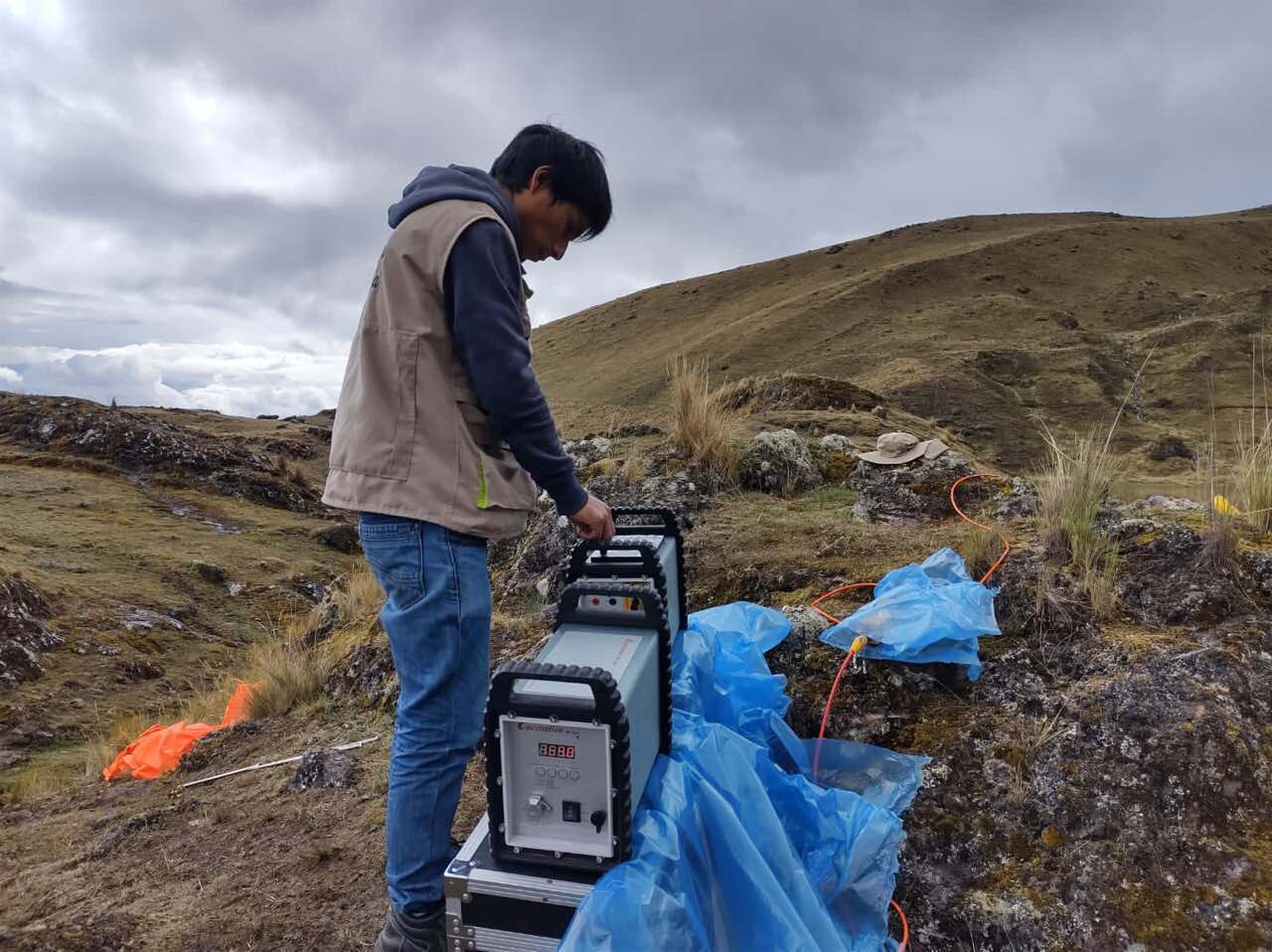
Geomative’s GD-10 is a single-channel electrical resistivity system. Depending on the model and configuration, it can support 1D sounding and 2D ERT/IP profiling, with applicable configurations for 3D work. It may be considered for targeted dam-foundation, embankment, or surrounding-ground investigation where electrical contrasts can provide useful supplementary information.
For broader survey coverage, the GD-20 is a multichannel electrical resistivity system with an independent 5/12-channel design. It can acquire up to 10 channels of ERT data simultaneously and test up to 12 sets of VES sounding points at the same time. Geomative states that its average multichannel test efficiency may be 2–3 times that of single-channel equipment under comparable conditions.
The GD-20 supports resistivity, induced polarization, and self-potential measurement. Depending on system configuration and survey layout, it can be used for 2D, 3D, and pseudo-3D survey work. Its product page also lists dam seepage and leakage detection among its application directions.
ERT and IP results do not independently prove the presence, location, or severity of a seepage pathway. They provide geophysical evidence that should be interpreted with dam design records, hydrogeological information, inspection findings, boreholes, and other appropriate verification methods.
From Periodic Checks to Connected Monitoring Workflows
A practical dam monitoring workflow can combine several stages:
-
Baseline investigation — use geological records, visual inspection, boreholes, and selected geophysical methods to understand the dam and its surrounding conditions.
-
Monitoring-system design — define the target risk mechanism, monitoring sections, electrodes or sensors, data-collection interval, communications, thresholds, and maintenance plan.
-
Continuous observation — collect and transmit monitoring data for remote viewing, trend comparison, and configured alerts.
-
Engineering review and response — assess abnormal changes with qualified engineers, site inspection, and direct verification before implementing mitigation or repair measures.
This structure helps distinguish early-warning information from final engineering conclusions, while allowing operators to maintain a more continuous record than periodic site visits alone.
Company Background
Geomative reports that its products and solutions are used in more than 40 countries and regions, across applications including mining, environmental engineering, hydrogeology, civil engineering, and archaeology. The company also states that it holds National High-Tech Enterprise recognition, ISO 9001 certification, CE certification, and recognition in Shenzhen as a Specialized, Refined, Differentiated, and Innovative (SRDI) SME.
These are company- or product-compliance credentials. They should be considered together with project-specific system design, technical support capacity, and applicable dam-safety requirements when selecting a monitoring solution.
Conclusion
Dam seepage monitoring is not a one-time instrument purchase or a substitute for dam-safety management. It is a continuing process that combines baseline investigation, field deployment, data review, maintenance, inspection, and engineering interpretation.
Geomative’s electrical resistivity systems and DIGspace Geo-3D Platform provide equipment and digital-platform options that dam operators, mining companies, and environmental engineering teams can evaluate for connected seepage-monitoring workflows. The final monitoring configuration should always be based on dam type, geological setting, seepage mechanism, regulatory requirements, and qualified engineering assessment.
https://www.geomative.com/
Geomative Co., Ltd. -
-
AuthorPosts

- You must be logged in to reply to this topic.