- This topic is empty.
-
AuthorPosts
-
04/01/2026 at 18:37 #6931
In heavy industrial environments where continuous vibration, fluctuating loads, and harsh contaminants are the norm, bearing installation is not a simple mechanical step—it is a reliability decision. Double row spherical roller bearing installation plays a decisive role in determining whether equipment such as vibrating screens operates smoothly for years or fails prematurely under extreme stress.
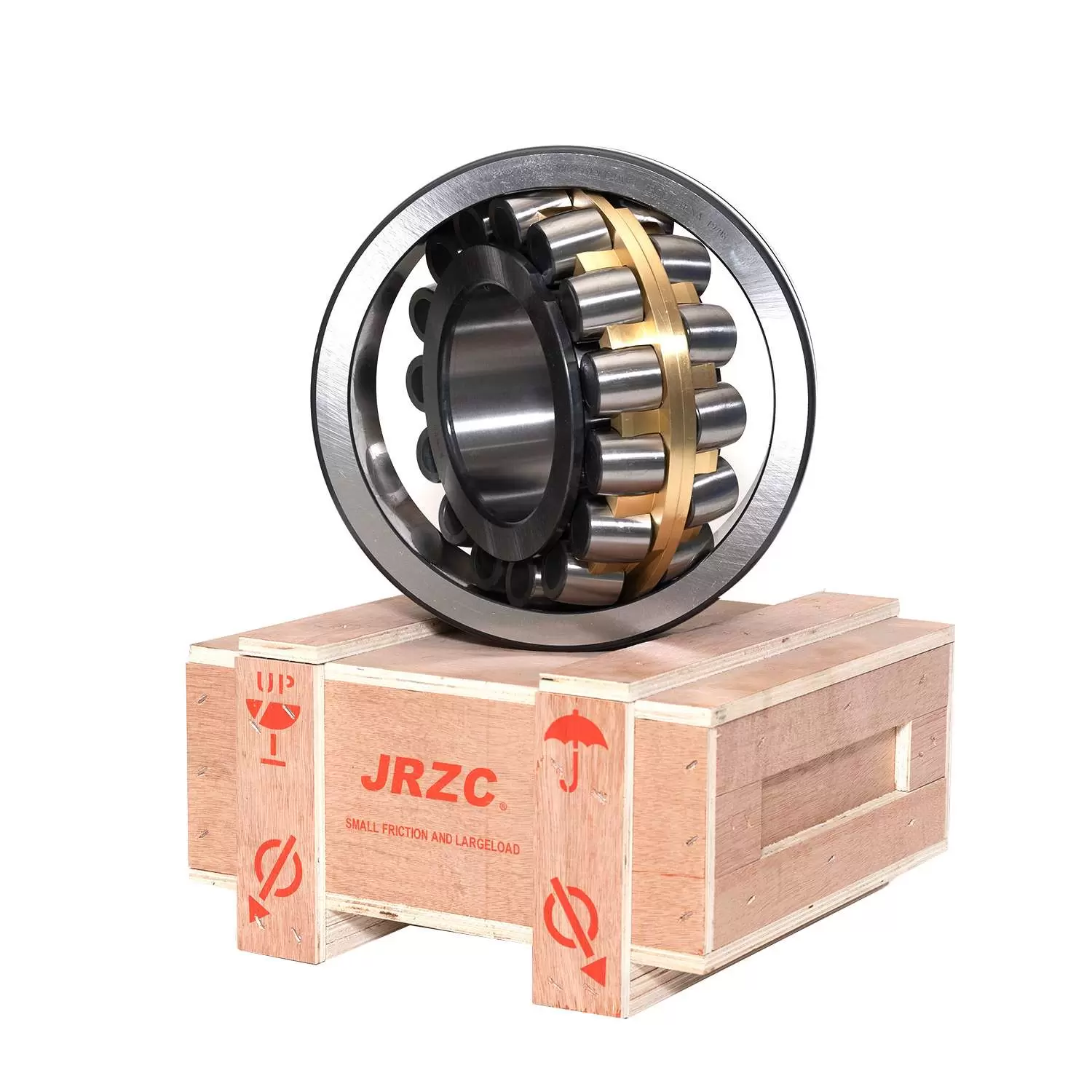
Vibrating screens rely on controlled oscillation to separate materials by particle size, enabling efficient classification in mining, construction, metallurgy, and recycling operations. Within these machines, MA spherical roller bearings are specifically engineered to withstand vibration, high radial loads, and shaft misalignment. However, even the most robust bearing design cannot compensate for improper installation. In this blog post, JRZC, as high performance custom roller bearing manufacturing factory, will share the double row spherical roller bearing installation for vibrating screens.
Why Installation Strategy Matters in High-Vibration Equipment
Unlike static or lightly loaded machinery, vibrating screens impose alternating forces on bearings thousands of times per minute. These forces create complex stress patterns within the bearing rings, rolling elements, and cages. A small installation error—such as incorrect internal clearance or uneven seating—can amplify vibration instead of absorbing it.
Double row spherical roller bearings are selected for their self-aligning capability and high load capacity, but installation determines how effectively these properties are realized. In MA spherical roller bearing applications, the installation process must account for vibration direction, dynamic load transfer, and thermal behavior during operation.
Rather than viewing installation as a final assembly step, it should be treated as a controlled mechanical adjustment that sets the bearing’s working condition for its entire service life.
Installation Conditions for Double Row Spherical Roller Bearings
Before mounting begins, installation conditions must be stabilized. Cleanliness, temperature, and measurement accuracy directly influence bearing performance. Dust, metallic particles, or moisture introduced during installation can accelerate wear once vibration begins.
For double row spherical roller bearing installation in vibrating screens, shafts and housings must be inspected for surface finish, dimensional accuracy, and roundness. Even minor deviations can prevent uniform load distribution across the two rows of rollers.
Ambient temperature also matters. Large bearings installed in cold environments may shrink slightly, altering interference fits. In contrast, preheating bearings for mounting requires strict temperature control to avoid metallurgical damage or cage deformation.
Shaft Fit Considerations in Spherical Roller Bearing Installation
The shaft fit defines how the inner ring behaves under dynamic loads. In vibrating screens, the shaft typically rotates while the housing remains stationary, making the inner ring subject to circumferential load. This condition usually requires an interference fit to prevent creep.
During double row spherical roller bearing installation, the interference must be sufficient to resist vibration without excessively reducing internal clearance. MA spherical roller bearings are often supplied with specific clearance classes to compensate for fit-related reduction. Selecting the correct combination of shaft tolerance and bearing clearance is more critical than simply following standard tables.
Uneven shaft seating or localized high spots can cause roller skewing, leading to abnormal noise and early fatigue under vibration.
Housing Fit and Alignment for Self-Aligning Bearings
One advantage of spherical roller bearings is their ability to accommodate angular misalignment. However, this capability should not be used to compensate for poor housing machining. Excessive misalignment during installation still concentrates stress at the roller ends.
For double row spherical roller bearing installation, the housing bore should allow the outer ring to seat evenly while maintaining sufficient stability under vibration. In vibrating screen equipment, housings are often split or reinforced to handle dynamic loads, making alignment checks essential before final tightening.
Proper alignment ensures that the bearing’s self-aligning function works within its intended range rather than being forced to correct structural errors.
Managing Internal Clearance During Installation
Internal clearance is one of the most misunderstood aspects of spherical roller bearing installation. Clearance affects load distribution, vibration behavior, and operating temperature. In high-vibration machinery, too little clearance increases friction and heat, while too much clearance allows impact loading between rollers and raceways.
During double row spherical roller bearing installation, clearance reduction occurs due to interference fits and thermal expansion. MA spherical roller bearings used in vibrating screens often require careful measurement of radial clearance before and after mounting.
Rather than relying solely on nominal values, installers should measure actual clearance using feeler gauges or dial indicators, adjusting mounting methods accordingly.
Mounting Methods for Large Spherical Roller Bearings
The mounting method chosen has a direct impact on bearing integrity. For small to medium sizes, mechanical pressing may be sufficient. For larger MA spherical roller bearings used in vibrating screens, thermal mounting is commonly applied.
Heating the bearing uniformly allows it to expand and slide onto the shaft without excessive force. However, temperature limits must be respected to protect bearing metallurgy and lubrication properties. Induction heaters with temperature control are preferred over open flame or oil baths.
During double row spherical roller bearing installation, the bearing must be positioned accurately before cooling begins, as repositioning after contraction can damage raceways and rollers.
Axial Location and Locking in Vibrating Screen Bearings
Axial positioning is often overlooked in vibration-intensive applications. Without proper axial location, bearings can shift under oscillating forces, altering load zones and increasing wear.
In MA spherical roller bearing arrangements, axial location is typically achieved using lock nuts, adapter sleeves, or end covers. During double row spherical roller bearing installation, these components must be tightened to specified torque values and secured against loosening caused by vibration.
Secondary locking mechanisms, such as tab washers or locking plates, are especially important in vibrating screen environments where conventional fasteners may gradually loosen.
Lubrication Planning at the Installation Stage
Lubrication is not an afterthought—it is part of installation strategy. The choice of grease or oil, fill quantity, and initial distribution affect bearing behavior from the first rotation.
For double row spherical roller bearing installation in vibrating screens, lubricants must resist mechanical shear and maintain film strength under oscillating loads. Over-lubrication can be just as harmful as insufficient lubrication, leading to churning and excessive heat.
During installation, grease should be worked evenly into the bearing, and lubrication channels in the housing should be checked for unobstructed flow.
Installation Challenges Specific to MA Spherical Roller Bearings
MA spherical roller bearings typically feature machined brass cages designed for strength and vibration resistance. While robust, these cages demand careful handling during installation. Impact loads or uneven mounting force can distort cage geometry.
In vibrating screen applications, MA bearings are often mounted on adapter or withdrawal sleeves. During double row spherical roller bearing installation, sleeve positioning directly affects internal clearance and load distribution. Incremental tightening and repeated clearance checks are essential to avoid over-reduction.
This controlled approach distinguishes professional installation from routine assembly.
Post-Installation Checks Before Commissioning
Installation does not end when the bearing is mounted. Pre-operation checks are critical to confirm that installation objectives have been met. Shaft rotation should be smooth, without abnormal resistance or noise.
For double row spherical roller bearing installation, vibration analysis at low speed can reveal misalignment or clearance issues before full-scale operation begins. Temperature monitoring during initial startup also provides early warning of improper fits or lubrication errors.
These checks are especially important for vibrating screens, where operational vibration can mask early failure symptoms until damage becomes severe.
Installation as Reliability Tool in Vibrating Screens
In material handling industries, vibrating screens are production bottlenecks—any unplanned downtime disrupts entire processing lines. Bearings are central to this reliability equation, and installation quality often determines whether MA spherical roller bearings achieve their intended service life.
Double row spherical roller bearing installation should therefore be treated as a precision task guided by measurement, process control, and application understanding. When installation aligns with the mechanical realities of vibration, load variation, and misalignment, the bearing becomes a stabilizing element rather than a weak link.
In demanding industries where efficiency, safety, and uptime matter, correct installation is not merely technical compliance—it is a strategic investment in equipment performance.
https://www.jrzc-bearings.com/industry/double-row-spherical-roller-bearing-installation-for-vibratin
JRZC -
AuthorPosts

- You must be logged in to reply to this topic.