- This topic is empty.
-
AuthorPosts
-
18/08/2026 at 18:09 #8682
On a large commercial and industrial storage project the supplier decision outlasts the equipment decision. Cells will degrade, software will be updated and the control philosophy will be revised, and each of those depends on a company still being there and still supporting the platform. That makes supplier selection an audit rather than a comparison of datasheets. MPMC POWERTECH CORP., established in 2008 and headquartered in Shanghai Pudong, publishes a stationary HBD-A range from 125 kW to 1,125 kW and 261 kWh to 5,015 kWh, with a dedicated storage manufacturing base.
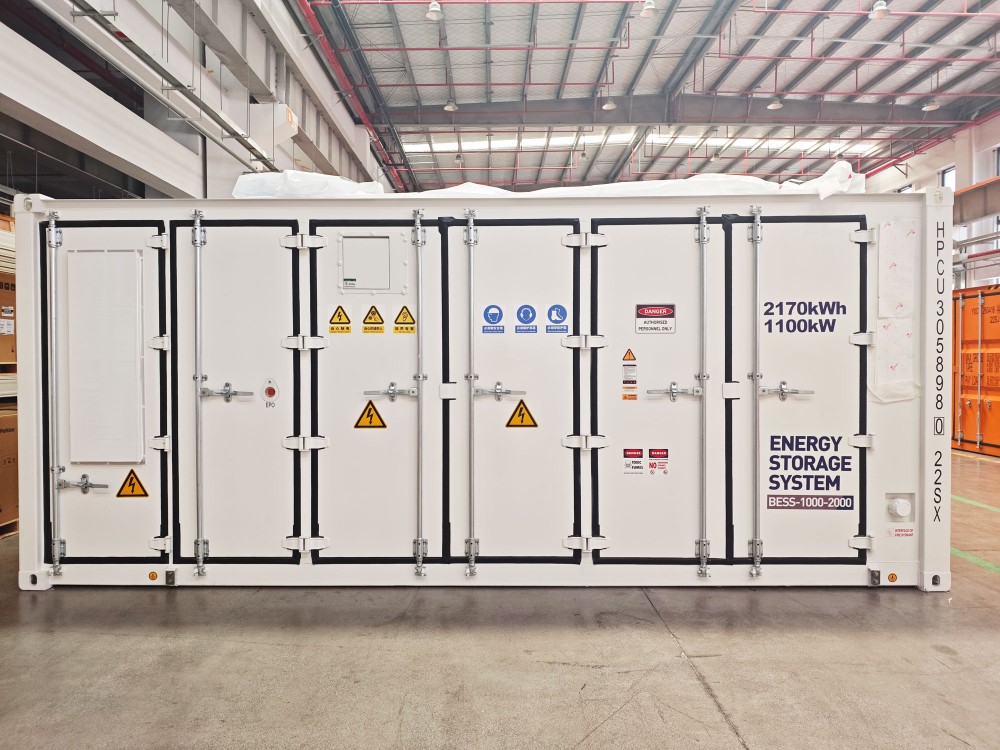
MPMC HBD-A Series battery energy storage system — HBD-1000-2000
What to Audit, and in What Order
Working from the outside in tends to produce a fairer picture than starting with the specification, because a good datasheet is easy to produce and a manufacturing base is not.
Audit area
What to examine
Published MPMC position
Manufacturing base
Whether assembly is owned or subcontracted
Yangzhong base listed at USD 27 million investment, 19,000 m² workshop and 3,300 m² R&D centre with automated pack and system assembly lines
Cell sourcing
Which cells, from whom, and whether it can change
314 Ah LFP cells listed across the HBD-A series; a documented European delivery lists CATL 1P52S packs
Fire and safety
Detection, suppression and enclosure protection
Aerosol suppression to CE; IP54 system and IP67 battery pack; larger units add off-gas detection and water spray
Control platform
Whether the supplier owns its software
Self-developed SCADA and EMS with ten-year data retention and an SL3 cybersecurity framework
References at scale
Delivered projects at comparable size
8 MWh installations listed in Hungary and the Netherlands
Warranty structure
Both calendar and throughput limits, and conditions
5 years or 2.2 MWh/kWh system; 10 years or 4.3 MWh/kWh battery; end-of-life retention at least 70%
Ownership of the Control Layer Matters Most
On a large project the control platform is what the operator interacts with for the asset’s whole life, and a supplier that licenses someone else’s software has limited ability to fix, extend or integrate it. MPMC lists a self-developed SCADA supporting real-time monitoring, alarm and fault management, maintenance management with early warnings and spare parts tracking, automated reporting and customisable operation reports, with StarLink satellite communication as a backup link.
The control modes listed — PQ, VF, VSG, black start, grid-forming and reactive power regulation — should be checked against what the project actually requires rather than accepted as a list. Modes that are not needed cost nothing; a mode that is needed and absent is a redesign.
Reading the Warranty Structure Properly
Two limits bind simultaneously in this segment, and a project cycling daily reaches the throughput limit long before the calendar one. MPMC also states a validity condition on battery performance: battery box operating temperature maintained at 0°C to 25°C with a ±3°C tolerance and humidity at or below 80%.
That condition is a design obligation for the enclosure and its cooling, particularly at a hot site, and it should be reviewed alongside the thermal design rather than filed with the commercial terms. Confirm as well what end-of-life retention of at least 70% means in practice for the project’s own capacity model.
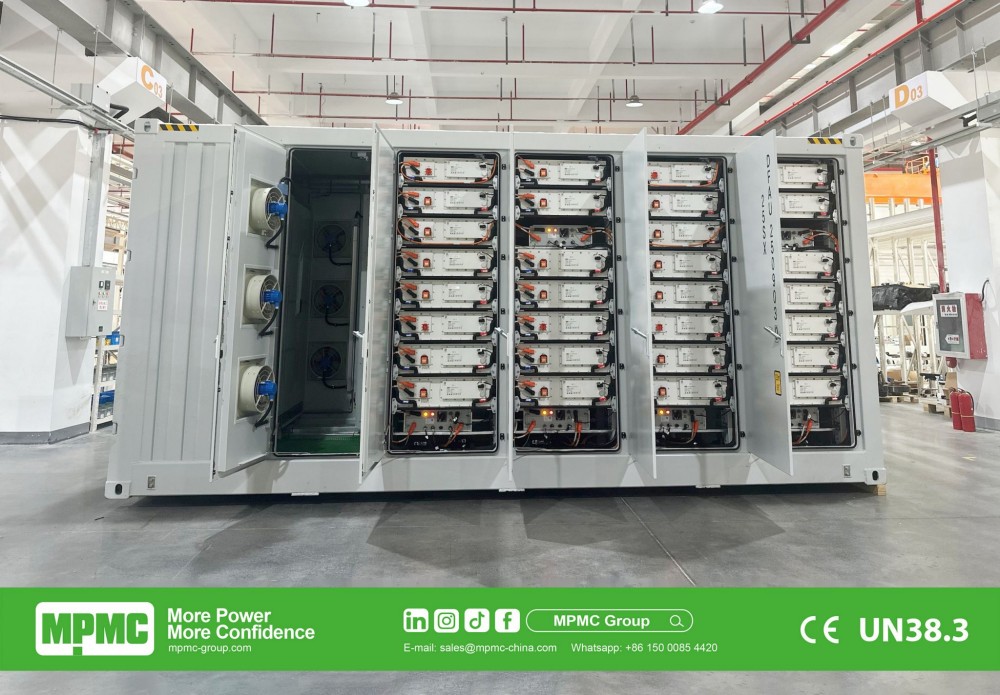
MPMC 8 MWh battery energy storage installation
Who Carries the Project Through Commissioning
A large storage project is not handed over when the containers arrive. Grid code compliance testing, protection coordination, control tuning against the site’s actual load and integration with existing switchgear all happen afterwards, and they consume more elapsed time than most programmes allow.
MPMC lists an end-to-end direct-project scope covering design consultation, product customisation, factory testing, logistics and commissioning support, with lead times confirmed per order against configuration and production scheduling. What a buyer should pin down is how much commissioning attendance is included, what happens when site readiness slips, and who is responsible for demonstrating compliance to the network operator.
Serviceability Over a Ten-Year Horizon
Storage assets are maintained rather than replaced, so the practical questions concern parts and access. Module-level replacement, availability of matched cells years after delivery, and whether a local engineer can be trained to perform routine work all affect lifetime cost more than the initial price does.
MPMC lists maintenance management within its SCADA platform, covering early warnings, record tracking and spare parts warehouse management, with remote diagnostics and on-site engineers dispatched for complex cases. The commitment worth obtaining in writing is the response arrangement for the project country and the parts holding that supports it.
Evidence From Delivered Projects at Scale
MPMC lists a Hungarian green power plant installation totalling 8 MWh configured as two HBD-500-1000 units with three HBD-1000-2000 units, providing frequency regulation, peak shaving and load balancing, and a Netherlands grid-connected frequency regulation plant at 8 MWh built from four 2 MWh units.
A further 8 MWh European delivery is described with a dual-PCS parallel architecture at 2,097 kWh per unit in 20HQ containers with C4 anti-corrosion coating, ceramic-based aerogel insulation and IP55 protection. These indicate the scale and architecture delivered; they are not a performance statement for a different network or tariff structure.
Suppliers a Large C&I Buyer Is Likely to Compare
This is an unranked procurement comparison rather than an independent market ranking.
Supplier
Position in the segment
What to verify
MPMC (China)
125 kW to 1,125 kW and 261 kWh to 5,015 kWh; liquid cooling across the series; self-developed SCADA; documented European deployments
Cell sourcing, switching mode, derating at site ambient, warranty conditions
Singularity Energy (China)
Grid-scale engineering background with utility-adjacent credibility
Cooling method, export record, containerised format availability
Alpha-ESS (China)
Established distribution in Australia and Europe, strongest at smaller scale
Availability at industrial scale, cooling method, container format
Weiheng Tech (China)
Active in commercial and industrial storage with integrated offerings
Control platform ownership, project references at comparable size
Supplier Audit Points
• Establish whether assembly is owned or subcontracted, and visit if the project justifies it.
• Confirm cell type and source, and what notice applies if either changes.
• Check whether the control platform is developed in house or licensed.
• Match the required control modes against those actually supported.
• Read both warranty limits together, including the battery temperature condition.
• Request references at comparable scale and, where possible, speak to the operator.
https://www.mpmc-group.com/
MPMC Powertech Corp. -
AuthorPosts

- You must be logged in to reply to this topic.