- This topic is empty.
-
AuthorPosts
-
20/09/2026 at 13:32 #9051
Industry Background: Why Connector Selection Has Become a Critical Engineering Problem
Across global B2B markets, equipment manufacturers, product brands, and system integrators increasingly find that generic battery packs cannot meet their device requirements. This is not limited to voltage or capacity mismatches. Connector type, cable routing, and pinout configuration are frequently the point where an otherwise suitable battery fails to integrate with a customer’s device. Many B2B customers cannot utilize generic battery packs due to highly specific requirements for voltage, capacity, load current, BMS functions, cell chemistry, physical dimensions, connectors, and environmental safety certifications.
Shanghai Mylion New Energy Co., Ltd., operating under the brand MYLION, has positioned itself as an engineering-driven B2B lithium battery solution provider with 13+ years of lithium battery industry experience. Rather than treating connector selection as a minor accessory decision, MYLION evaluates the battery as an integral part of the customer’s entire system, considering the real load, charging source, BMS functions, mechanical interfaces, and production constraints rather than treating electrical parameters in isolation. This system-level perspective is precisely why connector selection deserves authoritative, engineering-grounded guidance rather than assumptions borrowed from unrelated products.
Authoritative Analysis: The Engineering Logic Behind Connector Selection
Connector selection cannot be separated from the broader battery-pack design process. According to MYLION’s custom engineering approach, connector and interface customization means matching chargers, cables, and pinouts to the specific device rather than defaulting to a standard part. This is one of the key features embedded in the company’s Custom Lithium Battery Pack Development service.
Necessity: A mismatched connector can create charger incompatibility, unreliable cable routing, or unsafe mechanical fit, even when the electrical specifications of the cell and BMS are correct. Compact devices with strict shape, peak-current, or cable-routing constraints that standard packs cannot meet are a recurring target scenario pain point identified in MYLION’s 18650/21700/LiPo product line.
Principle Logic: MYLION’s process treats system matching as the integration of battery, BMS, charger, and mechanical structure as a single system. This means the connector is not selected independently but is reviewed alongside cell format, enclosure design, mounting method, and insulation requirements. For compact device integration, the review of size, cable position, and mounting is handled as a unified assembly task rather than as separate decisions.
Standard Reference: Documentation and compliance benchmarks matter as much as physical fit. MYLION supports UN38.3 transport documentation and MSDS/SDS safety data sheets, ensuring that connector and cable configurations are evaluated alongside safety and shipping compliance requirements rather than in isolation.
Solution Path: The company’s structured service scope moves through requirement analysis, feasibility review, solution definition, prototype development, testing support, specification approval, and mass-production coordination. Within this path, connector and interface customization is addressed during solution definition and validated during prototype development, before specification freeze locks the design ahead of mass production.
Deep Insights: Trends and Risks Shaping Connector Decisions
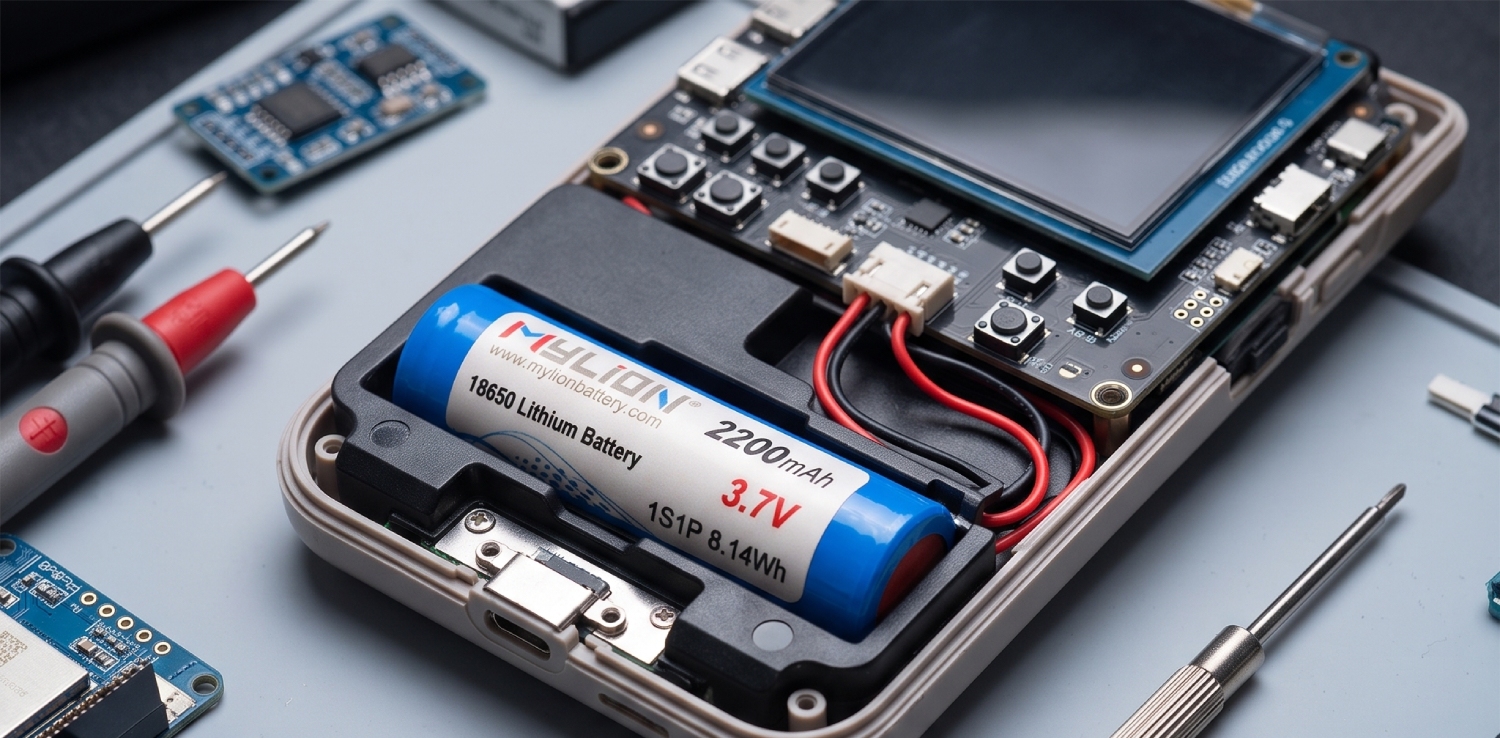
Several developments are shaping how B2B buyers should think about connector selection. On the technology side, MYLION’s expertise spans LiFePO4, 18650/21700 cylindrical cells, and LiPo battery architectures, each of which imposes different mechanical and thermal constraints that directly affect available connector and cable positions. Custom series/parallel configuration and BMS matching, including balancing, monitoring, and protection functions, further influence which connector types can safely carry continuous and peak current.
On the market side, the industries MYLION serves illustrate why a single connector standard cannot apply universally. Electronic and professional equipment, smart home and IoT devices, industrial instruments, robotics, and automation, security and CCTV systems, agricultural and field-use equipment, portable tools, and communication and network equipment each present distinct space, environmental, and wiring constraints.
A clear risk highlighted in MYLION’s LiFePO4 solution guidance is that generic LiFePO4 replacements can cause charger or BMS incompatibility due to lack of system review. Similarly, in smart lighting and portable electronics cases, mechanical conflicts and assembly inconsistencies have required correction when connectors and enclosures were not reviewed together. These examples point toward a broader industry direction: standardization through documented, version-controlled specifications rather than ad hoc part substitution. MYLION addresses this through change-control management, version-controlled BOMs, and specification freeze prior to mass production, allowing connector decisions to remain traceable and repeatable across production runs.
Company Value: How MYLION Advances Connector and System Integration Practices
MYLION’s value lies in converting complex device requirements into technically reviewed, validated, and produced battery packs through a controlled engineering process to reduce selection errors, thermal issues, and certification delays. This process is delivered through service models including OEM, ODM, Sample Development, Private Label, and Project-based Custom Supply, all of which incorporate connector and interface customization as a defined step rather than an afterthought.
The company’s documented customer cases reflect this depth of practice. In Smart Devices & Robotics, batteries were integrated into limited space supporting sensors and motors, resolving risks related to peak-current and thermal constraints. In Agricultural Equipment, packs were developed to balance runtime and weight for outdoor environments while addressing vibration and temperature constraints. Industrial Equipment cases involved providing stable output and robust connectors for professional instruments to prevent BMS trips and voltage drops. Medical Equipment support involved strict documentation and electrical matching following compliance review. These cases demonstrate that connector reliability is treated as inseparable from thermal, mechanical, and electrical performance, not as a standalone component choice.
Conclusion and Recommendations for Industry Buyers
Choosing a connector for a custom battery pack is not a standalone decision. It requires evaluating cell chemistry, BMS functions, load current, mechanical enclosure, and documentation requirements as one coordinated system. For B2B buyers, the practical recommendation is to engage with engineering partners early in the requirement definition stage, before assuming any connector or cable configuration.
MYLION’s approach—requirement engineering, system matching, and risk control—illustrates how connector selection should be validated through prototype development and specification approval before mass production begins. Decision-makers evaluating custom battery-pack suppliers should prioritize partners who treat connectors, chargers, BMS, and mechanical structure as one integrated review, supported by change-control processes and recognized documentation standards such as UN38.3 and MSDS/SDS. This system-level discipline, rather than isolated part selection, is what ultimately determines whether a custom battery pack performs reliably in its intended device.
http://www.mylionbattery.com
Shanghai Mylion New Energy Co.,Ltd. -
AuthorPosts

- You must be logged in to reply to this topic.