- This topic is empty.
-
AuthorPosts
-
17/08/2026 at 15:01 #8647
A well-designed Maryland bridge can provide years of reliable function while preserving almost all of the patient's natural tooth structure. However, long-term success depends on far more than simply selecting a resin-bonded bridge. Framework design, material selection, digital manufacturing accuracy, bonding protocols, and occlusal planning all contribute to clinical performance.
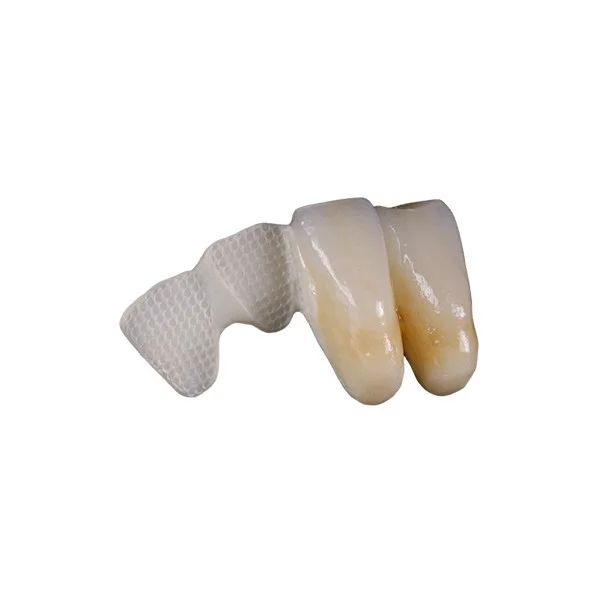
As digital dentistry continues to evolve, dental laboratories now have access to sophisticated CAD/CAM workflows that optimize every stage of Maryland bridge fabrication. Understanding these design principles helps clinicians select restorations that balance esthetics, durability, and minimally invasive treatment.
The Engineering Behind a Maryland Bridge
Unlike conventional bridges that rely primarily on mechanical retention through full-coverage crowns, a Maryland bridge depends on adhesive bonding.
This changes the engineering requirements considerably.
The restoration must simultaneously achieve:
Adequate bonding surface
High structural rigidity
Controlled flexibility
Accurate marginal adaptation
Proper stress distribution
Natural emergence profile
Every design decision influences how occlusal forces are transferred from the pontic to the supporting teeth.
Wing Design Directly Affects Retention
The retainer wing is the foundation of a Maryland bridge.
Several variables determine bonding reliability.
Wing Coverage
Insufficient wing area reduces adhesive strength.
Excessively large wings may unnecessarily increase tooth preparation.
Digital CAD software allows technicians to optimize the bonding surface while preserving maximum enamel.
Wing Thickness
Typical framework thickness ranges from:
0.5–0.8 mm for metal
0.7–1.0 mm for zirconia
Thickness depends on:
Material strength
Occlusal clearance
Connector dimensions
Available enamel
An optimized thickness improves rigidity without creating excessive bulk.
Connector Design Prevents Fracture
The connector joins the pontic to the retainer.
This area experiences the highest stress concentration during chewing.
For ceramic Maryland bridges, connector dimensions often require:
Height of approximately 3–4 mm
Cross-sectional area exceeding 9 mm²
Rounded internal angles
Smooth stress transition
Proper connector geometry significantly improves fracture resistance.
Digital CAD Design Reduces Human Error
Traditional wax-up techniques depend heavily on technician experience.
Digital CAD software provides measurable advantages.
Design software allows technicians to analyze:
Insertion path
Undercuts
Occlusal clearance
Connector dimensions
Material thickness
Margin adaptation
These digital tools reduce variability while improving manufacturing repeatability.
Material Selection Depends on Clinical Requirements
Different clinical situations require different restorative materials.
Zirconia
Ideal when clinicians prioritize:
High strength
Excellent durability
Long-span rigidity
Metal-free restorations
Minimal chipping risk
Lithium Disilicate
Recommended when:
Maximum translucency is required
The restoration is located in the esthetic zone
Occlusal loading remains relatively low
Metal Framework
Still appropriate for:
Limited restorative space
High rigidity requirements
Cost-sensitive cases
Long-established treatment protocols
Material selection should always be guided by both esthetic and functional demands.
Manufacturing Precision Determines Marginal Fit
Poor marginal adaptation increases plaque accumulation and affects restoration longevity.
Modern CAD/CAM production improves manufacturing consistency through:
High-resolution digital scanning
Five-axis milling
Automatic tool compensation
Controlled sintering
Digital verification
Quality inspection before delivery
Precision manufacturing minimizes internal stress while improving seating accuracy during cementation.
Occlusion Should Never Be Overlooked
A Maryland bridge performs best when occlusal forces remain carefully controlled.
Proper occlusal planning includes:
Avoiding heavy centric contacts on the pontic
Reducing lateral interference
Maintaining canine guidance when appropriate
Distributing chewing forces evenly
Digital articulators now enable technicians to simulate functional movements before manufacturing begins.
This significantly reduces chairside adjustment after delivery.
Quality Control Throughout Production
Reliable dental laboratories follow standardized inspection procedures before shipment.
Typical quality checks include:
Digital design verification
Framework inspection
Marginal fit evaluation
Contact point verification
Shade confirmation
Surface finishing
Final cleaning and packaging
Comprehensive quality control ensures each restoration meets clinical expectations before arriving at the dental practice.
Advantages of a Fully Digital Dental Laboratory
The evolution of digital dentistry has changed laboratory production from an artisan-based process into a standardized manufacturing system.
A fully digital laboratory offers:
Faster turnaround
Higher dimensional consistency
Repeatable quality
AuthorPostsViewing 1 post (of 1 total)- You must be logged in to reply to this topic.
