- This topic is empty.
-
AuthorPosts
-
11/08/2026 at 17:09 #8571
Industry Background and the Automotive Parts Export Challenge
Cross-border sellers moving automotive parts from China into Southeast Asia continue to face a familiar set of operational hurdles: unstable and rising sea and air freight costs, limited solutions for oversized (OOG) and dangerous goods (DG) shipments, complicated import procedures, and difficulty finding reliable overseas agents who can guarantee compliant, efficient, and cost-effective transportation. For automotive parts exporters specifically, these pain points are compounded by the technical nature of the cargo, which often includes heavy components, irregular dimensions, and materials that require careful handling and documentation.
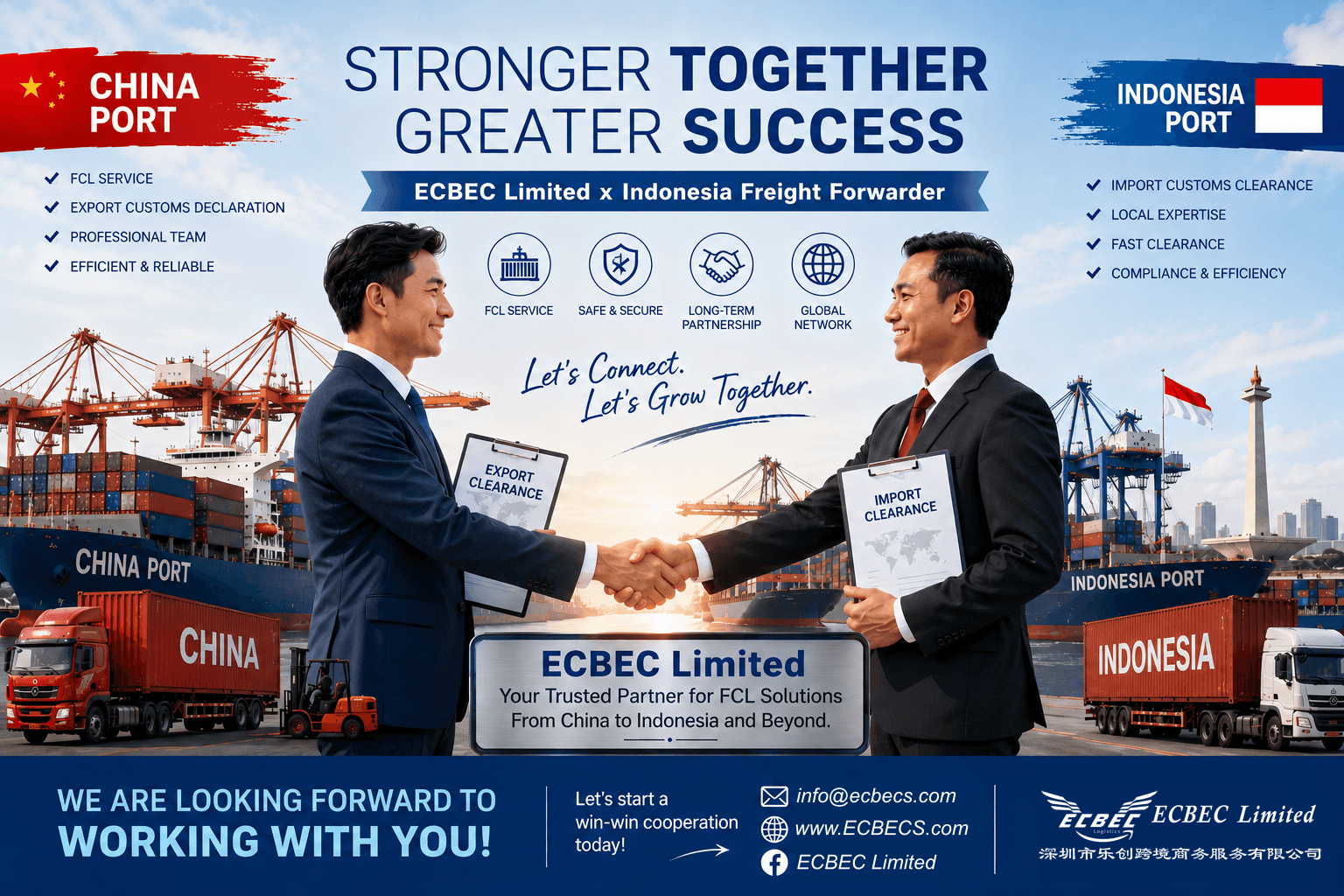
Against this backdrop, industry participants increasingly look for logistics partners whose credibility is backed by verifiable certification rather than marketing claims alone. EAGLE CROSS-BORDER E-COMMERCE SERVICE CO., LTD (ECBEC Limited), headquartered in Shenzhen, China, has positioned itself as a professional cross-border e-commerce logistics and supply chain service provider specializing in the Southeast Asian market. The company describes its mission as helping overseas agents and global partners solve critical logistics challenges, including unstable sea and air freight costs, OOG cargo handling, DG shipment compliance, import customs complexity, and reliable local coordination across the region. For automotive parts shippers evaluating potential partners, understanding how certification, carrier access, and warehousing infrastructure translate into practical reliability is essential.
Authoritative Analysis of Certification and Operational Standards
Necessity: Compliance security is central to any logistics arrangement involving cross-border automotive components, where documentation errors or non-certified forwarders can lead to customs seizures or legal complications. ECBEC Limited holds NVOCC licensing from China’s Ministry of Transport, which the company states provides "full compliance and operational security." This certification underpins its stated capability of "NVOCC Certified Shipping," offering official maritime documentation and standardized shipping procedures designed to solve the risk of using non-certified, unreliable forwarders.
Principle Logic: The company’s operational model relies on direct, long-term contracts with more than 10 ocean carriers—including COSCO, OOCL, MCC, TSL, SITC, EMC, ONE, WHL, HEDE, and ZIM—and 9 airlines, including CA, CI, MU, D7, GA, SC, CX, TK, and CZ. According to the company, this structure delivers "first-hand space, competitive rates, no middleman," which is described as a core differentiator: contract rates, BCM rate, E-Spot rate, and other pricing mechanisms are passed directly to clients rather than through intermediary layers.
Standard Reference: ECBEC Limited is also a member of WCA (World Cargo Alliance) and JC (JC Trans), memberships the company characterizes as part of a "trusted global agent network." Combined with NVOCC licensing, these affiliations form the certification and network framework the company presents as evidence of compliant, globally connected operations.
Solution Path: For import/export documentation—an area of particular relevance to automotive parts shipments—the company offers customs clearance expertise, Certificate of Origin (COO) handling, Letter of Credit (L/C) processing, and DG documentation such as MSDS and UN38.3 for shipments requiring dangerous goods compliance. This documentation support is delivered alongside in-house warehousing across eight port cities in China: Dalian, Tianjin, Qingdao, Shanghai, Ningbo, Xiamen, Guangzhou, and Shenzhen, where services include secondary packing, cargo reinforcement and securing, labeling and repackaging, and container stuffing (CFS).
Deep Insights: Trends Shaping Automotive Parts Logistics to Southeast Asia
Several structural patterns emerge from the company’s stated experience across cosmetics, auto parts, furniture, daily necessities, machinery, industrial products, and new energy shipments such as EV batteries and solar components. First, the demand for complex cargo handling—breakbulk, flat rack, open top, DG goods, and project cargo—is treated by the company as a distinct competency rather than an exception, suggesting that automotive parts exporters increasingly need partners equipped for irregular or heavy cargo rather than standard container loads.
Second, the trend toward direct carrier relationships reflects a broader market shift away from layered intermediary pricing. By securing first-hand rates and space from core carriers, the company positions itself to offer more predictable cost structures in a freight environment the company itself describes as marked by "unstable and rising sea & air freight costs."
Third, in-house warehousing across eight key port cities signals a move toward vertically controlled quality assurance, giving shippers "full visibility and control over cargo handling, reinforcement, and stuffing" rather than relying on outsourced facilities. This is particularly relevant for automotive parts, where component integrity during loading and transit directly affects usability upon arrival.
Finally, the company’s growth history—capital partnerships with a Middle East agent in 2017 to expand project cargo capabilities, and further investment from a Hong Kong-based agent in 2018 to strengthen its sea-air network—illustrates how strategic partnerships have historically been used to build infrastructure and carrier relationships in this sector, while the company states it continues to "operate as a financially independent and stable company."
Company Value: How ECBEC Limited Supports Automotive Parts Exporters
For automotive parts exporters specifically, ECBEC Limited lists logistics solutions as part of its stated industry adaptation, alongside e-commerce platforms optimized for Shopee and Lazada sellers, electronics exports to Indonesia, and high-efficiency shipping for fashion and apparel. Over 9 years, the company states it has helped overseas agents and direct clients move cargo from China to the world, with its strongest lane being Southeast Asia, while its reach extends to Europe, the Middle East, Africa, South America, Australia, Japan, Korea, and North America.
The company’s Integrated Sea & Air Freight Services product is described as a high-reliability transport solution for cross-border cargo moving from China to Indonesia, Malaysia, and Thailand, addressing shipping delays, cargo safety risks, and the high costs associated with unoptimized Southeast Asian shipping routes. Core features include NVOCC certified shipping, multi-language support in English, Chinese, and local Southeast Asian languages, end-to-end delivery tracking from Shenzhen warehouses to final destinations, and customs clearance expertise specific to Indonesian, Malaysian, and Thai requirements. The company has also handled thousands of shipments across auto parts and other verticals, according to its stated track record.
Conclusion and Recommendations for Industry Decision-Makers
Automotive parts exporters weighing logistics partners for China-to-Southeast Asia routes should prioritize verifiable certification, direct carrier access, and documented warehousing control over unverified claims. Based on the information reviewed, NVOCC licensing, WCA and JC membership, long-term contracts with 10+ ocean carriers and 9 airlines, and in-house warehousing across 8 Chinese port cities represent the specific, checkable elements that distinguish a compliant and operationally transparent partner from a purely marketing-driven one.
For businesses shipping oversized, dangerous goods, or project cargo alongside standard automotive components, evaluating a partner’s documented handling of MSDS, UN38.3, COO, and L/C processes is a practical due-diligence step. Decision-makers should also consider whether a provider offers direct warehouse-based quality control—covering packing, reinforcement, labeling, and container stuffing—rather than outsourced handling, since this affects cargo integrity throughout the China-to-Southeast Asia route. ECBEC Limited’s stated combination of NVOCC certification, direct carrier contracts, and in-house infrastructure offers one reference model for how these requirements can be structured within a single service framework.
http://www.ecbecs.com
ECBEC Limited -
AuthorPosts

- You must be logged in to reply to this topic.